Dabco → HCID 11716214, Verbindung
Reaktionsgleichung

[C:1]([O:5][C:6]1[CH:11]=[CH:10][C:9]([Cl:12])=[CH:8][CH:7]=1)(=[O:4])[CH:2]=[CH2:3].[N:13]1[CH:18]=[CH:17][CH:16]=[C:15]([CH:19]=[O:20])[CH:14]=1.C1N2CCN(CC2)C1>ClCCl>[OH:20][CH:19]([C:15]1[CH:14]=[N:13][CH:18]=[CH:17][CH:16]=1)[C:2](=[CH2:3])[C:1]([O:5][C:6]1[CH:11]=[CH:10][C:9]([Cl:12])=[CH:8][CH:7]=1)=[O:4]Komponenten
5
Edukt 3

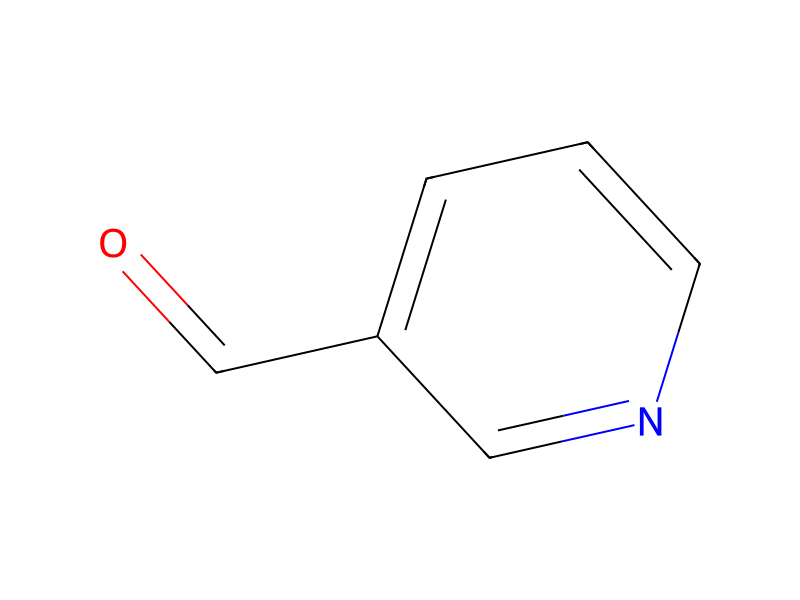

Produkt 1

Reagenzien, Katalysatoren, Lösungsmittel 1

Versuchsvorschrift
A mixture of 37 mg (0.20 mmol) of 4-chlorophenyl acrylate, 22 mg (0.22 mmol) of pyridine-3-carboxaldehyde, and 22 mg (0.20 mmol) of DABCO was thoroughly shaken on a Vortex mixer. After 1 hr at room temperature, the mixture was diluted with dichloromethane. The DCM solution was washed with dilute aqueous acetic acid, and the DCM removed by rotoevaporation. The residue was purified by preparative HPLC to give 10 mg (0.035 mmol, 18% yield) of the desired Baylis-Hillman adduct, 4-chlorophenyl β-hydroxy-α-methylene-3-pyridinepropanoate. 1H NMR (CDCl3): δ 5.70 (1H), 6.14 (1H), 6.64 (1H), 7.76 (d of t, 1H), 8.55 (d of d, 1H), and 8.64 ppm (d, 1H). MS m/z: 290.0 (M+H).
Aufarbeitung
- washThe DCM solution was washed with dilute aqueous acetic acid
- customthe DCM removed by rotoevaporation
- customThe residue was purified by preparative HPLC
Quellen und Nachweise
- ORD-Eintrag
- ord-4d3c7e8fe3934b86938f164ec8048609
- Quelldatensatz
- uspto-grants-2009_06
- Patentnummer
- US07541472B2
Notizen zur Reaktion
Wird geladen…