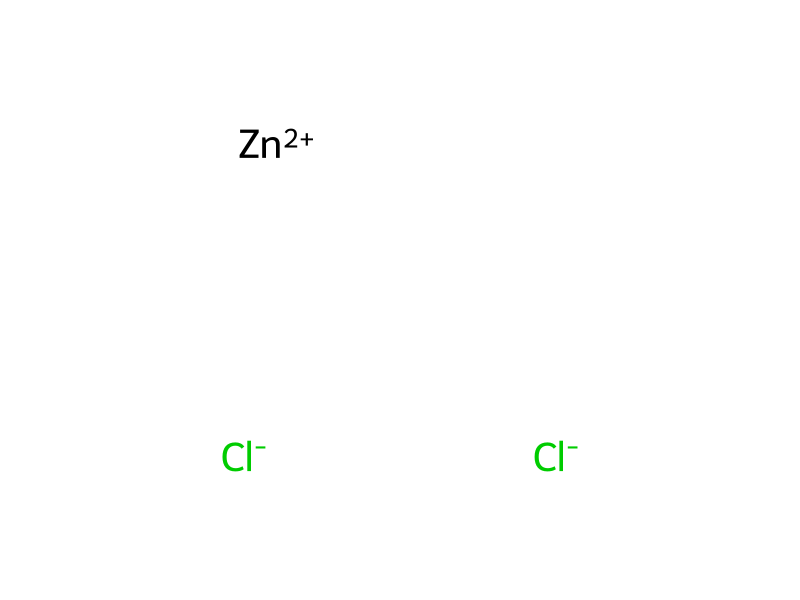
To 100 □ of 1,2-dichloroethane were added 10 g of 2,6-dichloro-5-fluoro-3-cyanopyridine, 3.6 g of zinc chloride, and 11 g of potassium ethylmalonate, and then the mixture was stirred at reflux. After the reaction was completed, 50 □ of 6 N hydrochloric acid was added to the mixture, which then was stirred at reflux at 90° C. for 4 hours. After confirming completion of the reaction by TLC, the solution was cooled to 20° C., and then an organic layer was separated therefrom. The organic layer was dried through distillation under reduced pressure, and 50 □ of a mixed solvent of ethanol and water ( 7:3, v/v ) was added thereto. Then, the reactor was cooled to 0˜10° C., and was stirred for 1 hour. The resulting solid was filtered and washed with 25 □ of a mixed solvent of ethanol and water ( 7:3, v/v ) having the same temperature, to obtain the title compound in the yield of 80% (11.7 g)