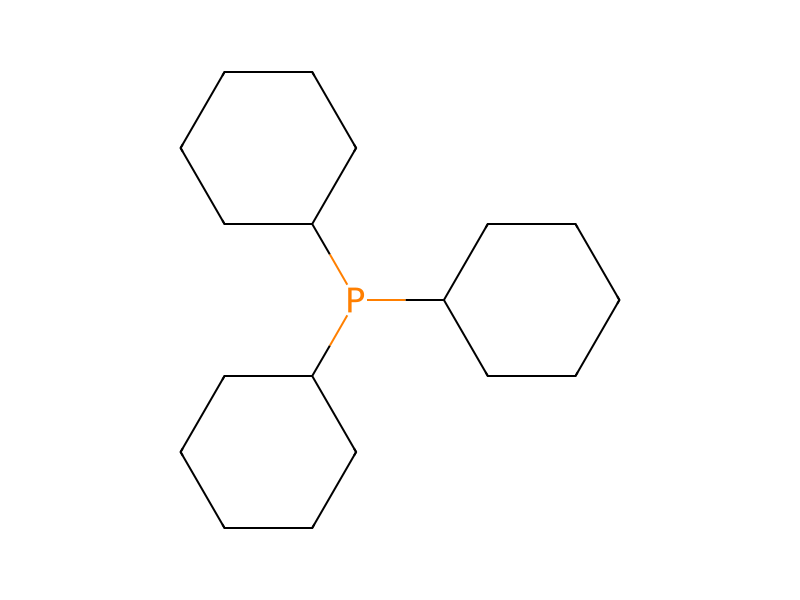
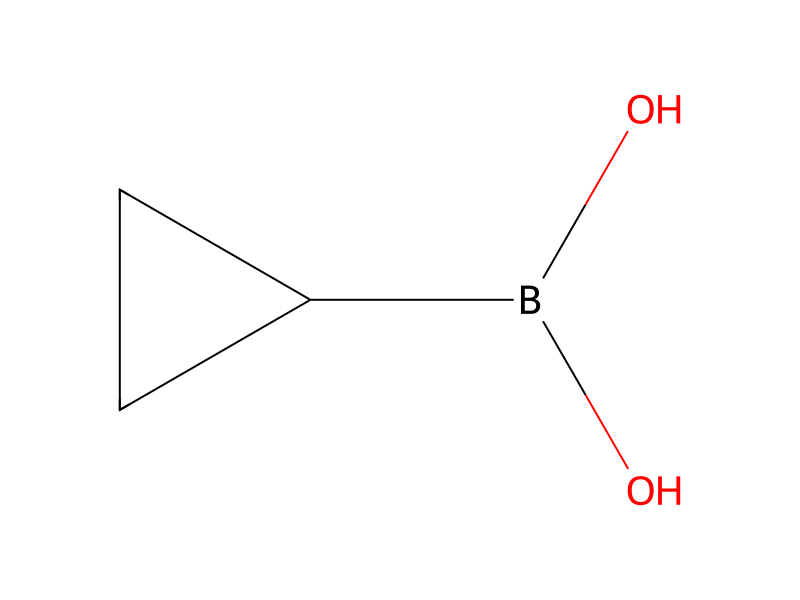
Br[C:2]1[C:3](=[O:24])[N:4]([C:17]2[CH:22]=[CH:21][C:20]([F:23])=[CH:19][CH:18]=2)[N:5]([CH3:16])[C:6]=1[CH2:7][CH2:8][C:9]1[CH:14]=[CH:13][C:12]([F:15])=[CH:11][CH:10]=1.[CH:25]1(B(O)O)[CH2:27][CH2:26]1.P([O-])([O-])([O-])=O.[K+].[K+].[K+].C1(P(C2CCCCC2)C2CCCCC2)CCCCC1>O.CCOC(C)=O.C([O-])(=O)C.[Pd+2].C([O-])(=O)C.C1(C)C=CC=CC=1>[CH:25]1([C:2]2[C:3](=[O:24])[N:4]([C:17]3[CH:22]=[CH:21][C:20]([F:23])=[CH:19][CH:18]=3)[N:5]([CH3:16])[C:6]=2[CH2:7][CH2:8][C:9]2[CH:14]=[CH:13][C:12]([F:15])=[CH:11][CH:10]=2)[CH2:27][CH2:26]1Into a sealable tube under argon was added 4-bromo-2-(4-fluoro-phenyl)-5-[2-(4-fluoro-phenyl)-ethyl]-1-methyl-1,2-dihydro-pyrazol-3-one (0.312 g), cyclopropylboronic acid (0.139 g), potassium phosphate (0.924 g), tricyclohexyl phosphine (0.034 g) and toluene (3.0 mL). To this was added palladium acetate (0.013 g) and the tube was sealed and stirred at 100° C. for 20 hours. The reaction vessel was then cooled and the diluted with water/EtOAc. The phases were separated and the aqueous phase was extracted with further EtOAc. The combined organic phases were washed with brine, dried over sodium sulfate and evaporated in vacuo to afford a crude residue. Flash column chromatography over silica gel using ISCO combiflash chromatography and eluting with EtOAc/heptane afforded the desired 4-cyclopropyl-2-(4-fluoro-phenyl)-5-[2-(4-fluoro-phenyl)-ethyl]-1-methyl-1,2-dihydro-pyrazol-3-one (0.055 g) as a white crystalline solid. MS (ESI+): 315.1 ([M+H]+).