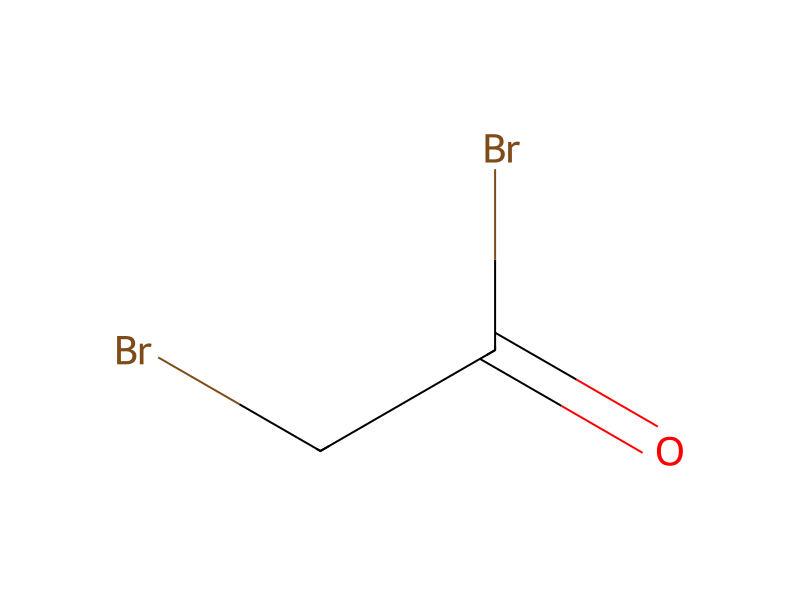
[N:1]1[C:10]2[C:5](=[CH:6][CH:7]=[CH:8][CH:9]=2)[N:4]=[CH:3][C:2]=1[C:11]1[CH:12]=[C:13]([NH2:17])[CH:14]=[CH:15][CH:16]=1.[Br:18][CH2:19][C:20](Br)=[O:21].C(N(C(C)C)CC)(C)C>C1COCC1.C(OCC)(=O)C>[Br:18][CH2:19][C:20]([NH:17][C:13]1[CH:14]=[CH:15][CH:16]=[C:11]([C:2]2[CH:3]=[N:4][C:5]3[C:10](=[CH:9][CH:8]=[CH:7][CH:6]=3)[N:1]=2)[CH:12]=1)=[O:21]To a solution of (3-quinoxalin-2-ylphenyl)amine (2 g, 9.04 mmol) in THF (50 mL), bromoacetyl bromide (0.83 mL, 9.5 mmol) was added, followed by diisopropylethylamine (DIEA, 1.8 mL, 10.85 mmol), at room temperature. The reaction mixture was stirred at room temperature for 24 hrs, the slurry was diluted with ethyl acetate and the organic phase was washed with water (50 mL). The insoluble solid was filtered and analysed to afford 2-bromo-N-(3-(quinoxalin-2-yl)phenyl)acetamide (700 mg, 22% yield). The mother liquer was evaporated in vacuo to afford a second batch of 2-bromo-N-(3-(quinoxalin-2-yl)phenyl)acetamide (1.8 g, 58% yield). LCMS calculated for C18H15N3O (M+H): 290.33. found 290.24. 1H-NMR (DMSO-d6, 400 Mhz) δH: 10.62 (1H, br.), 9.52 (1H, s), 8.55 (1H, m), 8.12-8.18 (2H, m), 8.05-8.08 (1H, m), 7.80-7.95 (3H, m), 7.55-7.60 (1H, m), 4.12 (2H, s).