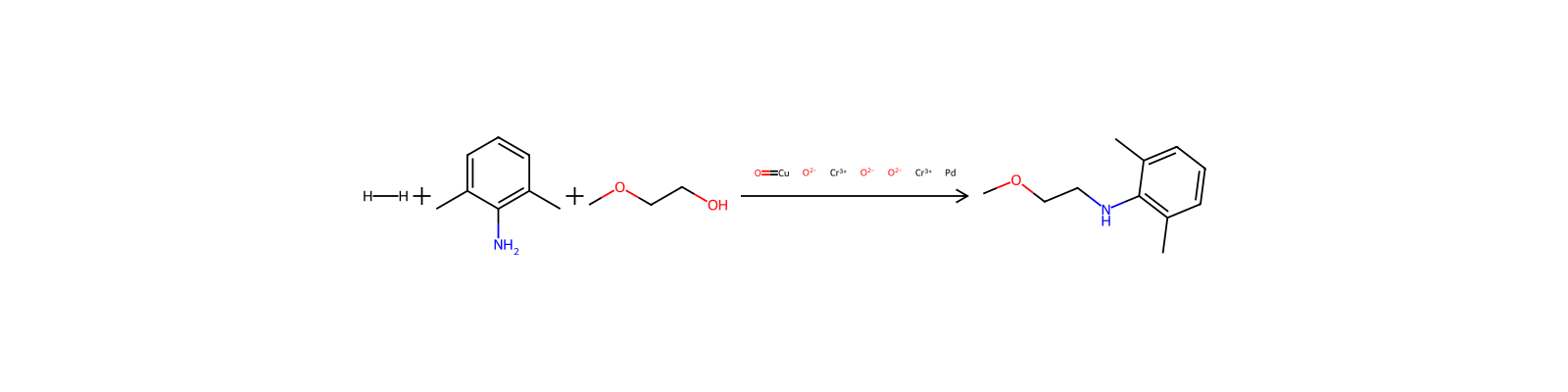
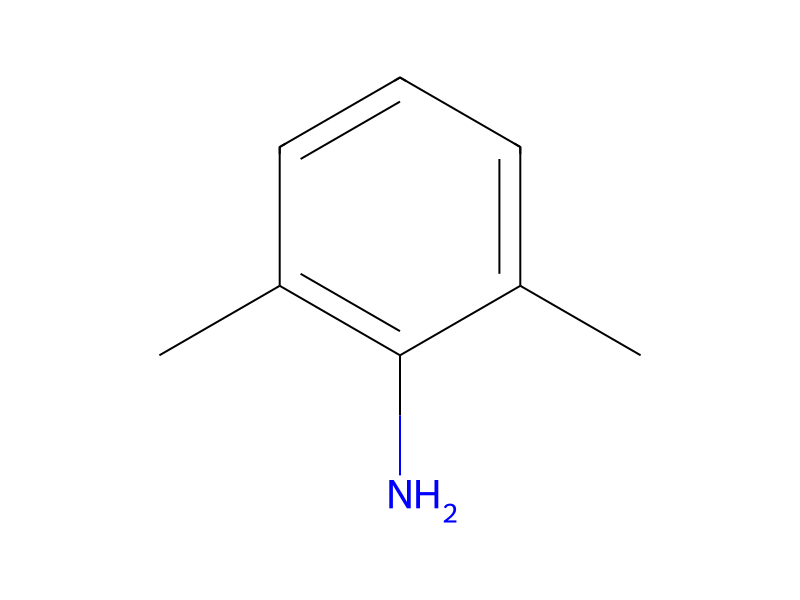
[H][H].[CH3:3][C:4]1[CH:10]=[CH:9][CH:8]=[C:7]([CH3:11])[C:5]=1[NH2:6].[CH3:12][O:13][CH2:14][CH2:15]O>[Cu]=O.[O-2].[Cr+3].[O-2].[O-2].[Cr+3].[Pd]>[CH3:3][C:4]1[CH:10]=[CH:9][CH:8]=[C:7]([CH3:11])[C:5]=1[NH:6][CH2:15][CH2:14][O:13][CH3:12]In an adiabatic reactor, 100 ml of a copper oxide/chromium oxide catalyst (molar ratio CuO:Cr2O3 =2:1) containing 1.5% by weight of palladium are activated in the manner described in Example 2 and heated in the stream of hydrogen to 275° C. 60.6 g (0.5 mol) of 2,6-dimethylaniline, 76 g (1.0 mol) of 2-methoxyethanol and 67.2 N1 (3mols) of hydrogen are then passed, at 275° C. and under a pressure of 4 bars (absolute), through the catalyst bed. The reaction mixture which issues from the reactor is condensed and worked up by distillation.