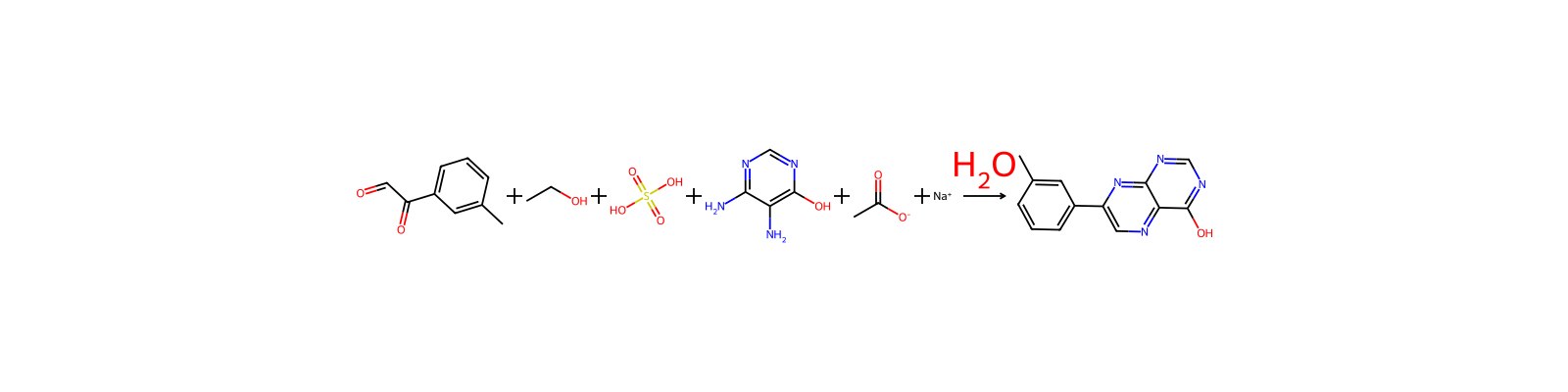
[C:1]1([CH3:11])[CH:6]=[CH:5][CH:4]=[C:3]([C:7]([CH:9]=O)=O)[CH:2]=1.C(O)C.S(O)(O)(=O)=O.[OH:20][C:21]1[N:26]=[CH:25][N:24]=[C:23]([NH2:27])[C:22]=1[NH2:28].C([O-])(=O)C.[Na+]>O>[OH:20][C:21]1[C:22]2[C:23](=[N:27][C:7]([C:3]3[CH:2]=[C:1]([CH3:11])[CH:6]=[CH:5][CH:4]=3)=[CH:9][N:28]=2)[N:24]=[CH:25][N:26]=1A solution of 3.6 g. of 3-tolylglyoxal in 15 ml. of ethanol was added to a stirred suspension of 3.26 g. of 6-hydroxy-4,5-diaminopyrimidine sulfate in 30 ml. of hot water containing 6.45 g. of sodium acetate. Stirring was continued for 17 hours at room temperature and the formed precipitate was then filtered, washed twice each with methanol and ether to yield 2.7 (28%) of 4-hydroxy-7-(3-tolyl)pteridine. Recrystallization from DMSO/water produced the pure product; melting point 248-50 degrees C. The test results (100 mg/kg; oral) are shown in Table VI.