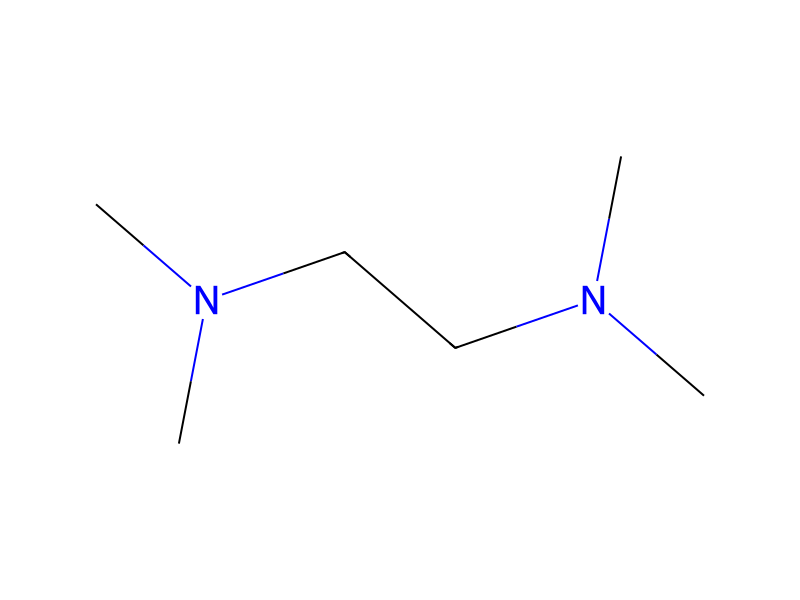
N,N,N',N'-Tetramethylethylenediamine → 1-isopropyl-2-(4-methoxyphenyl)-2,3-dihydro-1H-2,1-benzazaphosphole-1-oxide
Reaktionsgleichung

C([Li])CCC.CN(C)CCN(C)C.[CH3:14][O:15][C:16]1[CH:21]=[CH:20][C:19]([NH:22][CH2:23][C:24]2[CH:29]=[CH:28][CH:27]=[CH:26][CH:25]=2)=[CH:18][CH:17]=1.[CH:30]([P:33](Cl)(Cl)=[O:34])([CH3:32])[CH3:31]>CCCCCC.CCOCC.C1CCCCC1>[CH:30]([P:33]1(=[O:34])[C:25]2[CH:26]=[CH:27][CH:28]=[CH:29][C:24]=2[CH2:23][N:22]1[C:19]1[CH:20]=[CH:21][C:16]([O:15][CH3:14])=[CH:17][CH:18]=1)([CH3:32])[CH3:31]Komponenten
Edukt 4



Produkt 1

Reagenzien, Katalysatoren, Lösungsmittel 3



Reaktionsbedingungen
- Temperatur
- 0 °C
Versuchsvorschrift
Under a static nitrogen atmosphere at 0° C., a solution of n-butyllithium (8.0 g, 0.125 mol) in hexane was added to a solution of tetramethylethylenediamine (14.3 g, 0.123 mol) in 60 ml. of anhydrous cyclohexane with constant stirring. While maintaining the temperature at 0° C., a solution of N-(4-methoxyphenyl)-N-benzylamine (12.8 g, 0.06 mol) in 60 ml. of anhydrous cyclohexane was added to the reaction mixture to produce a suspension containing a dilithio compound. This suspension was stirred for 16 hours at 26° C. and then cooled to -72° C. using a solid carbon dioxide-acetone bath. A solution of isopropylphosphonic dichloride (10.3 g, 0.064 mol) in 60 ml. of anhydrous cyclohexane was rapidly added to the suspension causing the temperature of the reaction to increase to -25° C. The reaction mixture was allowed to cool to -72° C., after which time the solid carbon dioxide-acetone bath was removed and the reaction mixture was stirred for 2 hours. The reaction was quenched with the rapid addition of 12 ml. of acetic acid. The reaction mixture was concentrated under vacuum and the resulting residue was partitioned between methylene chloride and water. The layers were separated and the methylene chloride layer was washed with 5% hydrochloric acid, then with water, dried over magnesium sulfate and concentrated in vacuo to yield a yellow residue. The yellow residue was chromatographically separated on a silica gel column using ethyl acetate as the eluant. Fractions containing the benzazaphosphole were combined and concentrated under vacuum to produce a crude product. The crude product was slurried in ether to yield 1-isopropyl-2-(4-methoxyphenyl)-2,3-dihydro-1H-2,1-benzazaphosphole-1-oxide (3.0 g, 17% yield) as a white solid having a melting point of 135°-137° C. and the following analysis:
Aufarbeitung
- customto produce a suspension
- temperaturecooled to -72° C.
- customthe temperature of the reaction
- temperatureto increase to -25° C
- temperatureto cool to -72° C.
- customafter which time the solid carbon dioxide-acetone bath was removed
- stirringthe reaction mixture was stirred for 2 hours
- customThe reaction was quenched with the rapid addition of 12 ml
- concentrationThe reaction mixture was concentrated under vacuum
- customthe resulting residue was partitioned between methylene chloride and water
- customThe layers were separated
- washthe methylene chloride layer was washed with 5% hydrochloric acid
- dry with materialwith water, dried over magnesium sulfate
- concentrationconcentrated in vacuo
- customto yield a yellow residue
- customThe yellow residue was chromatographically separated on a silica gel column
- additionFractions containing the benzazaphosphole
- concentrationconcentrated under vacuum
- customto produce a crude product
Quellen und Nachweise
- ORD-Eintrag
- ord-f3b01fdfe94d4feeac6ad5ab2ab1c66e
- Quelldatensatz
- uspto-grants-1982_03
- Patentnummer
- US04319913
Notizen zur Reaktion
Wird geladen…