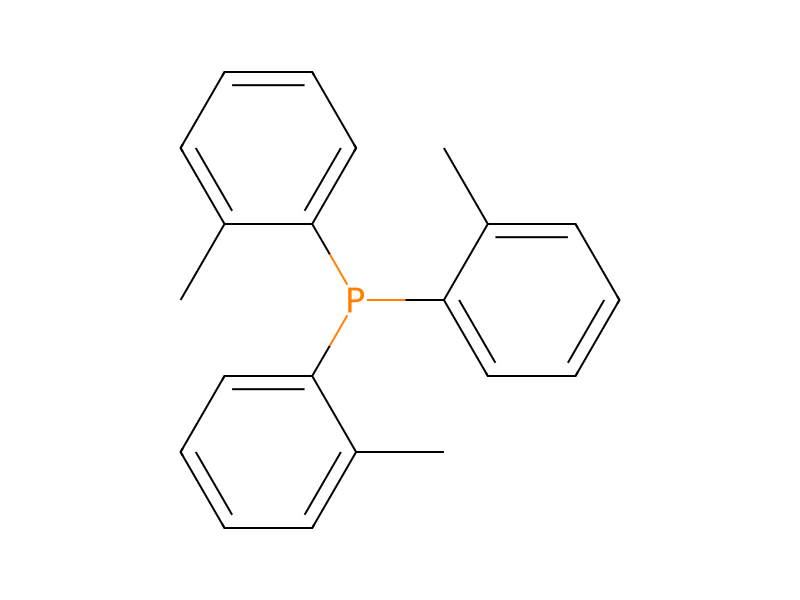
C[O:2][C:3](=[O:12])[C:4]1[CH:9]=[CH:8][C:7](Br)=[CH:6][C:5]=1[F:11].C1(C)C=CC=CC=1P(C1C=CC=CC=1C)C1C=CC=CC=1C.C([O-])(=O)C.[K+].[F:40][C:41]([F:45])([F:44])[CH:42]=[CH2:43]>CCCC[N+](CCCC)(CCCC)CCCC.[Br-].C([O-])(=O)C.[Pd+2].C([O-])(=O)C>[F:11][C:5]1[CH:6]=[C:7](/[CH:43]=[CH:42]/[C:41]([F:45])([F:44])[F:40])[CH:8]=[CH:9][C:4]=1[C:3]([OH:2])=[O:12]A mixture of methyl-2-fluoro-4-bromobenzoate (5.0 g, 0.021 mol), tri-o-tolylphosphine (1.31 g, 0.00429 mol), tetra-N-butylammonium bromide (2.08 g, 0.00644 mol), potassium acetate (4.2 g, 0.043 mol), 3,3,3-trifluoroprop-1-ene (20 g, 0.2 mol), palladium acetate (0.24 g, 0.0011 mol) was sealed in a Parr instrument and stirred at 180° C. for 96 h. After cooling, the reaction mixture was filtered through Celite® and the filtrate was partitioned bewteen EtOAc and 1 N aq. HCl. The organic layer was separated and washed with brine, dried (Na2SO4) and concentrated. The residue was chromatographed with hexane-EtOAc(5% AcOH) (0 to 60%) to give the product as a white solid. LC-MS: t=2.98 min, m/z=233.2 (M−1).