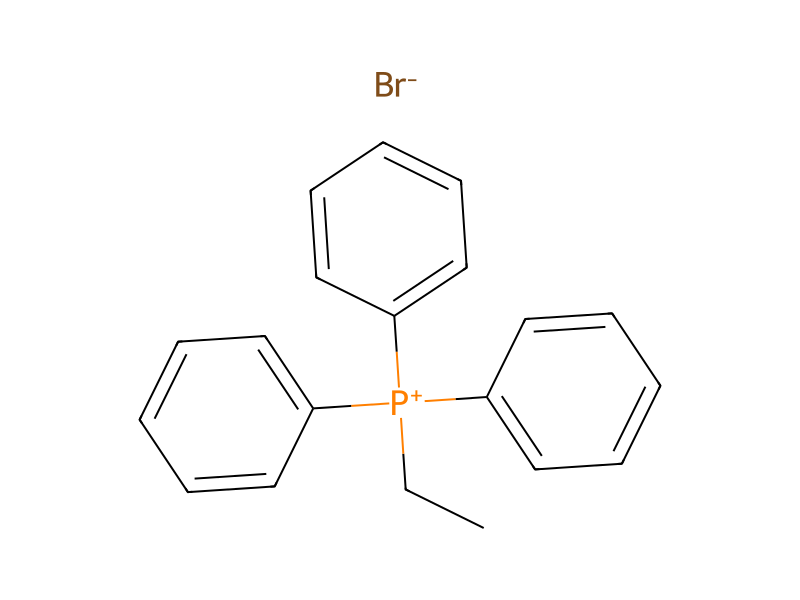
[CH2:1]([Li])[CH2:2]CC.[CH2:6]([O:13][C:14]1[CH:19]=[CH:18][CH:17]=[CH:16][C:15]=1[C:20](=O)[C:21]([O:23][CH3:24])=[O:22])[C:7]1[CH:12]=[CH:11][CH:10]=[CH:9][CH:8]=1>CCCCCC.[Br-].C([P+](C1C=CC=CC=1)(C1C=CC=CC=1)C1C=CC=CC=1)C.O1CCCC1>[CH2:6]([O:13][C:14]1[CH:19]=[CH:18][CH:17]=[CH:16][C:15]=1/[C:20](=[CH:1]\[CH3:2])/[C:21]([O:23][CH3:24])=[O:22])[C:7]1[CH:12]=[CH:11][CH:10]=[CH:9][CH:8]=1At 0° C. and under nitrogen, 32 ml (50 mmol) of a 1.6 molar solution of n-butyllithium in hexane is slowly added to 18.5 g (50 mmol) of ethyltriphenylphosphonium bromide in 100 ml of absolute tetrahydrofuran. After the mixture has been stirred for 30 minutes, 13.5 g (50 mmol) of methyl 2-(benzyloxy)-phenylglyoxylate in 25 ml of absolute tetrahydrofuran is dripped in at 0° C. The mixture is stirred for 16 hours at room temperature. After concentration, the residue is taken up in dichloromethane and washed several times with water. After drying over Na2SO4 the solvent is evaporated off. The crude product obtained is purified by chromatography (a 9:1 mixture of cyclohexane and ethyl acetate). There is obtained 8.0 g (57%) of the methyl crotonate (trans:cis ratio=9:1) as an oil.