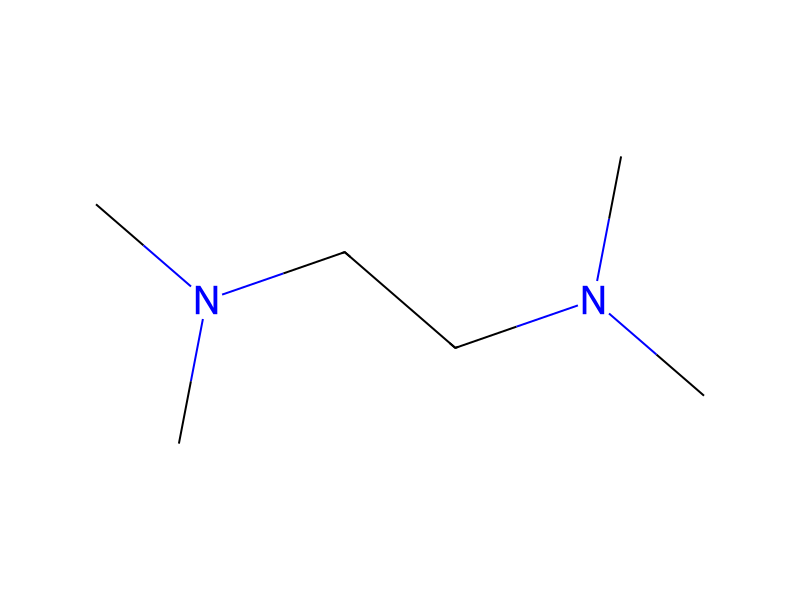
1 g (5 mmol) of 2-(2,5-dimethyl-1H-pyrrol-1-yl)-4,6-dimethylpyridine (prepared from the 6-amino-2,4-lutidine according to J. Chem. Soc., Perkin Trans., 1984, 12, 2801) is dissolved, under an argon atmosphere, in 10 ml of anhydrous ethyl ether and 1.132 ml (7.5 mmol) of N,N,N,N-tetramethylethylenediamine (TMEDA). The reaction mixture is cooled down to −20° C. and 2.4 ml (6 mmol) of a 2.5 M solution of BuLi in hexane is added dropwise. After 5 hours at −20° C., the reaction mixture is cooled down to −45° C. and 1.68 g (6 mmol) of 1-(3-bromopropyl)-2,2,5,5-tetramethyl-1-aza-2,5-disilacyclopentane is added and the temperature is allowed to return to ambient temperature overnight. 50 ml of a saturated solution of ammonium chloride is added and the mixture is agitated for 2 hours at 25° C. The organic phase is decanted and washed successively with 40 ml of water and 40 ml of salt water, dried over magnesium sulphate, filtered and concentrated under vacuum. The residue obtained is purified on a silica column (eluent=dichloromethane with 5% ethanol) in order to produce a yellow oil with a yield of 62%.