StartseiteMCPWorkbenchSkills
StartseiteWorkbenchBenachrichtigungenMein Bereich
llms.txt · MCP-AnleitungDatenschutz · Nutzungsbedingungen · Supportv1.8.3
  1. Startseite
  2. /Reaktion

Sodium Hydroxide → 2-(3-(4-Fluoro-3-(pyridin-3-yl)phenyl)imidazo[1,2-a]pyrimidin-7-yl)propan-2-ol

HRID 2183910
Drucken

Reaktionsgleichung

Reaktionsgleichung von HRID 2183910
Cl[C:2]1[CH:3]=[C:4]([C:9]2[N:13]3[CH:14]=[CH:15][C:16]([C:18]([OH:21])([CH3:20])[CH3:19])=[N:17][C:12]3=[N:11][CH:10]=2)[CH:5]=[CH:6][C:7]=1[F:8].[N:22]1[CH:27]=[CH:26][CH:25]=[C:24](B(O)O)[CH:23]=1.O1BOBOB1.[O-]P([O-])([O-])=O.[K+].[K+].[K+].[OH-].[Na+]>C1C=CC(/C=C/C(/C=C/C2C=CC=CC=2)=O)=CC=1.C1C=CC(/C=C/C(/C=C/C2C=CC=CC=2)=O)=CC=1.[Pd].O1CCOCC1.O>[F:8][C:7]1[CH:6]=[CH:5][C:4]([C:9]2[N:13]3[CH:14]=[CH:15][C:16]([C:18]([OH:21])([CH3:20])[CH3:19])=[N:17][C:12]3=[N:11][CH:10]=2)=[CH:3][C:2]=1[C:24]1[CH:23]=[N:22][CH:27]=[CH:26][CH:25]=1
KomponentenReaktionsbedingungenVersuchsvorschriftAufarbeitungQuellen und NachweiseNotizen zur Reaktion

Komponenten

9

Edukt 5

HCID 14798Sodium HydroxideHCID 62657Potassium Phosphate, TribasicHCID 1361341,3,5,2,4,6-TrioxatriborinaneHCID 27343783-Pyridinylboronic acidHCID 103084642-[3-(3-Chloro-4-fluorophenyl)imidazo[1,2-alpha]pyrimidin-7-yl]propan-2-ol

Produkt 1

HCID 9906309
2-(3-(4-Fluoro-3-(pyridin-3-yl)phenyl)imidazo[1,2-a]pyrimidin-7-yl)propan-2-ol

Reagenzien, Katalysatoren, Lösungsmittel 3

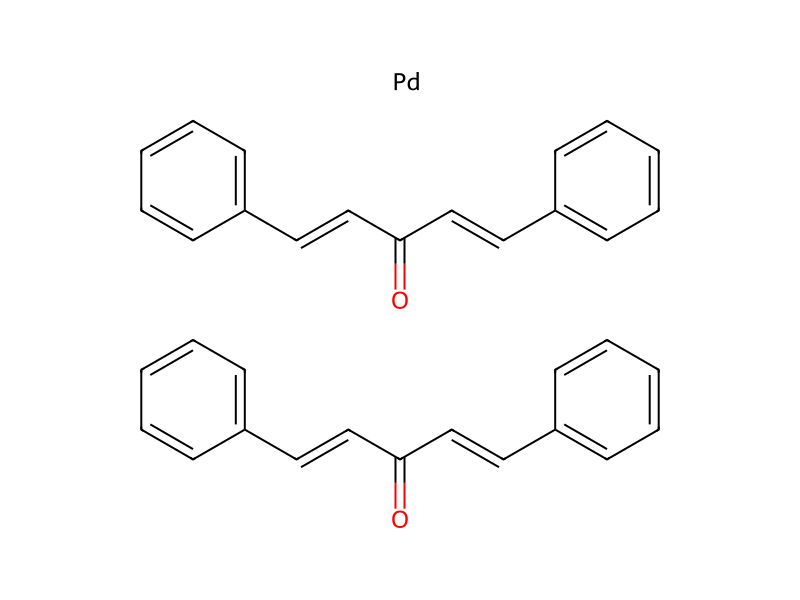
HCID 6505921(1E,4E)-1,5-diphenylpenta-1,4-dien-3-one; palladiumKatalysatorHCID 962WaterLösungsmittelHCID 312751,4-DioxaneLösungsmittel2×

Reaktionsbedingungen

Temperatur
70 °C

Versuchsvorschrift

A 5 l round-bottomed flask equipped with a mechanical stirrer, thermocouple, nitrogen/vacuum inlet adaptor and septum was charged with 2-[3-(3-chloro-4-fluorophenyl)imidazo[1,2-α]pyrimidin-7-yl]propan-2-ol (101.59 g, 333 mmol), 3-pyridineboronic acid in the form of its boroxine (42.98 g, 350 mmol), K3PO4 (111.69 g, 526 mmol), 1,4-dioxane (1.20 l), and water (406 ml). Cycling vacuum and then nitrogen three times degassed the stirred slurry. All solids dissolved on warming to 70° C. A 500 ml round-bottomed flask equipped with a magnetic stir bar, thermocouple, nitrogen/vacuum inlet adaptor and septum was charged with bis(dibenzylideneacetone)palladium(0) (9.57 g, 16.7 mmol) and 1,4-dioxane (130 ml). The resulting solution was degassed as above, then tri-tert-butylphosphine (49.8 ml of a 10 wt % solution in hexanes, 16.7 mmol) was added by syringe. The solution was degassed again and then warmed to 70° C. The warm catalyst solution was cannulated to the 5 l flask and the resulting mixture was stirred at 70° C. for 16 h. At the end of reaction, most of the product had crystallized out to provide a grey slurry. The reaction mixture was partitioned between 2N HCl (1.8 l) and toluene (0.9 l). The clear yellow aqueous phase was transferred to a stirred 4 l Erlenmeyer flask with a nitrogen sweep and borane-trimethylamine complex (1.87 g) was added. After 90 min the resulting black solids were removed by filtration through a 1.0μ filter. The filtrate was transferred to a mechanically stirred 5 l flask equipped with a pH probe. The pH was adjusted to 3.8 by slow addition of 50 wt % NaOH (about 130 ml). The mixture self-nucleated to provide a slurry. Additional 50 wt % NaOH (about 36 ml) was added over 30 min to pH 7.1 to provide a cream-colored slurry. The solids were collected on a frit, washed with water (250 ml) and air dried to give the free base 2-[3-(4-fluoro-3-(pyridin-3-yl)phenyl)imidazo[1,2-α]pyrimidin-7-yl]propan-2-ol as an off-white crystalline solid (117.38 g, 94.5 wt % pure): m.p. 234-236° C.; 1H NMR (DMSO-d6, 400 MHz) δ 9.00 (1H, d, J 7.2), 8.85 (1H, bs), 8.60 (1H, dd, J 4.8, 1.6), 8.06 (1H, m), 7.92 (1H, s), 7.87 (1H, dd, J 7.2, 2.4), 7.74 (1H, m), 7.76-7.68 (2H, m), 7.37 (1H, d, J 7.2), 5.49 (1H, s), 1.47 (6H, s); 13C NMR (DMSO-d6, 100.55 MHz) δ 169.6, 159.3 (d, J 248.2), 149.9 (d, J 3.2), 149.6, 148.5, 137.0 (d, J 3.2), 134.0, 133.5, 130.9, 130.3 (d, J 3.2), 130.0 (d, J 8.0), 126.6 (d, J 14.5), 126.1 (d, J 4.0), 124.1, 122.7, 117.7 (d, J 22.5), 106.3, 73.0, 30.3.


Aufarbeitung

  1. customA 5 l round-bottomed flask equipped with a mechanical stirrer
  2. customCycling vacuum and then nitrogen three times degassed the stirred slurry
  3. dissolutionAll solids dissolved
  4. customA 500 ml round-bottomed flask equipped with a magnetic stir bar
  5. customThe resulting solution was degassed as above, then tri-tert-butylphosphine (49.8 ml of a 10 wt % solution in hexanes
  6. addition16.7 mmol) was added by syringe
  7. customThe solution was degassed again
  8. temperaturewarmed to 70° C
  9. customAt the end of reaction
  10. custommost of the product had crystallized out
  11. customto provide a grey slurry
  12. customThe reaction mixture was partitioned between 2N HCl (1.8 l) and toluene (0.9 l)
  13. additionwas added
  14. customAfter 90 min the resulting black solids were removed by filtration through a 1.0μ
  15. filtrationfilter
  16. customequipped with a pH probe
  17. additionThe pH was adjusted to 3.8 by slow addition of 50 wt % NaOH (about 130 ml)
  18. customThe mixture self-nucleated to provide a slurry
  19. customto provide a cream-colored slurry
  20. customThe solids were collected on a frit
  21. washwashed with water (250 ml) and air
  22. customdried

Quellen und Nachweise

ORD-Eintrag
ord-a4584c3653ae4cd8b13ee37e902d6b81
Quelldatensatz
uspto-grants-2005_05
DOI
10.6084/m9.figshare.5104873.v1
Patentnummer
US06900215B2

Notizen zur Reaktion

Auf dieser SeiteKomponentenReaktionsbedingungenVersuchsvorschriftAufarbeitungQuellen und NachweiseNotizen zur Reaktion