StartseiteMCPSkillsWorkbenchOpenChem
StartseiteWorkbenchBenachrichtigungenMein Bereich
llms.txt · skill.md · MCP-AnleitungDatenschutz · Nutzungsbedingungen · Supportv1.8.5
  1. Startseite
  2. /Reaktion

Tetrahydrofuran → 2,6-Bis(2-methoxyethyloxymethyl)pyridine

HRID 2184779
Drucken

Reaktionsgleichung

C(=O)([O-])[O-].[K+].[K+].[N:7]1[C:12]([CH2:13][OH:14])=[CH:11][CH:10]=[CH:9][C:8]=1[CH2:15][OH:16].[OH-].[K+].[CH3:19][O:20][CH2:21][CH2:22]Br.[O:24]1[CH2:28]C[CH2:26][CH2:25]1>S([O-])(O)(=O)=O.C([N+](CCCC)(CCCC)CCCC)CCC.O>[CH3:19][O:20][CH2:21][CH2:22][O:16][CH2:15][C:8]1[CH:9]=[CH:10][CH:11]=[C:12]([CH2:13][O:14][CH2:26][CH2:25][O:24][CH3:28])[N:7]=1
KomponentenReaktionsbedingungenVersuchsvorschriftAufarbeitungQuellen und NachweiseNotizen zur Reaktion

Komponenten

8

Edukt 5

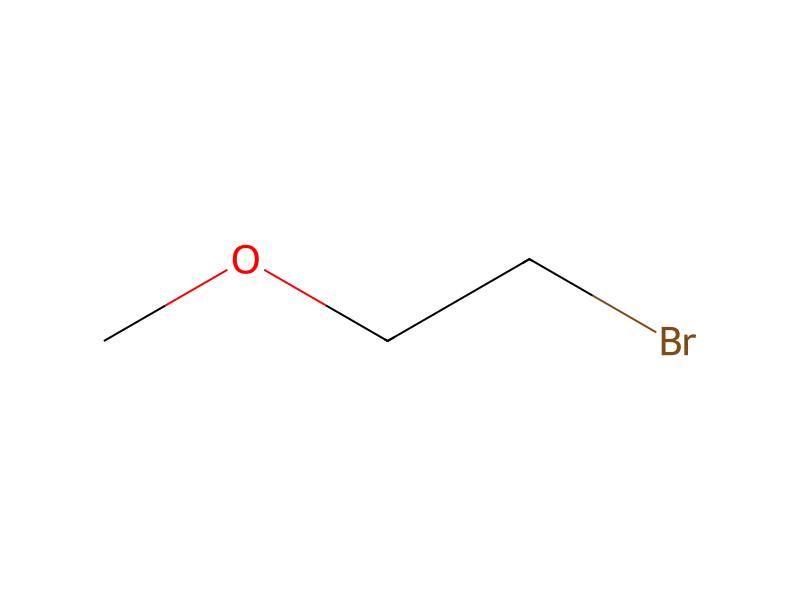
HCID 8028Tetrahydrofuran3×HCID 11430Potassium CarbonateHCID 14797Potassium HydroxideHCID 709572,6-PyridinedimethanolHCID 809722-Bromoethyl methyl ether2×

Produkt 1

HCID 216704862,6-Bis(2-methoxyethyloxymethyl)pyridine

Reagenzien, Katalysatoren, Lösungsmittel 2

HCID 94433Tetrabutylammonium hydrogen sulfateKatalysatorHCID 962WaterLösungsmittel

Reaktionsbedingungen

Temperatur
20 °C

Versuchsvorschrift

6.91 g of potassium carbonate and 8.75 g of tetra-butylammonium hydrogensulphate are successively added to a solution of 7.1 g of 2,6-pyridinedimethanol in 100 cm3 of tetrahydrofuran. The reaction mixture is cooled to 20° C. in an ice bath and 6.60 g of potassium hydroxide are then added, while maintaining the temperature of the reaction mixture at 30° C. After stirring for 15 minutes at this temperature, a solution of 4.73 cm3 of 2-bromoethyl methyl ether in 10 cm3 of tetrahydrofuran is added over approximately 15 minutes. The reaction mixture is stirred for 12 hours at 20° C. and a solution of 4.73 cm3 of 2-bromoethyl methyl ether in 10 cm3 of tetrahydrofuran is then added over 15 minutes. The reaction mixture is stirred for 48 hours at 20° C. The white suspension obtained is filtered. The solid is rinsed with 750 cm3 in total of tetrahydrofuran. The combined filtrates are concentrated under reduced pressure (2.7 kPa) at 40° C. The residual oil obtained (18 g) is purified by chromatography on a column of silica (0.020-0.045 mm), eluting with an ethyl acetate/methanol mixture (9:1 by volume), collecting 50 cm3 fractions). The fractions containing the expected product are combined and concentrated under reduced pressure (2.7 kPa) at 50° C. The oil obtained (1.6 g) is dissolved in 12 cm3 of distilled water and the solution is filtered. After freeze-drying, 1.52 g of 2,6-bis(2-methoxyethyloxymethyl)pyridine are obtained in the form of a fluid yellow oil [1H NMR spectrum (400 MHz, (CD3)2SO-d6, δ in ppm): 3.29 (s, 6H: 2×OCH3); 3.53 and 3.66 (2 mts, 4H each: OCH2CH2O); 4.57 (s, 4H: 2×ArCH2O); 7.35 (d, J=8 Hz, 2H: ═CH at 3 and ═CH at 5); 7.83 (t, J=8 Hz, 1H: ═CH at 4)].


Aufarbeitung

  1. temperaturewhile maintaining the temperature of the reaction mixture at 30° C
  2. stirringThe reaction mixture is stirred for 12 hours at 20° C.
  3. stirringThe reaction mixture is stirred for 48 hours at 20° C
  4. customThe white suspension obtained
  5. filtrationis filtered
  6. washThe solid is rinsed with 750 cm3 in total of tetrahydrofuran
  7. concentrationThe combined filtrates are concentrated under reduced pressure (2.7 kPa) at 40° C
  8. customThe residual oil obtained (18 g)
  9. customis purified by chromatography on a column of silica (0.020-0.045 mm)
  10. washeluting with an ethyl acetate/methanol mixture (9:1 by volume)
  11. customcollecting 50 cm3 fractions)
  12. additionThe fractions containing the expected product
  13. concentrationconcentrated under reduced pressure (2.7 kPa) at 50° C
  14. customThe oil obtained (1.6 g)
  15. filtrationthe solution is filtered
  16. customAfter freeze-drying

Quellen und Nachweise

ORD-Eintrag
ord-2019d9b89d7d494d84fd253466dc7be3
Quelldatensatz
uspto-grants-2002_06
DOI
10.6084/m9.figshare.5104873.v1
Patentnummer
US06399613B1

Notizen zur Reaktion

Auf dieser SeiteKomponentenReaktionsbedingungenVersuchsvorschriftAufarbeitungQuellen und NachweiseNotizen zur Reaktion