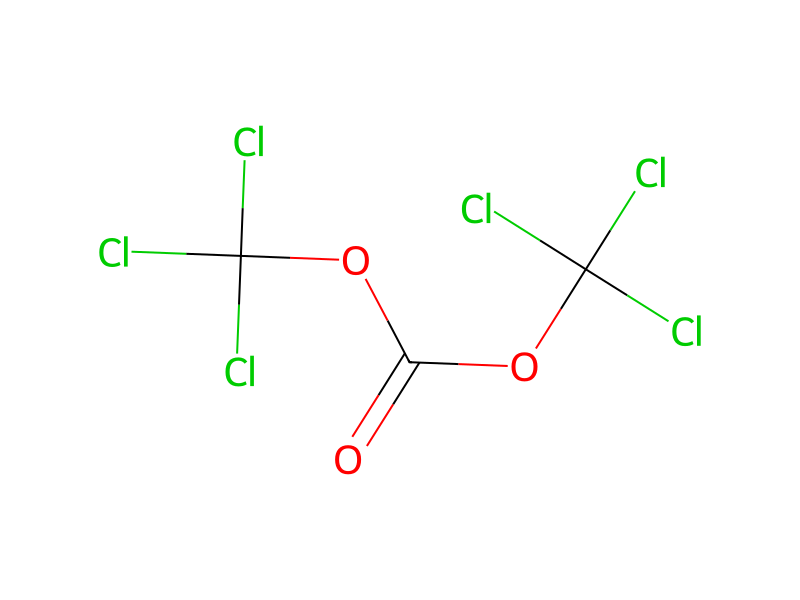
ClC(Cl)(O[C:5](=[O:11])OC(Cl)(Cl)Cl)Cl.Cl.[S:14]1[CH:18]=[CH:17][CH:16]=[C:15]1[C:19]1[N:23]=[C:22]([CH:24]2[CH2:29][CH2:28][NH2+:27][CH2:26][CH2:25]2)[O:21][N:20]=1.C(N(CC)CC)C.[CH:37]1([NH2:40])[CH2:39][CH2:38]1>C1(C)C=CC=CC=1.ClCCl>[CH:37]1([NH:40][C:5]([N:27]2[CH2:28][CH2:29][CH:24]([C:22]3[O:21][N:20]=[C:19]([C:15]4[S:14][CH:18]=[CH:17][CH:16]=4)[N:23]=3)[CH2:25][CH2:26]2)=[O:11])[CH2:39][CH2:38]154.60 mg (1 eq.) of triphosgene were added to a suspension of 150 mg (3 eq.) of 4-(3-thiophen-2-yl[1,2,4]oxadiazol-5-yl)piperidinium hydrochloride and 102.63 μl (4 eq.) of triethylamine in 2 ml of toluene. The reaction medium was stirred overnight at room temperature and then filtered. The filtrate thus collected was concentrated under reduced pressure. The residue obtained was taken up in 2 ml of dichloromethane, followed by addition of 77 μL (1 eq.) of triethylamine and 77.44 μl (2 eq.) of cyclopropylamine. The reaction medium was stirred for 20 hours at room temperature and then concentrated to dryness. The residue was chromatograph on a thick layer of silica (eluent: CH2Cl2/MeOH (95/5; v/v)) to give 80 mg (45%) of the expected product.