StartseiteMCPWorkbenchSkills
StartseiteWorkbenchBenachrichtigungenMein Bereich
llms.txt · MCP-AnleitungDatenschutz · Nutzungsbedingungen · Supportv1.8.3
  1. Startseite
  2. /Reaktion

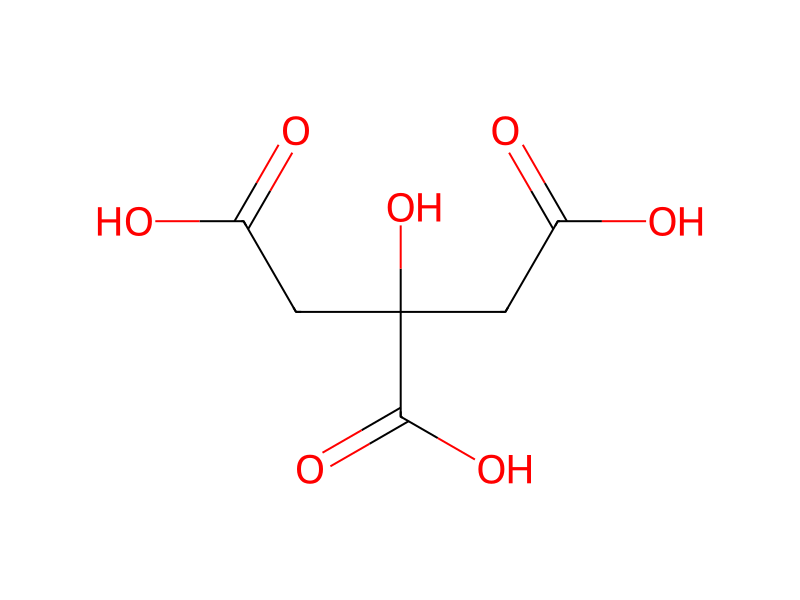
Citric Acid → (S)-8-Fluoro-6-methyl-5,6-dihydrophenanthridine

HRID 2224631
Drucken

Reaktionsgleichung

Reaktionsgleichung von HRID 2224631
[F:1][C:2]1[CH:15]=[CH:14][C:13]2[C:4](=[C:5]([CH3:16])[N:6]=[C:7]3[C:12]=2[CH:11]=[CH:10][CH:9]=[CH:8]3)[CH:3]=1.[BH4-].[Na+].C(OC(N1CCC[C@H]1C(O)=O)=O)C(C)C.C(O)(=O)CC(CC(O)=O)(C(O)=O)O>ClCCl.C(OCC)(=O)C>[F:1][C:2]1[CH:3]=[C:4]2[C:13](=[CH:14][CH:15]=1)[C:12]1[CH:11]=[CH:10][CH:9]=[CH:8][C:7]=1[NH:6][C@H:5]2[CH3:16]
KomponentenReaktionsbedingungenVersuchsvorschriftAufarbeitungQuellen und NachweiseNotizen zur Reaktion

Komponenten

7

Edukt 4

HCID 311Citric AcidHCID 774279(S)-N-isobutoxycarbonylprolineHCID 4311764Sodium borohydrideHCID 224823738-Fluoro-6-methylphenanthridine

Produkt 1

HCID 58597405(S)-8-Fluoro-6-methyl-5,6-dihydrophenanthridineAusbeute 151,9 %

Reagenzien, Katalysatoren, Lösungsmittel 2

HCID 6344
Dichloromethane
Lösungsmittel
3×
HCID 8857Ethyl AcetateLösungsmittel

Reaktionsbedingungen

Temperatur
0 °C

Versuchsvorschrift

To a stirred suspension of sodium borohydride (9.28 g, 0.245 mole) in anhydrous tetrahydrofuran (372 mL) kept under nitrogen at 0° C. was added dropwise a solution of (S)-N-isobutyloxycarbonylproline (160 g, 0.743 mole; prepared according to S. Atarashi et al., J. Heterocyclic Chem. 28, 329 (1991)) in anhydrous tetrahydrofuran (372 mL). After stimring the reaction mixture overnight at room temperature the solvent was removed to provide a solid foam (168 g). This material was dissolved in dichloromethane (272 mL), the solution was cooled to 0° C. and treated dropwise under nitrogen with a solution of 8-fluoro-6methylphenanthridine (17.3 g, 0.082 mole) in dichloromethane (100 mL). The progress of the reaction was monitored by NMR. After 4 days at room temperature conversion reached 50% . Additional solution of S-hydridotris[1-(2-methylpropyl) 1,2-pyrrolidinedicarboxylato-O2]borate(1-) (freshly prepared from 4.7 g of sodium borohydride and 81.6 g of (S)-N-isobutyloxycarbonylproline as described above) in dichloromethane (150 mL) was added dropwise at 0° C. After 7 days at room temperature the conversion reached 100% . The reaction mixture was cooled to 0° C. and 10% aqueous citric acid was added dropwise (200 mL). The mixture was allowed to reach room temperature (over 80 minutes) and then it was diluted with ethyl acetate (1.2 L). The organic layer was washed with 10% aqueous citric acid, followed by saturated aqueous potassium dihydrogenphosphate (2×200 mL). The organic layer was divided in 3 portions and each portion was washed sequentially with 1:1 (v/v) saturated aqueous sodium bicarbonate/ water (2×400 mL), water (1×400 mL), 1:1 (v/v) saturated aqueous sodium bicarbonate/ water (2×400 mL), water (1×400 mL), and brine (1×400 mL) to remove the (S)-N-isobutyloxycarbonyl proline. The combined organic extracts were dried over anhydrous sodium sulfate and evaporated to dryness to give 26.57 g of a brown oil which was immediately used in the next step without further purification.

Aufarbeitung

  1. additionwas added dropwise at 0° C
  2. waitAfter 7 days at room temperature the conversion reached
  3. temperatureThe reaction mixture was cooled to 0° C.
  4. customto reach room temperature
  5. custom(over 80 minutes)
  6. washThe organic layer was washed with 10% aqueous citric acid
  7. washeach portion was washed sequentially with 1:1 (v/v) saturated aqueous sodium bicarbonate/ water (2×400 mL), water (1×400 mL), 1:1 (v/v) saturated aqueous sodium bicarbonate/ water (2×400 mL), water (1×400 mL), and brine (1×400 mL)
  8. customto remove the (S)-N-isobutyloxycarbonyl proline
  9. dry with materialThe combined organic extracts were dried over anhydrous sodium sulfate
  10. customevaporated to dryness

Quellen und Nachweise

ORD-Eintrag
ord-f95bac5c4f634c0187c4d0e2abc36b53
Quelldatensatz
uspto-grants-2008_05
DOI
10.6084/m9.figshare.5104873.v1
Patentnummer
US07378427B2

Notizen zur Reaktion

Auf dieser SeiteKomponentenReaktionsbedingungenVersuchsvorschriftAufarbeitungQuellen und NachweiseNotizen zur Reaktion


