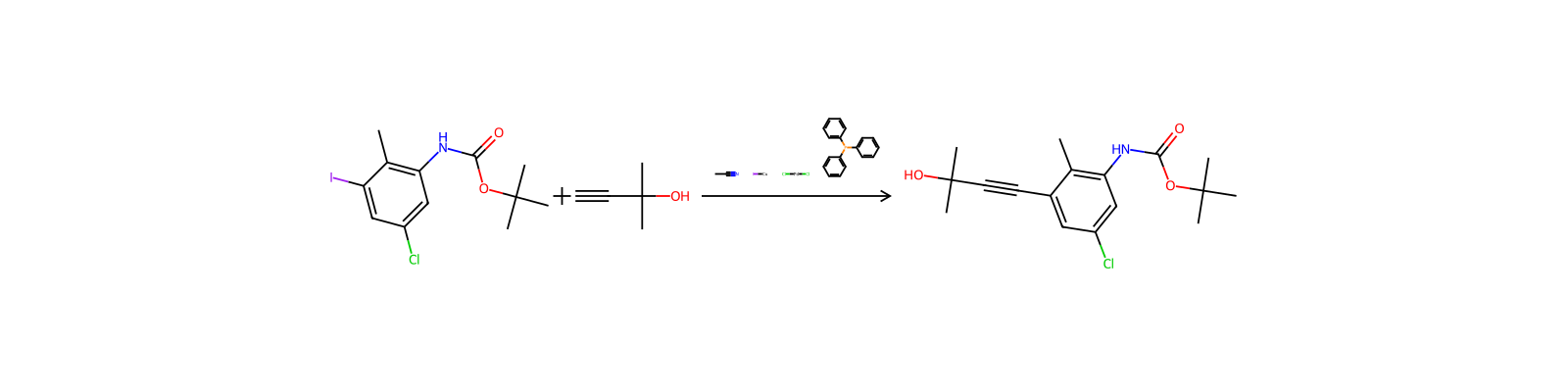
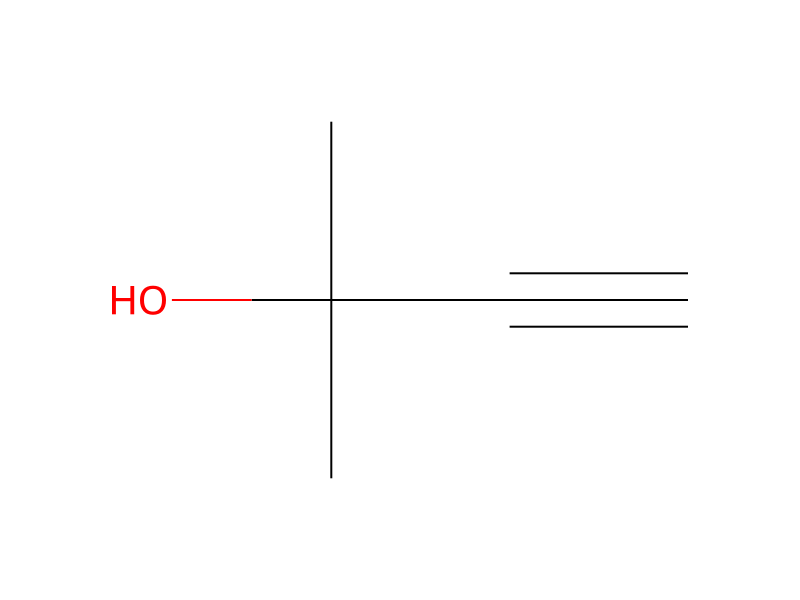
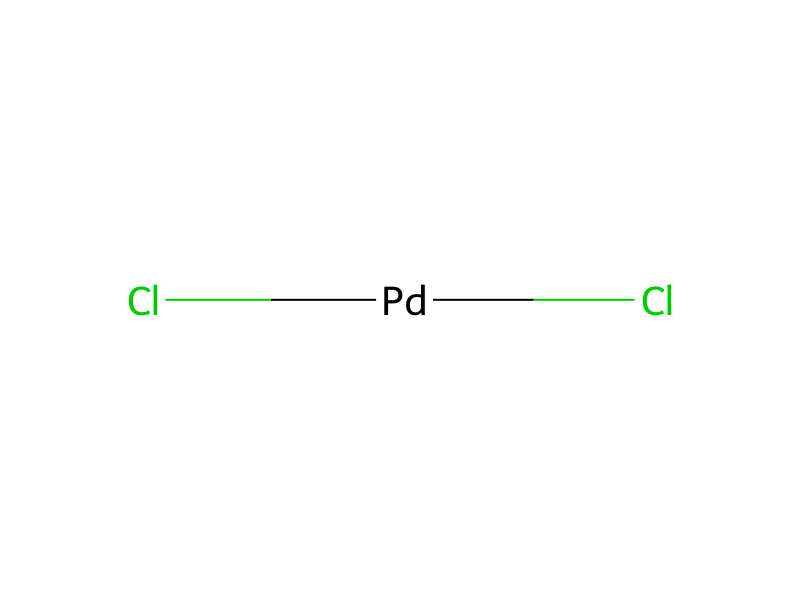
A solution of 1,1-dimethylethyl (5-chloro-3-iodo-2-methylphenyl)carbamate (610 mg, 1.7 mmol), 2-methyl-3-butyn-2-ol (245 μl, 2.5 mmol), and triphenylphosphine (30 mg, 0.12 mmol) in acetonitrile (2 mL) was deoxygenated for 20 minutes. The solution was cooled to 0° C., followed by the addition of copper(I)iodide (12 mg, 0.07 mmol), and palladium(II)dichloride (13 mg, 0.06 mmol). The mixture was stirred at reflux for 1.5 hours, then cooled to room temperature and concentrated in-vacuo. The resultant residue was partitioned between water and ethyl acetate. The aqueous portion was extracted twice with ethyl acetate. The combined organic portions were washed with brine, dried over sodium sulfate, filtered and concentrated in-vacuo to afford a brown residue which was purified by column chromatography (silica gel, 20% ethyl acetate in hexanes). The product was collected to afford 504 mg, 1.56 mmol (94%) of 1,1-dimethylethyl [5-chloro-3-(3-hydroxy-3-methylbut-1-yn-1-yl)-2-methylphenyl]carbamate as a yellow solid. 1H NMR (400 MHz, CDCl3): 7.36 (d, 1H), 7.06 (d, 1H), 2.26 (s, 3H), 1.63 (s, 6H), 1.41 (s, 9H); MS (EI) for C17H22ClNO3: 324 (MH+).