StartseiteMCPWorkbenchSkills
StartseiteWorkbenchBenachrichtigungenMein Bereich
llms.txt · MCP-AnleitungDatenschutz · Nutzungsbedingungen · Supportv1.8.3
  1. Startseite
  2. /Reaktion

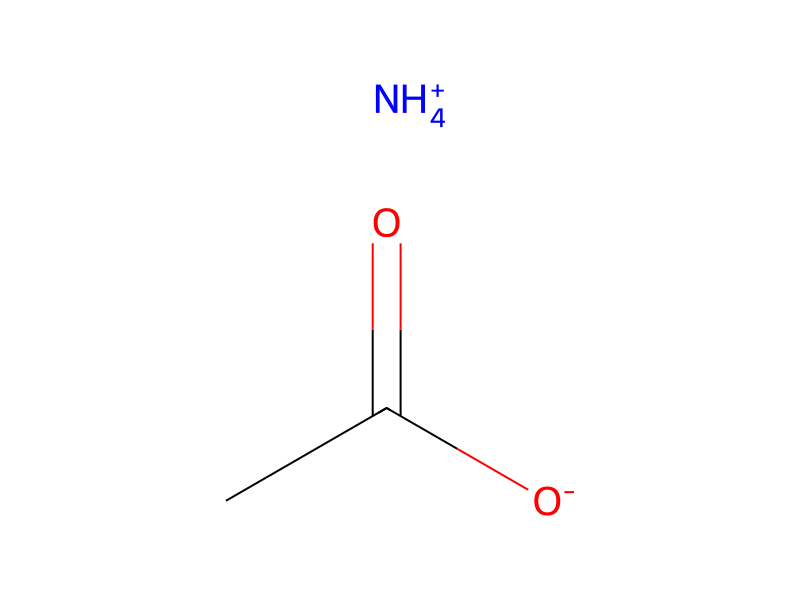
Ammonium Acetate → (S)-1-[(S)-2-((S)-2-tert-butoxycarbonylamino-3-methyl-butyrylamino)-propionyl]-hexahydro-pyridazine-3-carboxylic acid

HRID 2285419
Drucken

Reaktionsgleichung

Reaktionsgleichung von HRID 2285419
ClC(Cl)(Cl)C[O:4][C:5]([C@@H:7]1[CH2:12][CH2:11][CH2:10][N:9]([C:13](=[O:31])[C@@H:14]([NH:16][C:17](=[O:30])[C@@H:18]([NH:22][C:23]([O:25][C:26]([CH3:29])([CH3:28])[CH3:27])=[O:24])[CH:19]([CH3:21])[CH3:20])[CH3:15])[NH:8]1)=[O:6].C([O-])(=O)C.[NH4+]>O1CCCC1.O.[Zn]>[C:26]([O:25][C:23]([NH:22][C@@H:18]([CH:19]([CH3:21])[CH3:20])[C:17]([NH:16][C@@H:14]([CH3:15])[C:13]([N:9]1[CH2:10][CH2:11][CH2:12][C@@H:7]([C:5]([OH:6])=[O:4])[NH:8]1)=[O:31])=[O:30])=[O:24])([CH3:29])([CH3:28])[CH3:27]
KomponentenVersuchsvorschriftAufarbeitungQuellen und NachweiseNotizen zur Reaktion

Komponenten

6

Edukt 2

HCID 517165Ammonium AcetateHCID 86706028(S)-1-[(S)-2-((S)-2-tert-butoxycarbonylamino-3-methylbutyrylamino)-propionyl]-hexahydropyridazine-3-carboxylic acid 2,2,2-trichloroethyl ester

Produkt 1

HCID 86709709(S)-1-[(S)-2-((S)-2-tert-butoxycarbonylamino-3-methyl-butyrylamino)-propionyl]-hexahydro-pyridazine-3-carboxylic acid

Reagenzien, Katalysatoren, Lösungsmittel 3

HCID 23994Zinc
Katalysator
HCID 962WaterLösungsmittel
HCID 8028TetrahydrofuranLösungsmittel

Versuchsvorschrift

Zinc dust (273 mg, 4.18 mmol) was added to a solution of (S)-1-[(S)-2-((S)-2-tert-butoxycarbonylamino-3-methyl-butyrylamino)-propionyl]-hexahydro-pyridazine-3-carboxylic acid 2,2,2-trichloro-ethyl ester (98 mg, 0.19 mmol) in tetrahydrofuran (15 mL). This suspension was treated with a solution of ammonium acetate (220 mg, 2.85 mmol) in water (5 mL). After stirring at room temperature for 3 h, zinc residues were filtered off and the volatiles were removed in vacuo. The residue was partitioned between ethyl acetate and saturated potassium hydrogen sulfate solution and the volatiles were removed in vacuo. The residual acetic acid was removed by azeotroping with toluene (3×10 mL) to give crude (S)-1-[(S)-2-((S)-2-tert-butoxycarbonylamino-3-methyl-butyrylamino)-propionyl]-hexahydro-pyridazine-3-carboxylic acid which was combined with crude (E)-2,2-dimethyl-4-[2-((R)-1-methylamino-ethyl)-quinolin-7-yl]-but-3-enoic acid methyl ester in anhydrous acetonitrile (10 mL) and N,N-diisopropylethylamine (0.165 mL, 0.95 mmol). This solution was then treated with 2-(1H-7-azabenzotriazol-1-yl)-1,1,3,3-tetramethyl uronium hexafluorophosphate methanaminium (94 mg, 0.25 mmol). After stirring at room temperature for 16 h, the volatiles were removed in vacuo. The residue was dissolved in ethyl acetate, and subsequently washed with saturated ammonium chloride solution and sodium bicarbonate solution. The organics were combined and the volatiles were removed in vacuo. The residue was purified by silica gel chromatography using a 10 g Biotage cartridge eluted with a continuous gradient of iso-hexanes/acetone 1:0 to 1:1 to afford the title compound (90 mg, 68%) as a white solid. 1H NMR (300 MHz, CD3OD) δ 0.82-1.00 (m, 6H), 1.28-1.40 (m, 3H), 1.50-1.55 (m, 15H), 1.69 (d, J=6.9 Hz, 3H), 1.73-2.12 (m, 5H), 2.76-2.92 (m, 5H), 3.74 (s, 3H), 3.84-4.00 (m, 1H), 4.25-4.45 (m, 1H), 5.22-5.40 (m, 1H), 6.25 (q, J=6.9 Hz, 1H), 6.57-6.74 (m, 2H), 7.35-7.48 (m, 1H), 7.69-7.77 (m, 1H), 7.80-7.88 (m, 1H), 7.90-8.00 (m, 2H), 8.18-8.30 (m, 1H). LCMS (m/z) 695.4 [M+H], Tr=3.00 min.

Aufarbeitung

  1. filtrationzinc residues were filtered off
  2. customthe volatiles were removed in vacuo
  3. customThe residue was partitioned between ethyl acetate and saturated potassium hydrogen sulfate solution
  4. customthe volatiles were removed in vacuo
  5. customThe residual acetic acid was removed
  6. customby azeotroping with toluene (3×10 mL)

Quellen und Nachweise

ORD-Eintrag
ord-8d4ebe14adc44c3d9ab38f19aeec6609
Quelldatensatz
uspto-grants-2015_09
DOI
10.6084/m9.figshare.5104873.v1
Patentnummer
US09145441B2

Notizen zur Reaktion

Auf dieser SeiteKomponentenVersuchsvorschriftAufarbeitungQuellen und NachweiseNotizen zur Reaktion


