Reaktionsgleichung

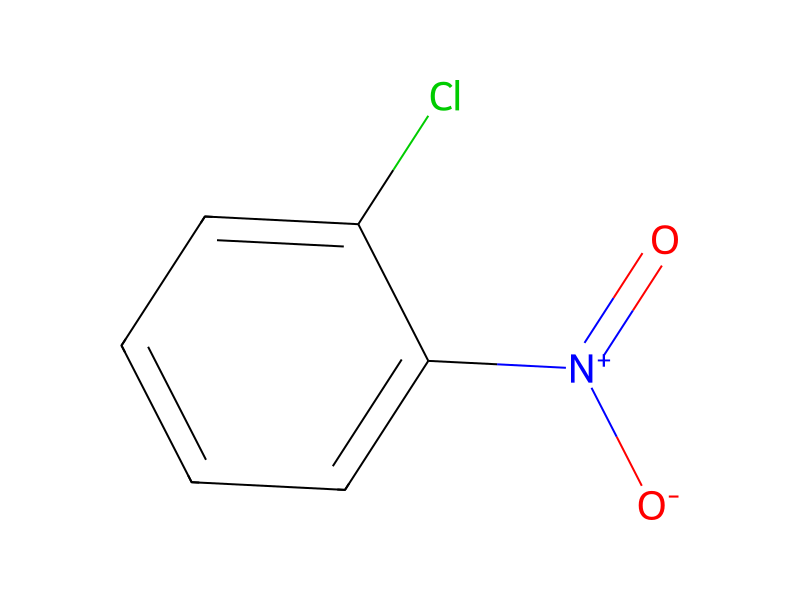
[Cl:1][C:2]1[CH:7]=[CH:6][CH:5]=[CH:4][C:3]=1[N+:8]([O-])=O.O.[OH-].[Na+].[H][H]>[Pd].C(O)CCC>[Cl:1][N:8]([C:3]1[CH:4]=[CH:5][CH:6]=[CH:7][C:2]=1[Cl:1])[NH:8][C:3]1[CH:4]=[CH:5][CH:6]=[CH:7][CH:2]=1Komponenten






Versuchsvorschrift
630 g o-chloronitrobenzene, 615 g water and 185 g sodium hydroxide (corresponding to a 23.1 wt. % aqueous solution), 0.9 g naphthalenediol-1,4, 535 g n-butanol and 1.0 g palladium on alumina (5% Pd) (the quantitative ratio of palladium metal to o-chloronitrobenzene used being 0.00008:1) are hydrogenated at a hydrogen pressure of 6 bars and at 55° to 65° C. for 4 hours and worked up as described in Example 1. 396 g pure 2,2'-dichlorohydrazobenzene of a purity of better than 98% is obtained in a yield of 78% of theory. In addition, 37 g o-chloroaniline is obtained which after the n-butanol has been drawn off is distillable under vacuum and thus may be recovered pure. When the distillation residue is mixed with 65 g n-butanol of 60° C., a second fraction of 61 g 2,2'-dichlorohydrazobenzene of a purity of from 97 to 98% crystallizes out on cooling. The total hydrazobenzene yield thus is 89.8%. In addition, 7.3 wt. % o-chloroaniline is obtained.
Quellen und Nachweise
- ORD-Eintrag
- ord-bb279d08371e412898b5d605e4e05456
- Quelldatensatz
- uspto-grants-1982_04
- Patentnummer
- US04326078
Verknüpfte Notizen
Wird geladen…