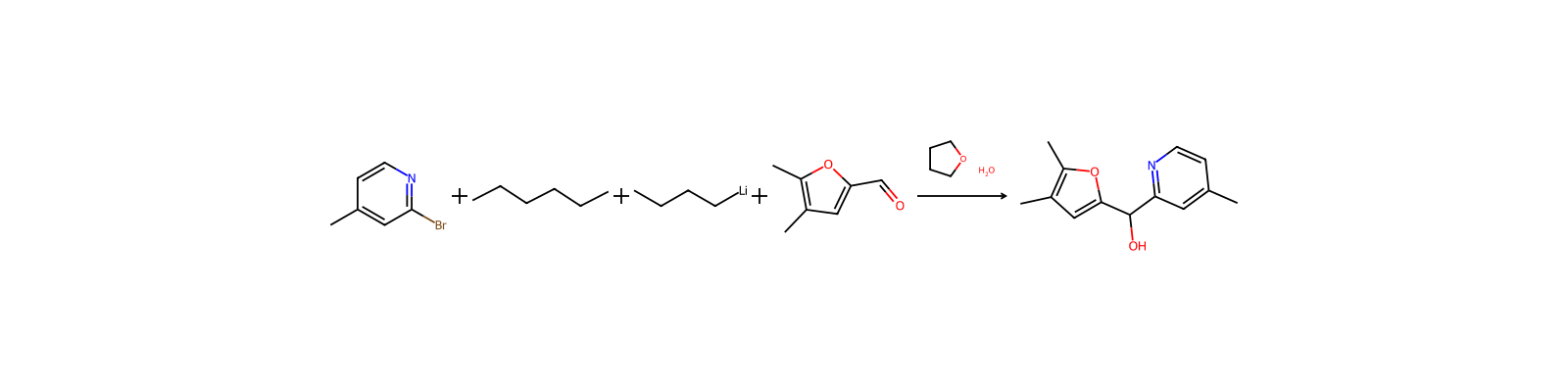
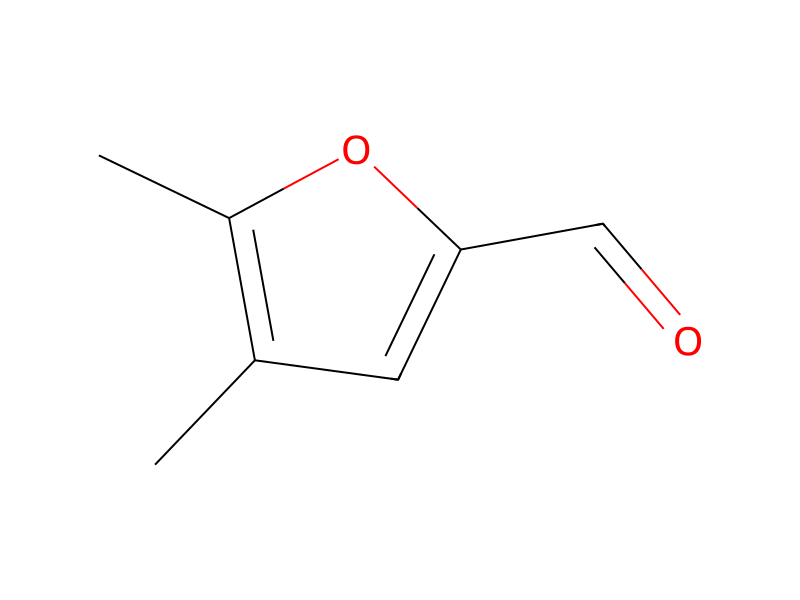
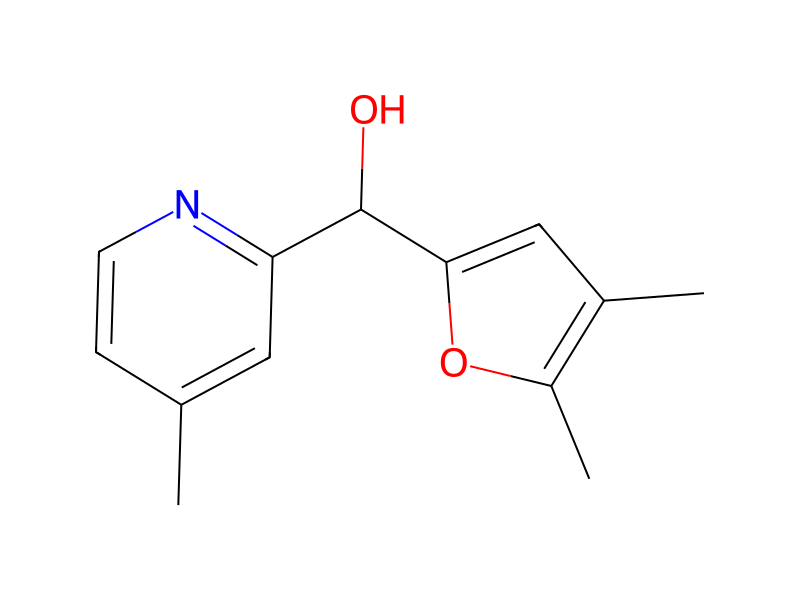
2-Bromo-4-picoline (1.5 g) was dissolved in tetrahydrofuran (40 ml) under an argon atmosphere to prepare a solution. A 1.6 M hexane solution (5.6 ml) of n-butyllithium was added dropwise to the solution at −78° C., and the mixture was then stirred at −78° C. for 30 min. A solution of 4,5-dimethylfurfural (1 g) in tetrahydrofuran (20 ml) was added dropwise thereto, and the temperature of the mixture was raised to room temperature with stirring. Water was added to the reaction solution to stop the reaction. The solvent was removed by distillation under the reduced pressure. Water was added to the residue, the mixture was extracted with ethyl acetate, and the ethyl acetate layer was then washed with water and was dried over anhydrous sodium sulfate. The solvent was removed by distillation under the reduced pressure, and the residue was purified by column chromatography using hexane-ethyl acetate to give (4,5-dimethylfuran-2-yl)-(4-methyl-pyridin-2-yl)-methanol (904 mg, yield 47%).