StartseiteMCPWorkbenchSkills
StartseiteWorkbenchBenachrichtigungenMein Bereich
llms.txt · MCP-AnleitungDatenschutz · Nutzungsbedingungen · Supportv1.8.3
  1. Startseite
  2. /Reaktion

tert-Butyl acrylate → 1,1-dimethylethyl(2E)-3-{4-[cycloheptylidene(4-hydroxyphenyl)methyl]-2-fluorophenyl}-2-propenoate

HRID 229259
Drucken

Reaktionsgleichung

Reaktionsgleichung von HRID 229259
Br[C:2]1[CH:7]=[CH:6][C:5]([C:8](=[C:16]2[CH2:22][CH2:21][CH2:20][CH2:19][CH2:18][CH2:17]2)[C:9]2[CH:14]=[CH:13][C:12]([OH:15])=[CH:11][CH:10]=2)=[CH:4][C:3]=1[F:23].[C:24]([O:28][C:29](=[O:32])[CH:30]=[CH2:31])([CH3:27])([CH3:26])[CH3:25].CC1C=CC=CC=1P(C1C=CC=CC=1C)C1C=CC=CC=1C>C([O-])(=O)C.[Pd+2].C([O-])(=O)C.Cl[Pd](Cl)([P](C1C=CC=CC=1)(C1C=CC=CC=1)C1C=CC=CC=1)[P](C1C=CC=CC=1)(C1C=CC=CC=1)C1C=CC=CC=1.CN(C=O)C.C(N(CC)CC)C.CC#N>[C:16]1(=[C:8]([C:9]2[CH:10]=[CH:11][C:12]([OH:15])=[CH:13][CH:14]=2)[C:5]2[CH:6]=[CH:7][C:2](/[CH:31]=[CH:30]/[C:29]([O:28][C:24]([CH3:27])([CH3:26])[CH3:25])=[O:32])=[C:3]([F:23])[CH:4]=2)[CH2:22][CH2:21][CH2:20][CH2:19][CH2:18][CH2:17]1
KomponentenReaktionsbedingungenVersuchsvorschriftAufarbeitungQuellen und NachweiseNotizen zur Reaktion

Komponenten

9

Edukt 3

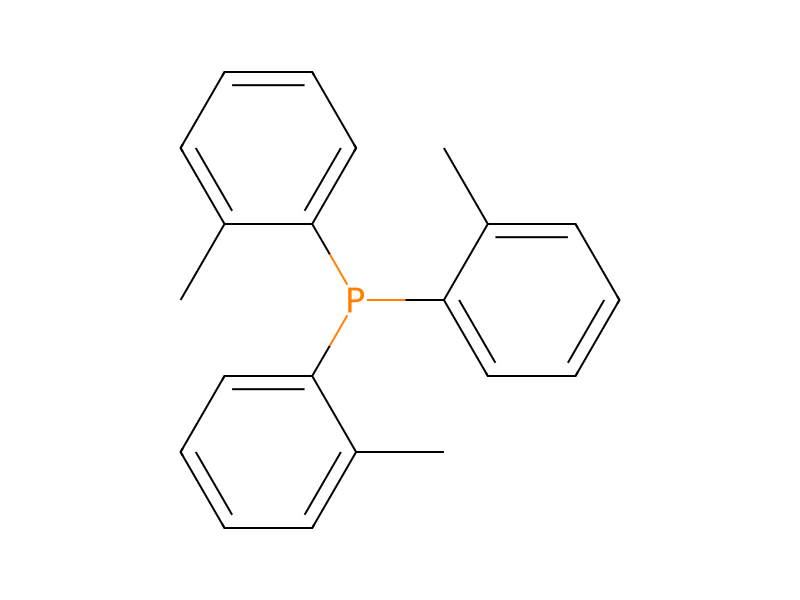
HCID 15458tert-Butyl acrylate2×HCID 80271Tri-o-tolylphosphineHCID 686544904-[(4-Bromo-3-fluorophenyl)(cycloheptylidene)methyl]phenol

Produkt 1

HCID 689767521,1-dimethylethyl(2E)-3-{4-[cycloheptylidene(4-hydroxyphenyl)methyl]-2-fluorophenyl}-2-propenoate

Reagenzien, Katalysatoren, Lösungsmittel 5

HCID 167845
palladium(II) acetate
Katalysator
HCID 178418476HCID 178418476, VerbindungKatalysator
HCID 6228DimethylformamideLösungsmittel
HCID 6342AcetonitrileLösungsmittel
HCID 8471TriethylamineLösungsmittel2×

Reaktionsbedingungen

Temperatur
75 °C

Versuchsvorschrift

To a round-bottomed flask were added 4-[(4-bromo-3-fluorophenyl)(cycloheptylidene)methyl]phenol (187) (0.21 g, 0.56 mmoL), tert-butylacrylate (0.25 mL, 0.22 g, 1.7 mmoL), palladium(II) acetate (0.023 g, 0.10 mmoL), triethylamine (0.22 mL, 0.16 g, 1.6 mmoL), P(o-tolyl)3 (0.071 g, 0.23 mmol) and anhydrous CH3CN (10 mL). The stirred reaction mixture was heated at 75° C. under a nitrogen atmosphere for 15 h. The oil bath was removed and the reaction mixture was allowed to cool at RT. Thin layer chromatography (hexanes:EtOAc (9:1)) indicated that only starting material was present. The reaction mixture was concentrated in vacuo to give an orange oil. To the oil were added tert-butylacrylate (0.82 mL, 0.72 g, 5.6 mmoL), triethylamine (0.40 mL, 0.29 g, 2.87 mmoL), dichlorobis(triphenylphosphine)palladium(II) (0.091 g, 0.13 mmoL), and anhydrous DMF (5 mL). The stirred reaction mixture was heated overnight at 110° C. under a nitrogen atmosphere. The oil bath was removed and the dark brown reaction mixture was allowed to cool at RT. The reaction mixture was partitioned between EtOAc and H2O. The layers were separated and the organic phase was dried over MgSO4, filtered, and the filtrate was concentrated in vacuo to give the crude acrylate ester. The acrylate ester intermediate was partially purified by flash chromatography on silica gel with a hexanes:EtOAc gradient (100:0 to 50:50) to give 0.1719 of impure 1,1-dimethylethyl (2E)-3-{4-[cycloheptylidene(4-hydroxyphenyl)methyl]-2-fluorophenyl}-2-propenoate. To a stirred solution of the impure tert-butylacrylate ester (0.17 g) in CH2Cl2 (4 mL) was added trifluoroacetic acid (2 mL) at RT. The reaction mixture was stirred at RT under a nitrogen atmosphere for 2.75 h. The reaction mixture was concentrated in vacuo to give the crude acrylic acid. The crude product was purified by reverse phase preparative HPLC using a C-18 column and a CH3CN:H2O gradient (75:25 to 100:0) with 0.05% TFA as a modifier to give 0.080 g (39% over two steps) of compound 188 as a pale yellow solid. 1H NMR (400 MHz, DMSO-d6): δ 1.50 (m, 8H), 2.21 (m, 4H), 6.51 (d, J=16.1 Hz, 1H), 6.67 (d, J=8.4 Hz, 2H), 6.92 (d, J=8.2 Hz, 2H), 6.97 (m, 2H), 7.58 (d, J=16.1 Hz, 1H), 7.72 (t, J=8.2 Hz, 1H), 9.32 (s, 1H), 12.50 (br s, 1H). HRMS (ESI) Calcd for C23H22O3F: 365.1553 (M−H)−. Found: 365.1570.

Aufarbeitung

  1. customThe stirred reaction mixture
  2. customThe oil bath was removed
  3. temperatureto cool at RT
  4. concentrationThe reaction mixture was concentrated in vacuo
  5. customto give an orange oil
  6. customThe stirred reaction mixture
  7. temperaturewas heated overnight at 110° C. under a nitrogen atmosphere
  8. customThe oil bath was removed
  9. temperatureto cool at RT
  10. customThe reaction mixture was partitioned between EtOAc and H2O
  11. customThe layers were separated
  12. dry with materialthe organic phase was dried over MgSO4
  13. filtrationfiltered
  14. concentrationthe filtrate was concentrated in vacuo
  15. customto give the crude acrylate ester
  16. customThe acrylate ester intermediate was partially purified by flash chromatography on silica gel with a hexanes

Quellen und Nachweise

ORD-Eintrag
ord-9b4cc35de0bc4058907fa2cd8566505e
Quelldatensatz
uspto-grants-2009_07
DOI
10.6084/m9.figshare.5104873.v1
Patentnummer
US07560589B2

Notizen zur Reaktion

Auf dieser SeiteKomponentenReaktionsbedingungenVersuchsvorschriftAufarbeitungQuellen und NachweiseNotizen zur Reaktion