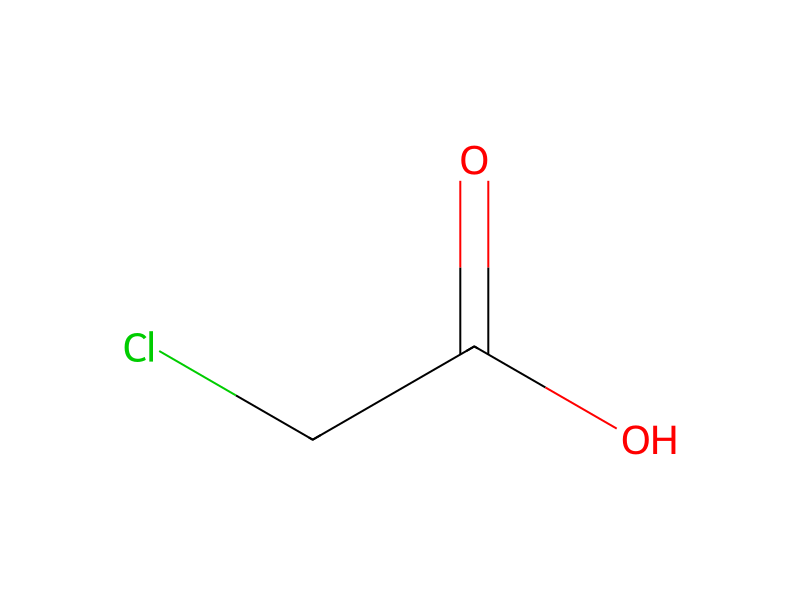
2-(5-norbornen-2-yl)-2-propanol (15.20 g, 0.10 mole) (JSR Corp., Japan) and toluene (100 ml) were added to a three-necked 500 ml round bottomed flask equipped with a magnetic stirrer, an addition funnel, and a condenser with a nitrogen inlet. The addition funnel was charged with n-butyl lithium (1.6M in hexane, 62.50 ml, 0.10 mole). The n-butyl lithium was added drop wise while stirring at room temperature. An exothermic reaction occurred. Afterwards, chloroacetic acid (4.75 g, 0.05 mole) in toluene (100 ml) was added drop wise. The contents were heated to reflux for about 20 hours. After cooling to room temperature, water (200 ml) was added cautiously and stirred. The water phase was collected, washed with ether (100 ml) and neutralized with 2 molar hydrochloric acid solution. The cloudy solution was extracted twice with ether (100 ml) and the combined ether solutions was washed with brine (100 ml) and dried over anhydrous magnesium sulfate. The solvent was removed and the residue was recrystallized from a small amount of hexane to give 3.3 g of white crystalline material (Melting Point: 48.5-49.50° C.).