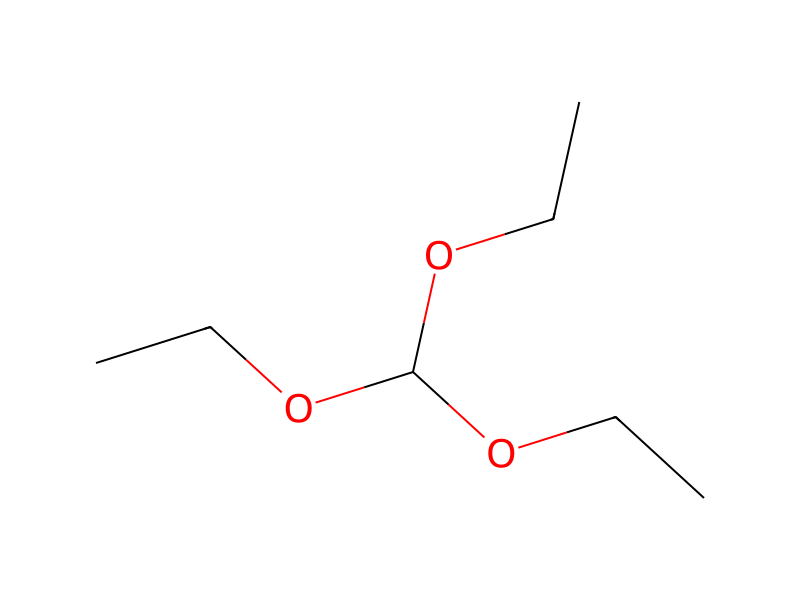
[N+:1]([C:4]1[C:9]([F:10])=[C:8]([F:11])[C:7]([F:12])=[C:6](F)[C:5]=1[C:14](=[O:21])[CH2:15][C:16]([O:18][CH2:19][CH3:20])=[O:17])([O-:3])=[O:2].[CH2:22](OC(OCC)OCC)C.C(OC(=O)C)(=O)C.[CH:39]1([NH2:42])[CH2:41][CH2:40]1.CC(C)([O-])C.[K+]>C(O)(C)(C)C>[CH:39]1([N:42]2[C:6]3[C:5](=[C:4]([N+:1]([O-:3])=[O:2])[C:9]([F:10])=[C:8]([F:11])[C:7]=3[F:12])[C:14](=[O:21])[C:15]([C:16]([O:18][CH2:19][CH3:20])=[O:17])=[CH:22]2)[CH2:41][CH2:40]1A solution of 6.8 g (22 mmoles) of 2-nitro-3,4,5,6-tetrafluoro-β-oxobenzenepropanoic acid, ethyl ester, 4.9 g (33 mmoles) of triethylorthoformate and 50 ml of acetic anhydride was heated at reflux for two hours. The solvent was removed in vacuo and then in high vacuo at 80° C. for 1.5 hours. The residue was dissolved in 25 ml of t-butanol and treated with 1.43 g (25 mmoles) of cyclopropylamine. The mixture was heated at 45° C. for four hours, cooled to room temperature and treated dropwise with a solution of 2.47 g (25 mmoles) of potassium t-butoxide in 25 ml of t-butanol. The reaction was heated at 60° C. for six hours and the solvent was removed in vacuo. The residue was dissolved in chloroform, washed with water, dried (MgSO4), and evaporated in vacuo. The residue was chromatographed over silica gel eluting with chloroform/ethyl acetate (80/20) to give 1.9 g of the title compound as an oil which was used without further purification.