StartseiteMCPWorkbenchSkills
StartseiteWorkbenchBenachrichtigungenMein Bereich
llms.txt · MCP-AnleitungDatenschutz · Nutzungsbedingungen · Supportv1.8.0
  1. Startseite
  2. /Reaktion

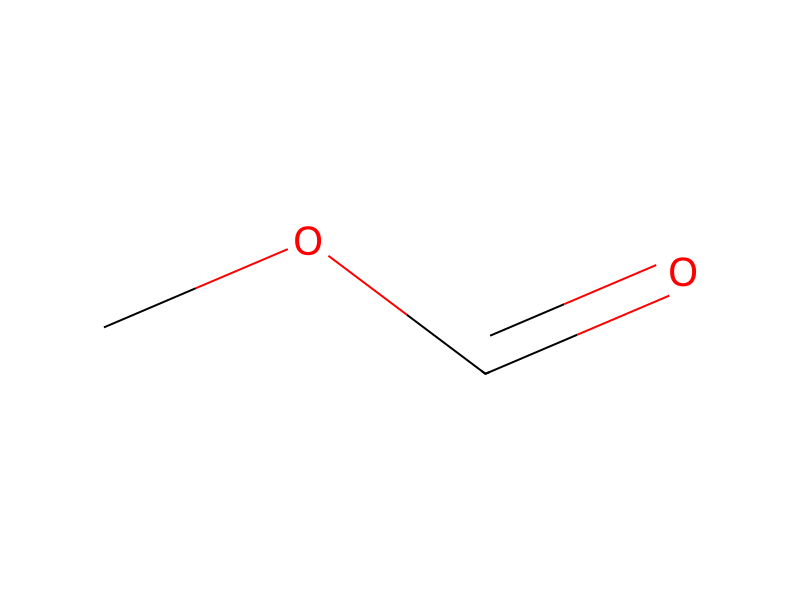
Methyl formate → HCID 86640154, Verbindung

HRID 2386195
Notizen
Druckvorschau

Reaktionsgleichung

Reaktionsgleichung von HRID 2386195
[CH3:1][O:2][C:3]1[CH:4]=[C:5]([CH2:9][CH2:10][CH2:11][CH2:12][CH2:13][CH2:14][C:15](OC)=[O:16])[CH:6]=[CH:7][CH:8]=1.[H-].C([Al+]CC(C)C)C(C)C.C(OC)=O.[Cl-].[NH4+].[Al]>ClCCl>[CH3:1][O:2][C:3]1[CH:4]=[C:5]([CH2:9][CH2:10][CH2:11][CH2:12][CH2:13][CH2:14][CH:15]=[O:16])[CH:6]=[CH:7][CH:8]=1
KomponentenReaktionsbedingungenVersuchsvorschriftAufarbeitungQuellen und NachweiseNotizen zur Reaktion

Komponenten

7

Edukt 5

HCID 7865Methyl formateHCID 25517Ammonium ChlorideHCID 5359268AluminumHCID 21225700DiisobutylaluminumhydrideHCID 68528114HCID 68528114, Verbindung

Produkt 1

HCID 86640154HCID 86640154, Verbindung

Reagenzien, Katalysatoren, Lösungsmittel 1

HCID 6344DichloromethaneLösungsmittel

Reaktionsbedingungen

Temperatur
-78 °C

Versuchsvorschrift

Methyl 7-(3-methoxyphenyl)heptanoate (0.259 g, 1.04 mmol) was dissolved in dry dichloromethane (10 mL) under an atmosphere of argon and cooled to −78° C. A 1 M solution of diisobutylaluminum hydride (in hexanes) (1.19 mL, 1.19 mmol) was added and the reaction was allowed to proceed over 45 minutes. The reaction was quenched with methyl formate (0.0710 g, 1.04 mmol). The quenched reaction solution was allowed to warm to 0° C. and saturated ammonium chloride was added (2.8 mL) at which point aluminum salts precipitated from the solution. These salts were broken up with the addition of saturated sodium potassium tartrate (excess) and stirring for 18 hours at room temperature. The aqueous and organic layers were separated and the aqueous layer was washed twice with dichloromethane. The combined organic layers were washed with saturated sodium bicarbonate then brine. The organic layer was dried over sodium sulfate and the solvent was removed under reduced pressure. The aldehyde product was isolated as a clear oil (80%, 0.181 g) following flash column chromatography with silica (0-8% ethyl acetate:hexanes gradient mobile phase): 1H NMR (600 MHz, CDCl3) δ 9.75 (s, 1H), 7.19 (t, 1H), 6.73 (d, J=7.2 Hz, 1H), 6.72 (m, 2H), 3.80 (s, 3H), 2.58 (t, 2H), 2.42 (t, 2H), 1.63 (m, 4H), 1.36 (m, 4H); 13C NMR (150 MHz, CDCl3) δ 202.78, 159.56, 144.25, 129.17, 120.80, 114.17, 110.84, 55.09, 43.84, 35.88, 31.10, 28.99, 28.96, 21.97.

Aufarbeitung

  1. customThe quenched reaction solution
  2. temperatureto warm to 0° C.
  3. customprecipitated from the solution
  4. additionThese salts were broken up with the addition of saturated sodium potassium tartrate (excess)
  5. customThe aqueous and organic layers were separated
  6. washthe aqueous layer was washed twice with dichloromethane
  7. washThe combined organic layers were washed with saturated sodium bicarbonate
  8. dry with materialThe organic layer was dried over sodium sulfate
  9. customthe solvent was removed under reduced pressure

Quellen und Nachweise

ORD-Eintrag
ord-c3293f3f2da540f4ba58ae961b000dcb
Quelldatensatz
uspto-grants-2012_09
DOI
10.6084/m9.figshare.5104873.v1
Patentnummer
US08268817B2

Notizen zur Reaktion

Wird geladen…

Auf dieser SeiteKomponentenReaktionsbedingungenVersuchsvorschriftAufarbeitungQuellen und NachweiseNotizen zur Reaktion


