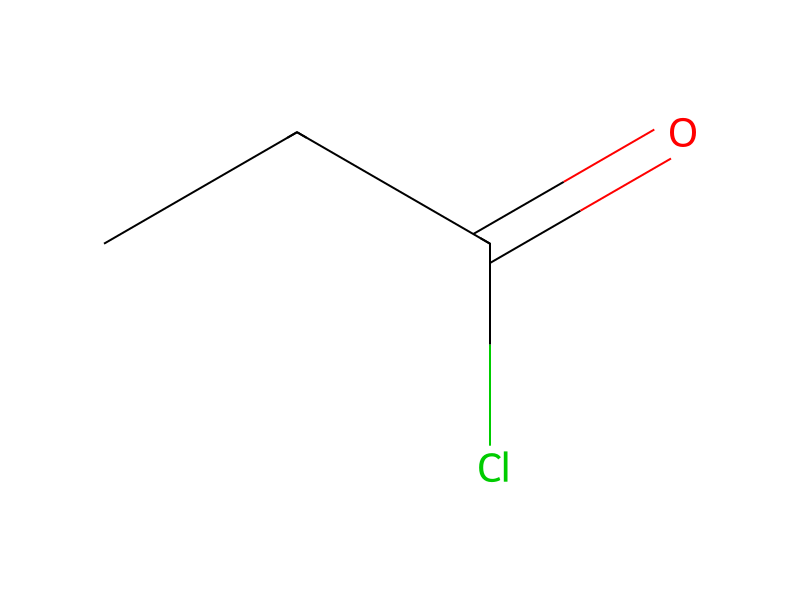
Cl.[Br:2][C:3]1[CH:8]=[CH:7][C:6]([N:9]2[C:13]([CH2:14][C@@H:15]3[CH2:19][CH2:18][NH:17][CH2:16]3)=[N:12][NH:11][C:10]2=[O:20])=[C:5]([F:21])[CH:4]=1.C(N(CC)C(C)C)(C)C.[C:31](Cl)(=[O:34])[CH2:32][CH3:33]>ClCCl>[Br:2][C:3]1[CH:8]=[CH:7][C:6]([N:9]2[C:13]([CH2:14][C@@H:15]3[CH2:19][CH2:18][N:17]([C:31](=[O:34])[CH2:32][CH3:33])[CH2:16]3)=[N:12][NH:11][C:10]2=[O:20])=[C:5]([F:21])[CH:4]=1Into a 4 mL screwcap vial was placed 4-(4-bromo-2-fluorophenyl)-5-[(3S)-3-pyrrolidinylmethyl]-2,4-dihydro-3H-1,2,4-triazol-3-one hydrochloride (0.318 mmol). Added to the vial in succession was dichloromethane (3 mL), N,N-diisopropylethylamine (0.916 mmol), and propanoyl chloride (0.319 mmol). The vial was capped and stirred at room temperature overnight. The solution was concentrated in vacuo and the residue was purified by reverse phase HPLC (10-40% acetonitrile w/0.1% TFA/water w/0.1% TFA). The combined product fractions were concentrated in vacuo for 1 h to remove the acetonitrile. The aqueous solution was neutralized with the addition of saturated aqueous sodium bicarbonate, and extracted twice with dichloromethane. The combined organic layers were dried over sodium sulfate, filtered, and concentrated in vacuo to afford the title compound (100 mg, 79% yield). MS(ES)+ m/e 397.0, 399.1 [M+H]+.
Wird geladen…