StartseiteMCPWorkbenchSkills
StartseiteWorkbenchBenachrichtigungenMein Bereich
llms.txt · MCP-AnleitungDatenschutz · Nutzungsbedingungen · Supportv1.8.0
  1. Startseite
  2. /Reaktion

Hydrochloric Acid → 4-(3-Phenylquinoxalin-2-yl)phenylboronic acid

HRID 2408218
Notizen
Druckvorschau

Reaktionsgleichung

Reaktionsgleichung von HRID 2408218
Br[C:2]1[CH:7]=[CH:6][C:5]([C:8]2[C:17]([C:18]3[CH:23]=[CH:22][CH:21]=[CH:20][CH:19]=3)=[N:16][C:15]3[C:10](=[CH:11][CH:12]=[CH:13][CH:14]=3)[N:9]=2)=[CH:4][CH:3]=1.C([Li])CCC.[B:29](OC)([O:32]C)[O:30]C.Cl>O1CCCC1>[C:18]1([C:17]2[C:8]([C:5]3[CH:6]=[CH:7][C:2]([B:29]([OH:32])[OH:30])=[CH:3][CH:4]=3)=[N:9][C:10]3[C:15]([N:16]=2)=[CH:14][CH:13]=[CH:12][CH:11]=3)[CH:23]=[CH:22][CH:21]=[CH:20][CH:19]=1
KomponentenReaktionsbedingungenVersuchsvorschriftAufarbeitungQuellen und NachweiseNotizen zur Reaktion

Komponenten

6

Edukt 4

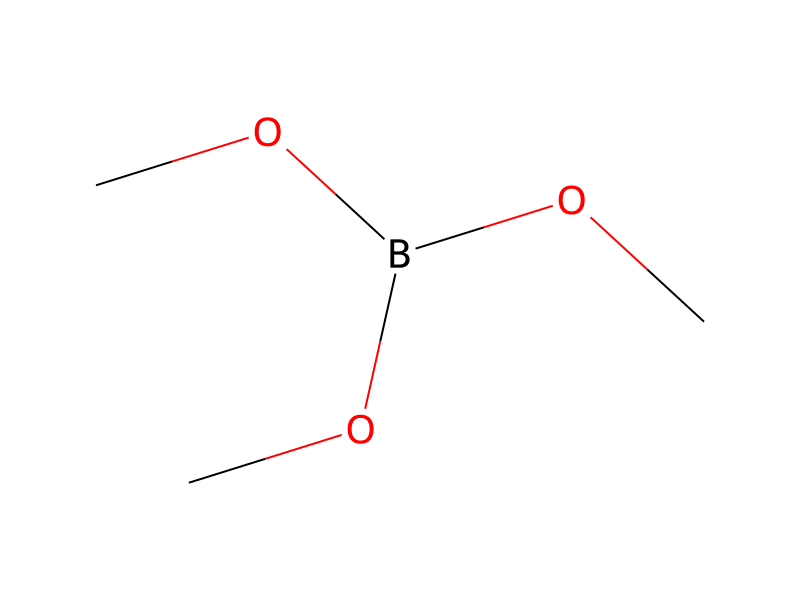
HCID 313Hydrochloric AcidHCID 8470Trimethyl borateHCID 18497902-(4-Bromophenyl)-3-phenylquinoxalineHCID 178418339Butyllithium

Produkt 1

HCID 577298334-(3-Phenylquinoxalin-2-yl)phenylboronic acid

Reagenzien, Katalysatoren, Lösungsmittel 1

HCID 8028
Tetrahydrofuran
Lösungsmittel

Reaktionsbedingungen

Temperatur
-78 °C

Versuchsvorschrift

In a 300-mL three-neck flask was placed 5.0 g (13 mmol) of 2-(4-bromophenyl)-3-phenylquinoxaline, and the atmosphere in the flask was replaced with nitrogen. There was added 40 mL of tetrahydrofuran, and the mixture was cooled to −78° C. under a nitrogen stream. After the cooling, 10 mL (16 mmol) of 1.6 M n-butyllithium was dripped thereinto, and the mixture was stirred at the same temperature for 1 hour. After a predetermined time, 3.1 mL (27 mmol) of trimethyl borate was added thereto, and the temperature of the reaction solution was raised to room temperature, and then, the solution was stirred for 10 hours. After a predetermined time, the reaction solution was cooled to 0° C., to which 100 mL of 0.1 M hydrochloric acid was added, and the solution was stirred for 1 hour. After a predetermined time, an organic substance was extracted with ethyl acetate from the aqueous phase. The extracted solution combined with the organic phase was washed with brine, and then dried with magnesium sulfate. The mixture was subjected to suction filtration through Celite (produced by Wako Pure Chemical Industries, Ltd., Catalog No. 531-16855). The obtained filtrate was concentrated to give a solid. The solid was recrystallized with ethyl acetate/hexane; thus, 3.0 g of a pale-yellow powder which was a product was obtained in a yield of 66%.


Aufarbeitung

  1. customIn a 300-mL three-neck flask was placed
  2. temperaturethe temperature of the reaction solution was raised to room temperature
  3. stirringthe solution was stirred for 10 hours
  4. additionwas added
  5. stirringthe solution was stirred for 1 hour
  6. extractionAfter a predetermined time, an organic substance was extracted with ethyl acetate from the aqueous phase
  7. washwas washed with brine
  8. dry with materialdried with magnesium sulfate
  9. filtrationThe mixture was subjected to suction filtration through Celite (produced by Wako Pure Chemical Industries, Ltd., Catalog No. 531-16855)
  10. concentrationThe obtained filtrate was concentrated
  11. customto give a solid
  12. customThe solid was recrystallized with ethyl acetate/hexane
  13. customwas obtained in a yield of 66%

Quellen und Nachweise

ORD-Eintrag
ord-8f34db1150e749b9a1e84e65c55431fb
Quelldatensatz
uspto-grants-2014_08
DOI
10.6084/m9.figshare.5104873.v1
Patentnummer
US08815412B2

Notizen zur Reaktion

Wird geladen…

Auf dieser SeiteKomponentenReaktionsbedingungenVersuchsvorschriftAufarbeitungQuellen und NachweiseNotizen zur Reaktion