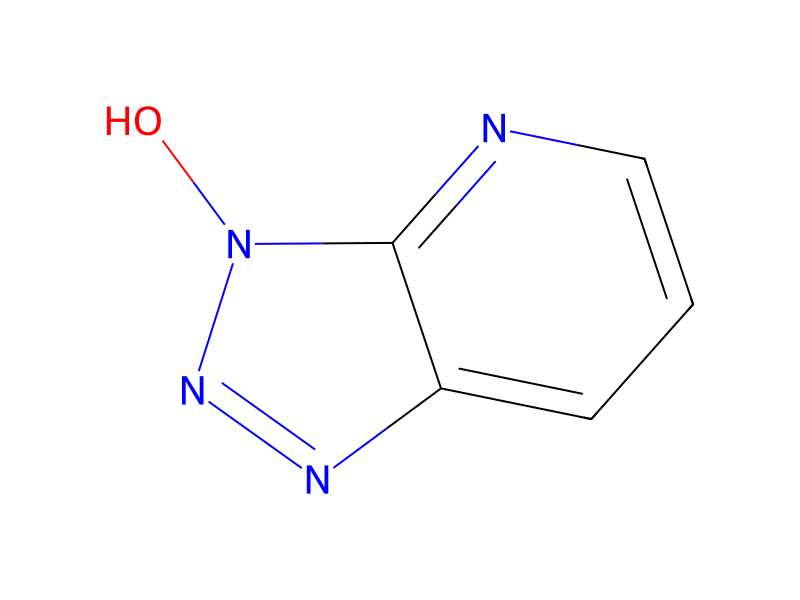
A mixture of 3-amino-6-fluoro-2-phenylaminobenzonitrile (960 mg, 4.22 mmol), (S)-2-tertbutoxycarbonylaminopropionic acid (879 mg, 4.6 mmol), HOAt (633 mg, 4.6 mmol), 4-methylmorpholine (1.02 mL, 9.29 mmol) and N-(3-dimethylaminopropyl)-N′-ethylcarbodiimide hydrochloride (892 mg, 4.6 mmol) in DCM (5 mL) was stirred at RT for 1 h. The reaction mixture was diluted with water and extracted with DCM (×3). The combined organic fractions were washed with brine, then dried (MgSO4) and concentrated in vacuo. A solution of the resulting residue in AcOH (5 mL) was heated at 70° C. for 18 h and then concentrated under reduced pressure. The resulting residue was partitioned between EtOAc and a saturated aqueous solution of NaHCO3. The aqueous phase was extracted with EtOAc (×3) and the combined organic fractions were washed with brine, dried (MgSO4) and concentrated in vacuo. The resulting residue was dissolved in 4N HCl in dioxane (5 mL) and stirred at RT for 1 h. The volatiles were removed under reduced pressure to afford 2-((S)-1-aminoethyl)-5-fluoro-3-phenyl-3H-benzoimidazole-4-carbonitrile hydrochloride as a brown solid which was used in the following step without further purification.