Reaktionsgleichung

N#N.C([O-])([O-])=O.[Cs+].[Cs+].Br[C:10]1[C:11]([C:16]#[N:17])=[N:12][CH:13]=[CH:14][CH:15]=1.[NH:18]1[C:27]2[C:22](=[CH:23][CH:24]=[CH:25][CH:26]=2)[CH2:21][CH2:20][CH2:19]1.C1(P(C2C=CC=CC=2)C2C3OC4C(=CC=CC=4P(C4C=CC=CC=4)C4C=CC=CC=4)C(C)(C)C=3C=CC=2)C=CC=CC=1>C1(C)C=CC=CC=1>[N:18]1([C:10]2[C:11]([C:16]#[N:17])=[N:12][CH:13]=[CH:14][CH:15]=2)[C:27]2[C:22](=[CH:23][CH:24]=[CH:25][CH:26]=2)[CH2:21][CH2:20][CH2:19]1Komponenten
Edukt 5
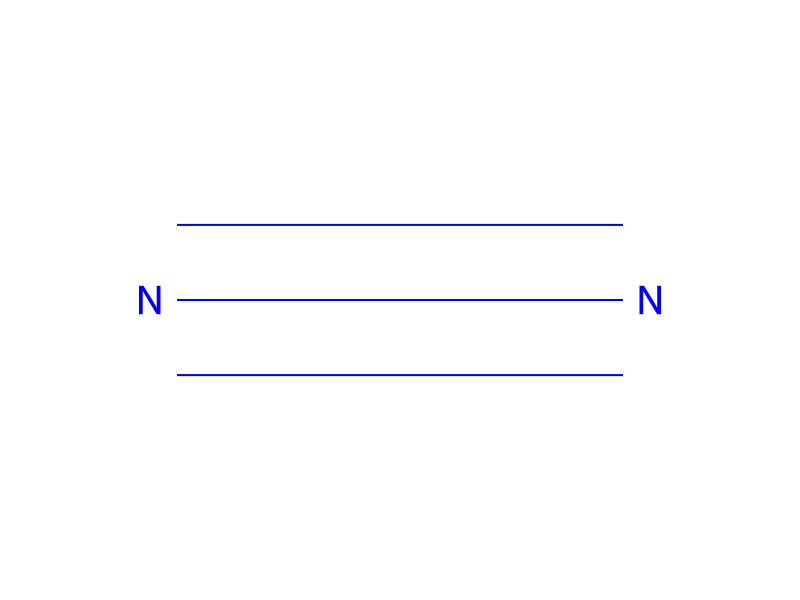

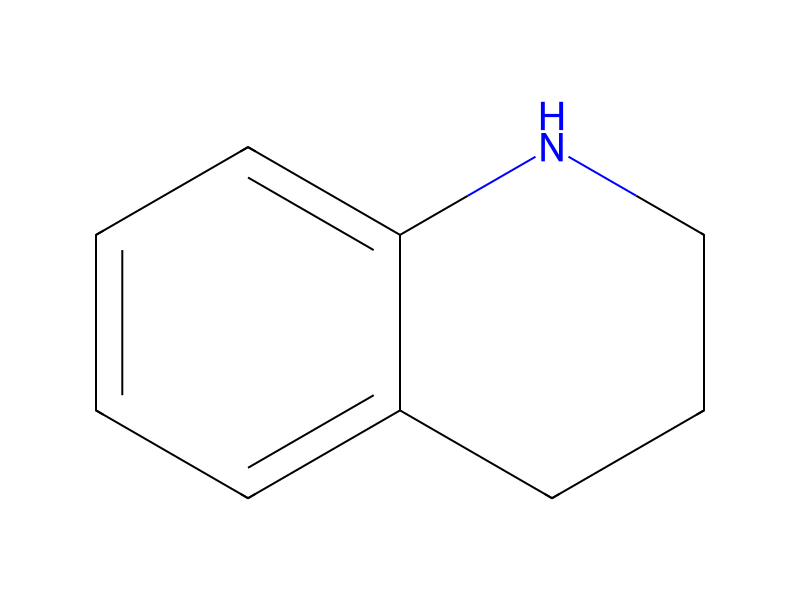


Produkt 1

Reagenzien, Katalysatoren, Lösungsmittel 1

Reaktionsbedingungen
- Temperatur
- 120 °C
Versuchsvorschrift
A 250 mL round bottom flask was fitted with a magnetic stirrer and a reflux condenser (with a septum and N2 inlet on top). Cs2CO3 (13.04 g, 40 mmol), 3-bromopyridine-2-carbonitrile (2.66 g, 20 mmol), toluene (100 mL), 1,2,3,4-tetrahydroquinoline (2.76 mL, 22 mmol), and 4,5-bis-(diphenylphosphanyl)-9,9-dimethyl-9H-xanthene (174 mg, 1.5% mol) were added in sequence. The mixture was degassed at room temperature by bubbling N2 through the suspension with stirring for 5 minutes. Pd2(dba)3 (90 mg, 0.5% mol) was added and the mixture was degassed again for 1 h at room temperature. The mixture was heated to 120° C. (bath) and refluxed under N2 in the dark. After two days, the mixture was cooled to room temperature. Another batch of 1,2,3,4-tetrahydroquinoline (2 mL), and Pd2(dba)3 (90 mg) were added. The system was degassed again for 1 h, and the heating was resumed. After another two days, the reaction mixture was cooled to room temperature and was concentrated by rotary evaporation under high vacuum. The residue was absorbed onto silica gel (50 mL) and loaded to a dry-packed silica gel column (200 mL silica). The column was eluted with 20% AcOEt/hexanes to afford a mixture of product and 3-bromo-2-cyanopyridine. The mixture was recrystallized from hexanes-AcOEt to give the product, 3-(3,4-dihydro-2H-quinoline-1-yl)pyridine-2-carbonitrile, as yellow crystals, 2.90 g (61.4%). 1H NMR (CDCl3) δ 2.06 (tt, 2H, J=5.7, 6.6 Hz), 2.91 (t, 2H, J=6.6 Hz), 3.76 (t, 2H, J=5.7 Hz), 6.56 (d, 1H, J=8.1 Hz), 6.85 (dd, 1H, J=0.9, 7.5 Hz), 6.98 (br, t, 1H, J=7.5 Hz), 7.10 (br, d, 1H, J=7.5 Hz), 7.42 (dd, 1H, J=4.5, 8.4 Hz), 7.72 (dd, 1H, J=1.2, 8.4 Hz), 8.42 (dd, 1H, J=1.5, 4.5 Hz).
Aufarbeitung
- customThe mixture was degassed at room temperature
- customby bubbling N2 through the suspension
- additionPd2(dba)3 (90 mg, 0.5% mol) was added
- customthe mixture was degassed again for 1 h at room temperature
- temperaturerefluxed under N2 in the dark
- waitAfter two days
- temperaturethe mixture was cooled to room temperature
- additionAnother batch of 1,2,3,4-tetrahydroquinoline (2 mL), and Pd2(dba)3 (90 mg) were added
- customThe system was degassed again for 1 h
- waitAfter another two days
- temperaturethe reaction mixture was cooled to room temperature
- concentrationwas concentrated by rotary evaporation under high vacuum
- customThe residue was absorbed onto silica gel (50 mL)
- washThe column was eluted with 20% AcOEt/hexanes
- customto afford
- customThe mixture was recrystallized from hexanes-AcOEt
Quellen und Nachweise
- ORD-Eintrag
- ord-7b104b80bd2f447bb2080f52f29a58ef
- Quelldatensatz
- uspto-grants-2011_01
- Patentnummer
- US07863293B2
Verknüpfte Notizen
Wird geladen…