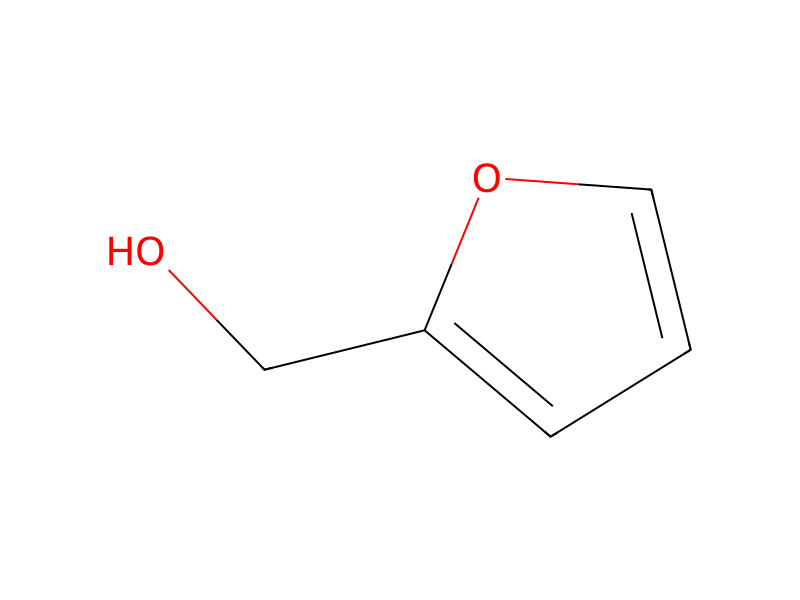
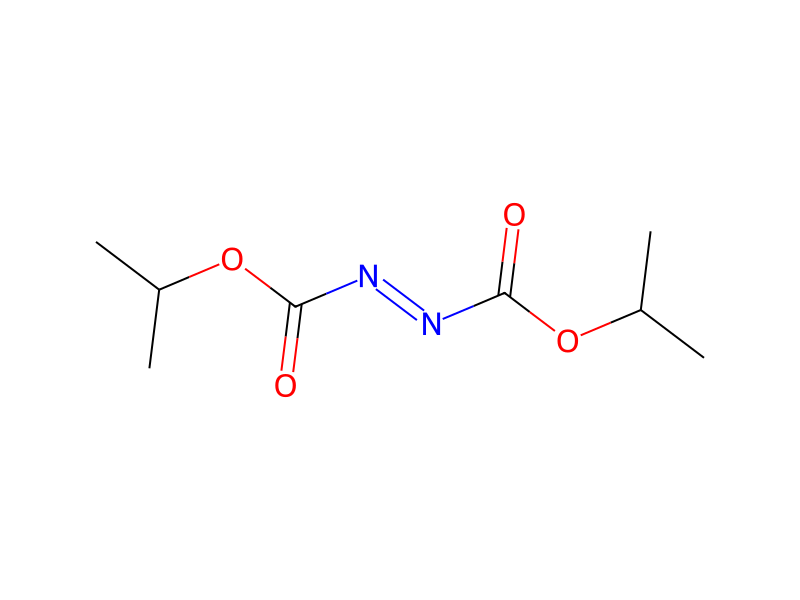
[Cl:1][C:2]1[CH:7]=[CH:6][C:5]([C:8]2[N:12]([C:13]3[CH:18]=[CH:17][C:16]([Cl:19])=[CH:15][C:14]=3[Cl:20])[N:11]=[C:10]([C:21]3[NH:25][N:24]=[N:23][N:22]=3)[C:9]=2[CH3:26])=[CH:4][CH:3]=1.[CH2:27](O)[C:28]1[O:32][CH:31]=[CH:30][CH:29]=1.C1(P(C2C=CC=CC=2)C2C=CC=CC=2)C=CC=CC=1.N(C(OC(C)C)=O)=NC(OC(C)C)=O>>[Cl:1][C:2]1[CH:7]=[CH:6][C:5]([C:8]2[N:12]([C:13]3[CH:18]=[CH:17][C:16]([Cl:19])=[CH:15][C:14]=3[Cl:20])[N:11]=[C:10]([C:21]3[N:25]([CH2:27][C:28]4[O:32][CH:31]=[CH:30][CH:29]=4)[N:24]=[N:23][N:22]=3)[C:9]=2[CH3:26])=[CH:4][CH:3]=1A mixture of 5-(5-(4-chlorophenyl)-1-(2,4-dichlorophenyl)-4-methyl-1H-pyrazol-3-yl)-1H-tetrazole (113 mg, 0.28 mmol) obtained in Step 1 of Example 52, furfuryl alcohol (0.05 ml, 0.56 mmol) and triphenylphosphine (146 mg, 0.56 mmol) was dissolved in tetrahydronfuran (3 ml) and cooled down to 0° C. Then, diisopropyl azodicarboxylate (0.11 ml, 0.56 mmol) was slowly added thereto at 0° C. After stirring for 2 hours at room temperature, the resulting solution was quenched with saturated ammonium chloride solution (1 ml). The mixture was extracted with ethyl acetate, and then the solvent of the organic layer was removed under a reduced pressure. The residue contained two regioisomers were separated by silica gel column chromatography (hexane/ethyl acetate=1/5), and repurified by reverse phase preparative HPLC, to obtain two compound, one of which was the title compound (22 mg, 16%).