Reaktionsgleichung

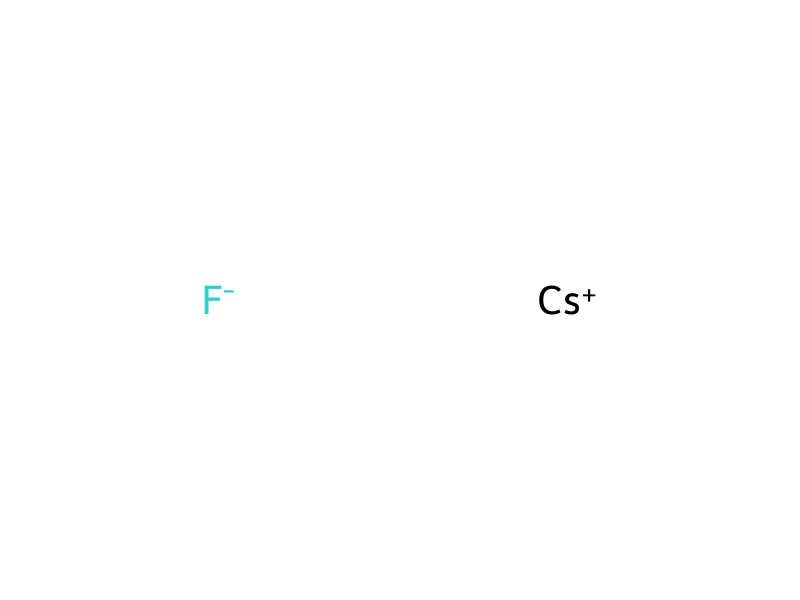
[F-:1].[Cs+].[F:3][C:4]1([F:17])[C:10]([F:12])([F:11])[C:9]([F:14])([F:13])[C:8]([F:16])([F:15])[O:7][C:5]1=[O:6].[F:18][C:19]([F:27])([F:26])[C:20]1([F:25])[O:24][C:21]1(F)[F:22]>COCCOC>[F:25][C:20]([C:19]([F:27])([F:26])[F:18])([O:7][C:8]([F:16])([F:15])[C:9]([F:14])([F:13])[C:10]([F:12])([F:11])[C:4]([F:17])([F:3])[C:5]([F:1])=[O:6])[C:21]([F:22])=[O:24]Komponenten
5
Edukt 3


Produkt 1

Reagenzien, Katalysatoren, Lösungsmittel 1

Versuchsvorschrift
In a 200 cc autoclave equipped with a mechanical stirrer, 5 g of cesium fluoride powder, 20 cc of ethyleneglycol dimethyl ether and 50 g of perfluoro-δ-valerolactone was charged. Thirty seven grams of hexafluoropropylene oxide was introduced intermittently into the reactor for about 2 hours with vigorously stirring at the temperature of 0° to 5° C. under a pressure of lower than 1.0 kg/cm2G.
Aufarbeitung
- customIn a 200 cc autoclave equipped with a mechanical stirrer
Quellen und Nachweise
- ORD-Eintrag
- ord-57aa123eba954a8f816580b55fae8e3e
- Quelldatensatz
- uspto-grants-1979_04
- Patentnummer
- US04151200
Verknüpfte Notizen
Wird geladen…