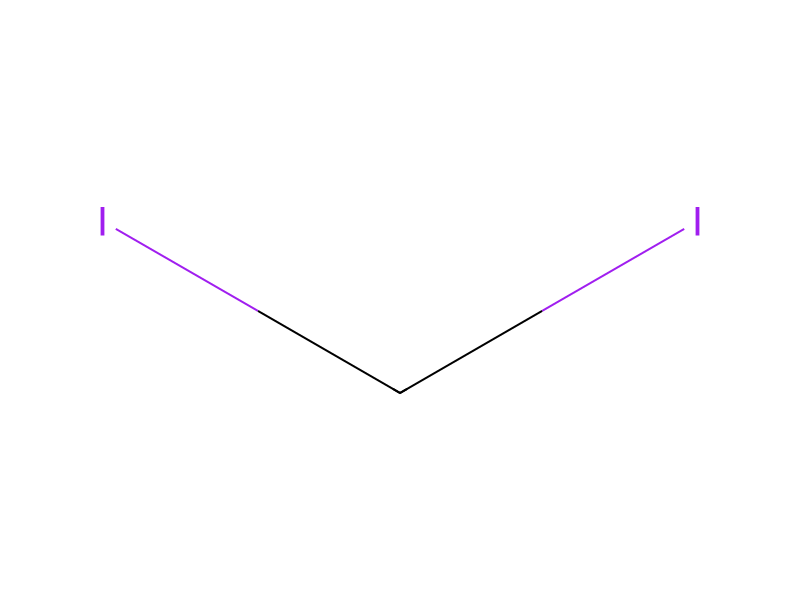
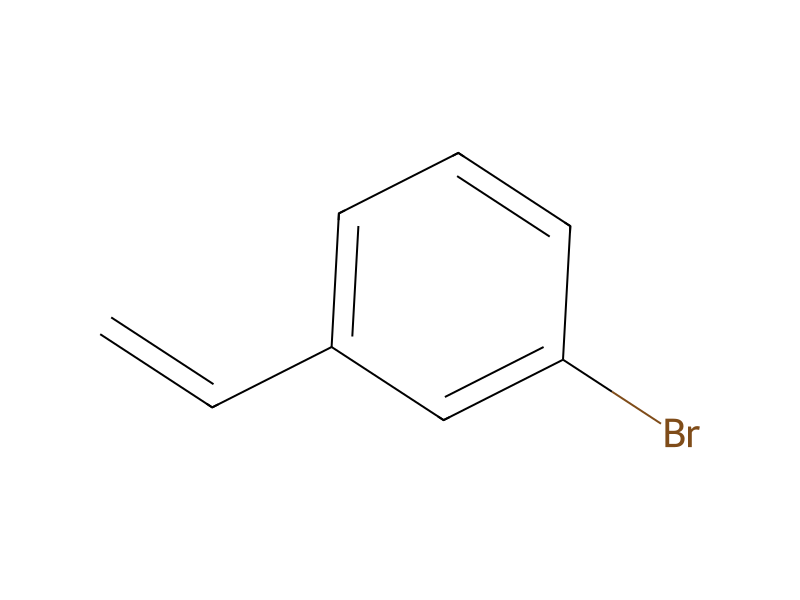
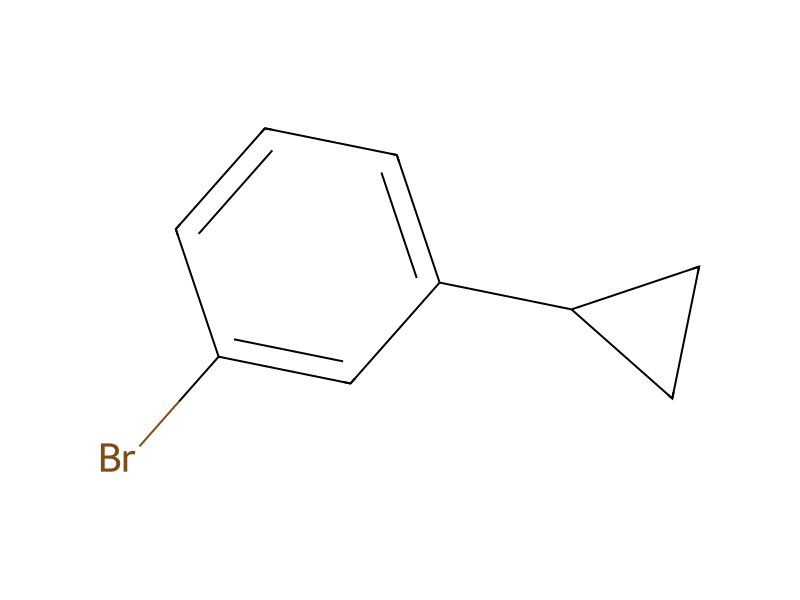
1.0 M Diethyl zinc in hexanes (27.3 ml, 27.3 mmol) was added to a solution of 2,4,6-trichlorophenol (5.4 g, 27.3 mmol) in dichloromethane (100 ml) at −40° C. After stirring for 15 minutes, diiodo-methane (2.2 mL, 27.3 mmol) was added at −40° C. and stirred for an additional 15 minutes. 1-Bromo-3-vinyl-benzene (2.5 g, 13.7 mmol) was then added to the reaction mixture, allowed to warm to room temperature, and left stirring overnight. The reaction mixture was diluted with dichloromethane, washed with 1N HCl (2×), saturated sodium bicarbonate (2×), saturated sodium sulfite, 1N sodium hydroxide, and saturated brine, dried over magnesium sulfate, filtered and concentrated. GC-MS revealed that the reaction mixture contained 1-Bromo-3-cyclopropyl-benzene and 1-bromo-3-vinyl-benzene. To remove the bromo-3-vinyl-benzene, the crude mixture was reacted with potassium permanganate. A solution of potassium permanganate/water (1.5 g/20 mL) was added drop-wise to a solution of the crude mixture (˜3.5 g) in THF (40 mL) at 0° C. and then allowed to warm to room temperature. After 1 hour, the reaction was diluted with diethyl ether, washed with water and saturated brine, dried over anhydrous sodium sulfate filtered and concentrated. Purication by flash column chromatography eluted with 100 hexanes afforded 1-bromo-3-cyclopropyl-benzene (2.20 g, 81%). 1.6 M n-Butyllithium in hexanes (3.2 mL, 5.1 mmol) was added drop-wise to a solution of 1-bromo-3-cyclopropyl-benzene at −78° C. and stirred for 1 hour. This reaction mixture was then transferred via canula to a 250 mL round bottom flask equipped with a stirrer bar approximately ¼ full of solid carbon dioxide and stirred and for 1 hour. The reaction mixture was concentrated and then the residue was diluted with water. The aqueous layer was washed with dichloromethane (3×), acidified with 1 N HCl to pH˜2, and extracted with ethyl acetate. The organic phase was washed with water and saturated brine, dried over anhydrous sodium sulfate, filtered and concentrated to afford 3-cyclopropyl-benzoic (356 mg, 43%, white solid). 1H NMR (DMSO), δ (ppm): 12.90 (bs, 1H), 7.71 (d, 1H), 7.64 (s, 1H), 7.34 (m, 2H), 2.01 (m, 1H), 0.99 (m, 2H), 0.70 (m, 2H).