Reaktionsgleichung

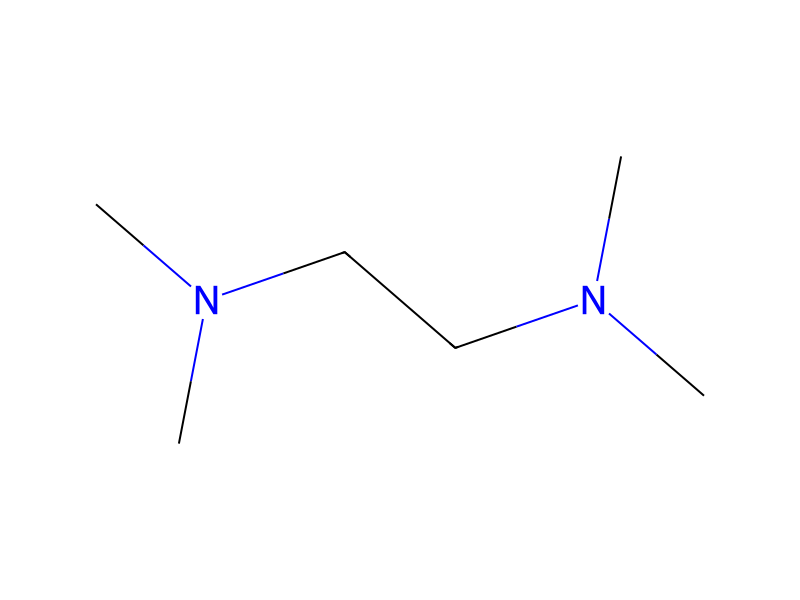
[C:1]([N:20]1[CH:24]=[N:23][CH:22]=[N:21]1)([C:14]1[CH:19]=[CH:18][CH:17]=[CH:16][CH:15]=1)([C:8]1[CH:13]=[CH:12][CH:11]=[CH:10][CH:9]=1)[C:2]1[CH:7]=[CH:6][CH:5]=[CH:4][CH:3]=1.CN(C)CCN(C)C.C([Li])CCC.[Br:38]Br>O1CCCC1>[C:1]([N:20]1[C:24]([Br:38])=[N:23][CH:22]=[N:21]1)([C:8]1[CH:13]=[CH:12][CH:11]=[CH:10][CH:9]=1)([C:14]1[CH:15]=[CH:16][CH:17]=[CH:18][CH:19]=1)[C:2]1[CH:7]=[CH:6][CH:5]=[CH:4][CH:3]=1Komponenten
Edukt 4



Produkt 1

Reagenzien, Katalysatoren, Lösungsmittel 1

Reaktionsbedingungen
- Temperatur
- -70 °C
Versuchsvorschrift
A stirred solution of 1-trityl-1,2,4-triazole (15.55 g, prepared as described in Example 1) and N,N,N',N'-tetramethylethylenediamine (5.8 g) in dry tetrahydrofuran (500 ml) was cooled to -70° C. under nitrogen and treated dropwise with n-butyllithium (37.5 ml, 1.6M in hexane). The deep-red solution was stirred at -70° C. for twenty minutes, then treated dropwise with a solution of bromine (10.4 g) in dry tetrahydrofuran (10 ml). The now brownish-yellow solution was allowed to warm to -20° C., quenched with 0.1M sodium thiosulphate solution (150 ml), and extracted with dichloromethane (500 ml). The organic layer was washed with water (4×100 ml), dried and evaporated. The residue was chromatographed on silica, using dichloromethane-ether (25:2) as eluant, to give 1-trityl-5-bromo-1,2,4-triazole (7.86 g, m.p. 239°-241° C.). NMR (CDCl3):δ7.1-7.3(15H,m), 7.95(1H,s).
Aufarbeitung
- temperatureto warm to -20° C.
- customquenched with 0.1M sodium thiosulphate solution (150 ml)
- extractionextracted with dichloromethane (500 ml)
- washThe organic layer was washed with water (4×100 ml)
- customdried
- customevaporated
- customThe residue was chromatographed on silica
Quellen und Nachweise
- ORD-Eintrag
- ord-09cad086280c4967bea25fcd5ce70adc
- Quelldatensatz
- uspto-grants-1995_02
- Patentnummer
- US05393732
Verknüpfte Notizen
Wird geladen…