Reaktionsgleichung
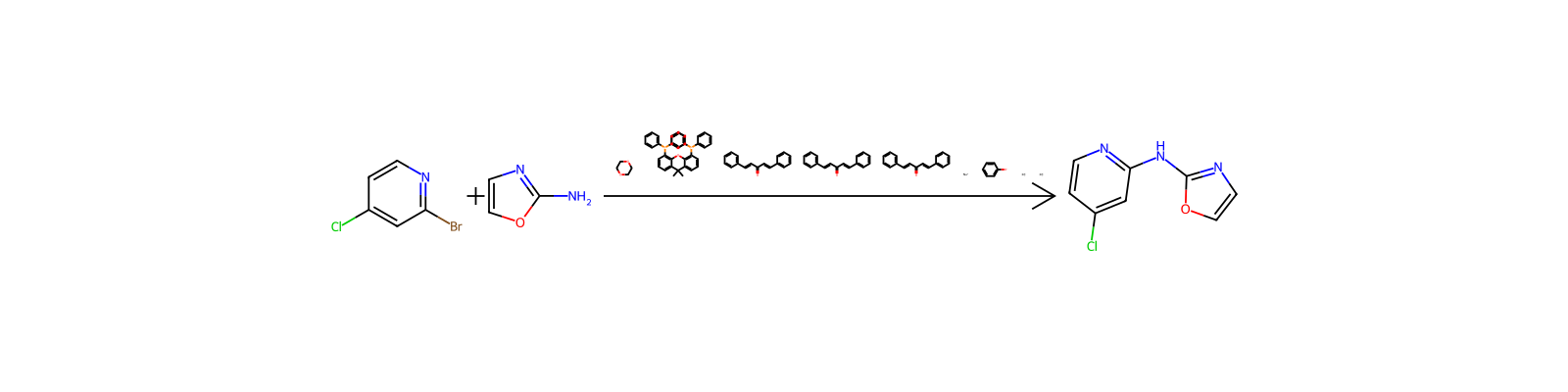
Clc1ccnc(Br)c1.Nc1ncco1>C1COCCO1.CC1(C)c2cccc(P(c3ccccc3)c3ccccc3)c2Oc2c(P(c3ccccc3)c3ccccc3)cccc21.O=C(/C=C/c1ccccc1)/C=C/c1ccccc1.O=C(/C=C/c1ccccc1)/C=C/c1ccccc1.O=C(/C=C/c1ccccc1)/C=C/c1ccccc1.[Na+].[O-]c1ccccc1.[Pd].[Pd]>Clc1ccnc(Nc2ncco2)c1Komponenten
Edukt 2


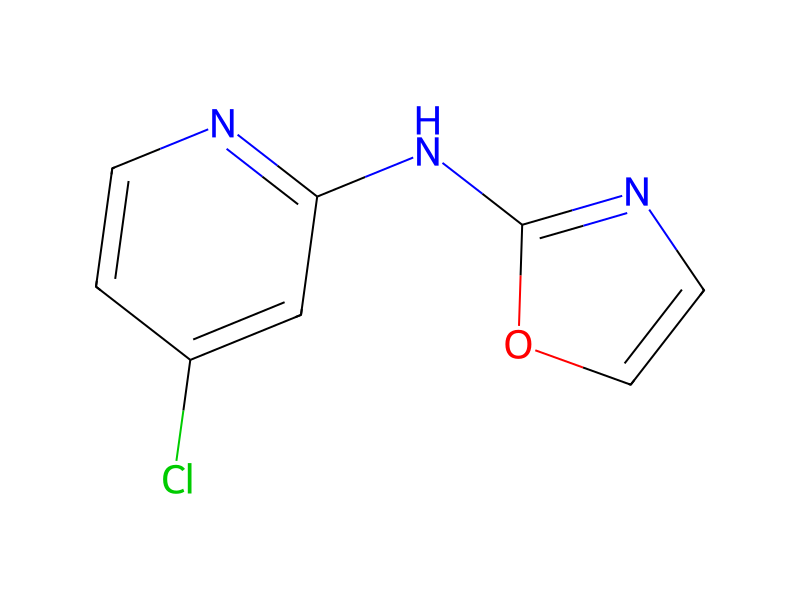
Produkt 1
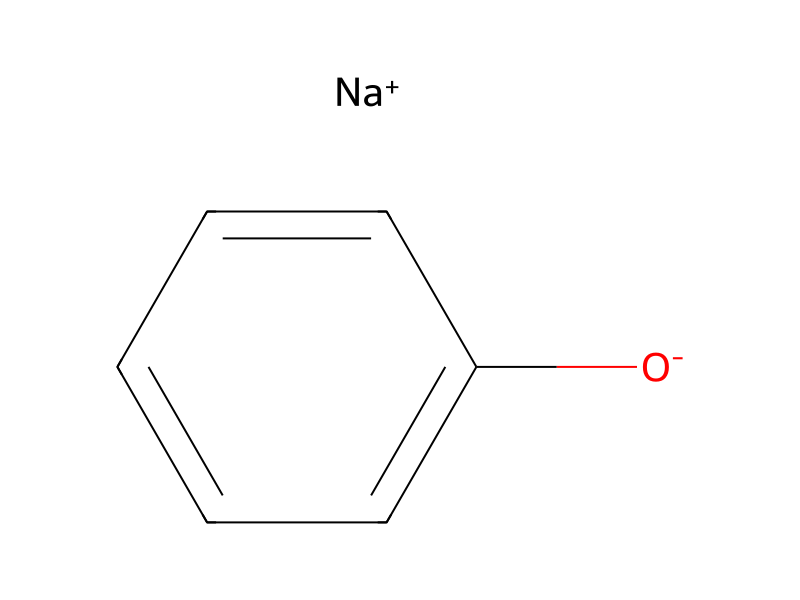
Reagenzien, Katalysatoren, Lösungsmittel 4



Reaktionsbedingungen
- Temperatur
- 170 °C
Versuchsvorschrift
Objective: Improve yield of the desired product starting from the bromoaryl compound. To a flask containing 2-bromo-4-chloropyridine (196 mg, 1.02 mmol), sodium phenolate (177 mg, 1.52 mmol), TRIS(DIBENZYLIDENEACETONE)DIPALLADIUM(0) (11.63 mg, 0.01 mmol) and (9,9-dimethyl-9H-xanthene-4,5-diyl)bis(diphenylphosphine) (17.64 mg, 0.03 mmol) (Xantphos), was added degassed dioxane (4 mL) and the mixture allowed to stir under nitrogen atmosphere for 5 min. To this solution was added oxazol-2-amine (94 mg, 1.12 mmol) and the reaction mixture was heated to 170 °C for 2 h under microwave irradiation. Methanol was added to the crude reaction mixture together with silica (2 g), the solvent was removed under reduced pressure and the remaining residue was placed in dry load tube prior to chromatography. The crude product was purified by flash silica chromatography, elution gradient 0 to 100% EtOAc in heptane. Pure fractions were evaporated to dryness to afford N-(4-chloropyridin-2-yl)oxazol-2-amine (1.000 mg, 0.503 %) as a beige solid. Conclusion: Trace amount of the desired product isolated.
Quellen und Nachweise
- ORD-Eintrag
- ord-16b6dbfada904ea1b6f495fddc318fb3
- Quelldatensatz
- 750 AstraZeneca ELN dataset
- Originallink
- Quelle ansehen
Verknüpfte Notizen
Wird geladen…