StartseiteMCPWorkbenchSkills
StartseiteWorkbenchBenachrichtigungenMein Bereich
llms.txt · MCP-AnleitungDatenschutz · Nutzungsbedingungen · Supportv1.8.3
  1. Startseite
  2. /Reaktion

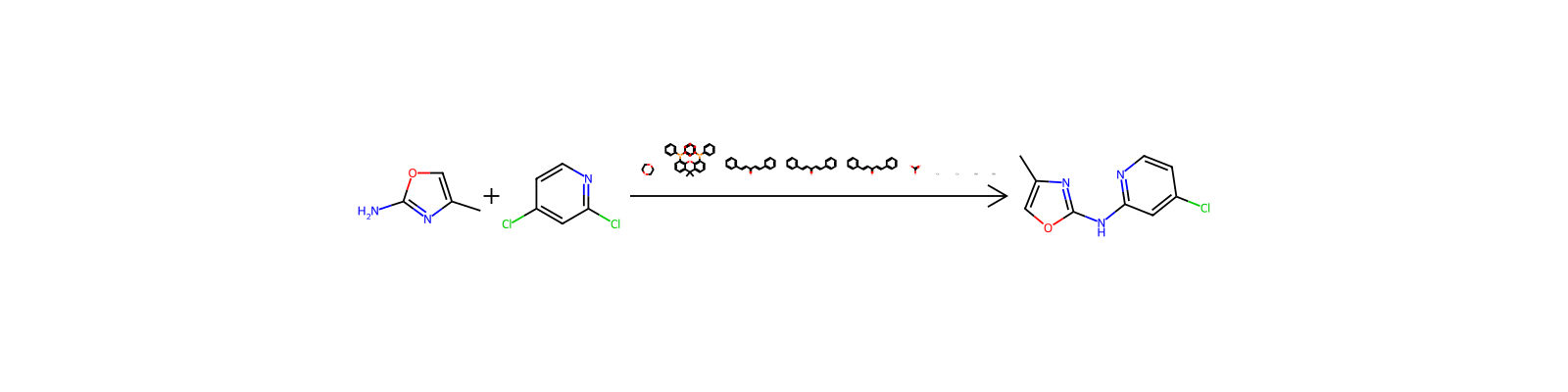
2,4-Dichloropyridine → N-(4-chloro-2-pyridinyl)-4-methyl-1,3-oxazol-2-amine

HRID 326
Drucken

Reaktionsgleichung

Reaktionsgleichung von HRID 326
Cc1coc(N)n1.Clc1ccnc(Cl)c1>C1COCCO1.CC1(C)c2cccc(P(c3ccccc3)c3ccccc3)c2Oc2c(P(c3ccccc3)c3ccccc3)cccc21.O=C(/C=C/c1ccccc1)/C=C/c1ccccc1.O=C(/C=C/c1ccccc1)/C=C/c1ccccc1.O=C(/C=C/c1ccccc1)/C=C/c1ccccc1.O=C([O-])[O-].[Cs+].[Cs+].[Pd].[Pd]>Cc1coc(Nc2cc(Cl)ccn2)n1
KomponentenReaktionsbedingungenVersuchsvorschriftQuellen und NachweiseNotizen zur Reaktion

Komponenten

7

Edukt 2

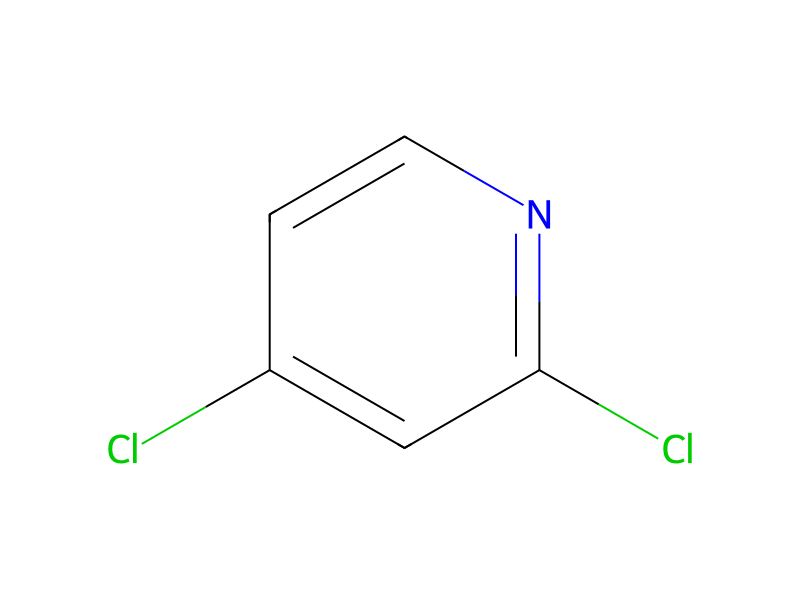
HCID 335152,4-DichloropyridineHCID 5358244-Methyloxazol-2-amine

Produkt 1

HCID 101584500N-(4-chloro-2-pyridinyl)-4-methyl-1,3-oxazol-2-amineAusbeute 28,14 %

Reagenzien, Katalysatoren, Lösungsmittel 4

HCID 10796Cesium carbonateReagenzHCID 6360441,1'-(9,9-Dimethyl-9H-xanthene-4,5-diyl)bis(1,1-diphenylphosphine)
Katalysator
HCID 9811564Bis(dibenzylideneacetone)palladiumKatalysator
HCID 312751,4-DioxaneLösungsmittel

Reaktionsbedingungen

Temperatur
140 °C

Versuchsvorschrift

Objective: To find out which substrates are efficient coupling partners, is there a robust link between how electron poor the substrate is and yield i.e. more electron poor aminooxazoles produce greater yields. Pd2(dba)3 (22.89 mg, 0.025 mmol), 9,9-dimethyl-4,5-bis(diphenylphosphino)xanthene (43.4 mg, 0.075 mmol), 2,4-dichloropyridine (148 mg, 1.00 mmol), cesium carbonate (652 mg, 2.00 mmol) and 4-methyloxazol-2-amine (98 mg, 1.00 mmol) were added to an oven dried microwave vial, the vial was capped and placed under an inert atmosphere, dioxane (4 mL) was added and the resulting mixture was heated to 140 °C for 1 h by microwave irradiation under a nitrogen atmosphere. Dichloromethane (10 mL) was added to the crude reaction mixture and the mixture was adsorbed onto silica gel. The crude product was purified by flash silica chromatography, elution gradient 0 to 30% EtOAc in heptane. Pure fractions were evaporated to dryness to afford N-(4-chloropyridin-2-yl)-4-methyloxazol-2-amine (59.0 mg, 28.1 %) as a cream solid. Note: a further 34 mg of impure product came off the column early and so the yield for this reaction is probably closer to 35% had the purification been efficient. Conclusion: Somewhat surprisingly the methyl substituted amino-oxazole gave significant amounts of coupled product. It appears that certain moderately elctron rich substrates may also undergo relatively efficient coupling.
Quellen und Nachweise

ORD-Eintrag
ord-2b17d1283fc34150bab8e6391b459594
Quelldatensatz
750 AstraZeneca ELN dataset
Originallink
Quelle ansehen

Notizen zur Reaktion

Auf dieser SeiteKomponentenReaktionsbedingungenVersuchsvorschriftQuellen und NachweiseNotizen zur Reaktion



