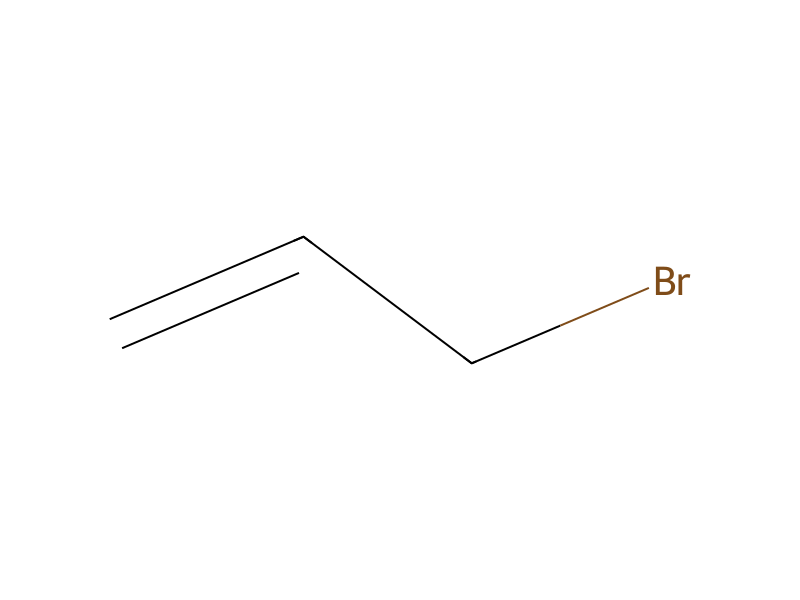
1.22 g (12.2 mmol) Diisopropylamine was dissolved in 10 ml tetrahydrofuran under nitrogen and treated with 7.8 ml (12.2 mmol) 1.6M n-butyllithium in hexane at a temperature between -78° and -50° C. The mixture was stirred for 20 minutes and then a solution of 3 g (12.2 mmol) methyl 2-(4,6-dimethoxy-2-pyrimidinylthio)acetate in 30 ml tetrahydrofuran was added to the reaction mixture and the mixture then stirred for 30 minutes. 1.45 g (12.2 mmol) 3-Bromopropene was added, dropwise, to the solution. The reaction mixture was slowly allowed to reach room temperature, with stirring, and then stirred for 20 hours. The mixture was added to 100 ml ice/water and extracted with ethyl acetate. The ethyl acetate phase, after drying over magnesium sulphate, was evaporated and then purified by medium pressure chromatography using hexane/ethyl acetate as eluent.