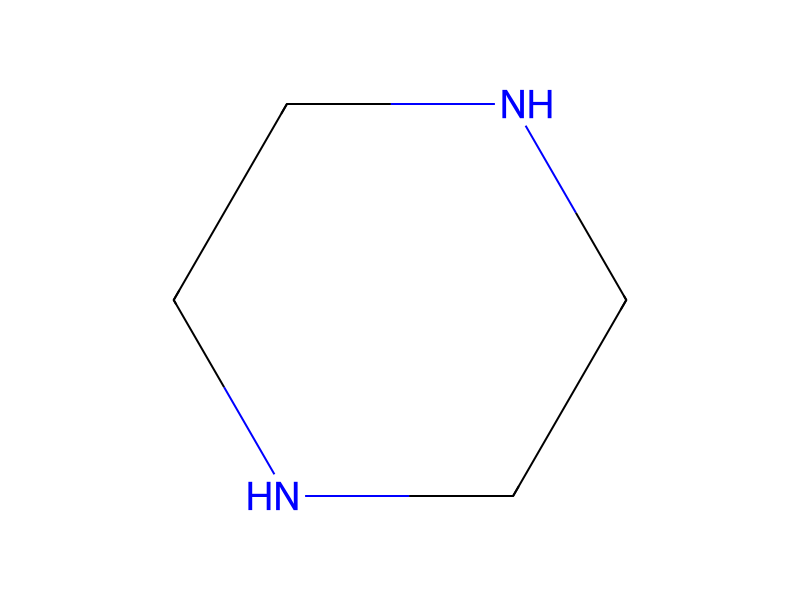
4-Chloroquinoline (25 g, 0.153 mol) and anhydrous piperazine (59.2 g, 0.69 mol) were dissolved in dimethylacetamide (400 ml) and stirred at 130° C. for 4 hours. The mixture was allowed to reach room temperature, water (600 ml) and 2M NaOH (150 ml) were added and the mixture was extracted with dichloromethane (600 ml). The organic phase was dried over magnesium sulfate, the solvent was removed at reduced pressure and the residue crystallized with diisopropylether. The raw product was mixed with a mixture of dichloromethane, diisopropylether and ethyl acetate (1:1:1), and stirred overnight at room temperature. The mixture was filtered, the filtrate evaporated under reduced pressure and the residue crystallized with diisopropylether to yield 10.0 g of off-white crystals (0.047 mol, 31%). NMR (1H, CDCl3, 300 MHz): 8.74 (s, 1H), 8.04 (m, 2H), 7.65 (m, 1H), 7.48 (m, 1H), 6.85 (d, 1H), 3.19 (m, 8H).