StartseiteMCPWorkbenchSkills
StartseiteWorkbenchBenachrichtigungenMein Bereich
llms.txt · MCP-AnleitungDatenschutz · Nutzungsbedingungen · Supportv1.8.3
  1. Startseite
  2. /Reaktion

Water → HCID 178431671, Verbindung

HRID 339847
Drucken

Reaktionsgleichung

Reaktionsgleichung von HRID 339847
Br[C:2]1[CH:3]=[C:4]([CH:8]2[C:13]([CH3:15])([CH3:14])[O:12][C:11]([NH:16][C@H:17]([C:28]3[CH:33]=[CH:32][CH:31]=[CH:30][CH:29]=3)[CH2:18][CH2:19][O:20][Si](C(C)(C)C)(C)C)=[N:10][S:9]2(=[O:35])=[O:34])[CH:5]=[CH:6][CH:7]=1.[N:36]1[CH:41]=[C:40](B(O)O)[CH:39]=[N:38][CH:37]=1.P([O-])([O-])([O-])=O.[K+].[K+].[K+].O>C1(C)C=CC=CC=1.C1C=CC(/C=C/C(/C=C/C2C=CC=CC=2)=O)=CC=1.C1C=CC(/C=C/C(/C=C/C2C=CC=CC=2)=O)=CC=1.[Pd].CC(P(C(C)(C)C)C1[CH-]C=CC=1)(C)C.C1C=CC([C-]2C(C3C=CC=CC=3)=C(C3C=CC=CC=3)C(C3C=CC=CC=3)=C2C2C=CC=CC=2)=CC=1.[Fe+2]>[CH3:14][C:13]1([CH3:15])[O:12][C:11]([NH:16][C@H:17]([C:28]2[CH:29]=[CH:30][CH:31]=[CH:32][CH:33]=2)[CH2:18][CH2:19][OH:20])=[N:10][S:9](=[O:34])(=[O:35])[CH:8]1[C:4]1[CH:5]=[CH:6][CH:7]=[C:2]([C:40]2[CH:41]=[N:36][CH:37]=[N:38][CH:39]=2)[CH:3]=1
KomponentenReaktionsbedingungenVersuchsvorschriftAufarbeitungQuellen und NachweiseNotizen zur Reaktion

Komponenten

8

Edukt 4

HCID 962WaterHCID 62657Potassium Phosphate, Tribasic2×HCID 2795193(Pyrimidin-5-yl)boronic acid2×HCID 178431688HCID 178431688, Verbindung

Produkt 1

HCID 178431671HCID 178431671, VerbindungAusbeute 19,6 %

Reagenzien, Katalysatoren, Lösungsmittel 3

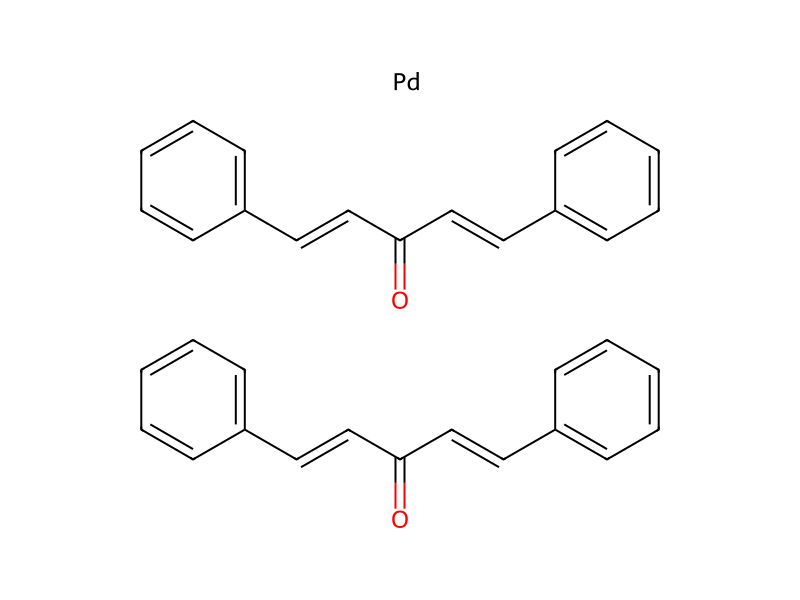
HCID 6505921(1E,4E)-1,5-diphenylpenta-1,4-dien-3-one; palladiumKatalysator2×HCID 12024214Ditert-butyl(cyclopenta-1,3-dien-1-yl)phosphane;iron(2+);(2,3,4,5-tetraphenylcyclopenta-1,4-dien-1-yl)benzeneKatalysator2×HCID 1140TolueneLösungsmittel

Reaktionsbedingungen

Temperatur
80 °C

Versuchsvorschrift

Under inert gas, a suspension of 100 mg of [5-(3-bromophenyl)-6,6-dimethyl-4,4-dioxo-5,6-dihydro-4H-4lambda6-1,4,3-oxathiazin-2-yl]-[(S)-3-(tert-butyldimethylsilanyloxy)-1-phenylpropyl]amine, 31 mg of pyrimidine-5-boronic acid and 110 mg of potassium phosphate in 2 ml of toluene was initially charged. After the addition of 10 mg of bis(dibenzylideneacetone)palladium and 24 mg of 1,2,3,4,5-pentaphenyl-1-(di-tert-butylphosphino)ferrocene, the reaction mixture was stirred at 80° C. for 1.5 h. The progress of the reaction was checked by LCMS. Since no conversion had taken place yet, 0.8 ml of water, 73 mg of potassium phosphate, 24 mg of pyrimidine-5-boronic acid, 10 mg of bis(dibenzylideneacetone)palladium and 24 mg of 1,2,3,4,5-pentaphenyl-1-(di-tert-butylphosphino)ferrocene were added and the mixture was stirred at constant temperature for a further 20 hours. After the removal of the solvent under reduced pressure, the residue was dissolved in 2 ml of methanol and 0.2 ml of concentrated hydrochloric acid, and the mixture was stirred at room temperature for 1.5 hours. The reaction solution was diluted with 20 ml of ethyl acetate and 10 ml of water, and the organic phase was washed once again with saturated aqueous sodium chloride solution, dried over MgSO4 and concentrated by rotary evaporation. The residue was purified by means of normal phase chromatography using a Flashmaster with a dichloromethane/methanol gradient. The product-containing fractions were combined and concentrated by rotary evaporation. The crude product was purified further in a purification laboratory by means of preparative HPLC. The product-containing fractions were combined, the acetonitrile was removed under reduced pressure, and the aqueous residue was basified with saturated aqueous sodium hydrogencarbonate solution and extracted with dichloromethane. The organic phase was dried over MgSO4 and concentrated by rotary evaporation, and the residue was taken up again in a mixture of acetonitrile and water and lyophilized. This gave the product (15.7 mg) with a molecular weight of 466.6 g/mol (C24H26N4O4S); MS (ESI): m/e=467 (M+H+).


Aufarbeitung

  1. additionwas initially charged
  2. stirringthe mixture was stirred at constant temperature for a further 20 hours
  3. customAfter the removal of the solvent under reduced pressure
  4. dissolutionthe residue was dissolved in 2 ml of methanol
  5. stirring0.2 ml of concentrated hydrochloric acid, and the mixture was stirred at room temperature for 1.5 hours
  6. additionThe reaction solution was diluted with 20 ml of ethyl acetate and 10 ml of water
  7. washthe organic phase was washed once again with saturated aqueous sodium chloride solution
  8. dry with materialdried over MgSO4
  9. concentrationconcentrated by rotary evaporation
  10. customThe residue was purified by means of normal phase chromatography
  11. concentrationconcentrated by rotary evaporation
  12. customThe crude product was purified further in a purification laboratory by means of preparative HPLC
  13. customthe acetonitrile was removed under reduced pressure
  14. extractionextracted with dichloromethane
  15. dry with materialThe organic phase was dried over MgSO4
  16. concentrationconcentrated by rotary evaporation
  17. additionthe residue was taken up again in a mixture of acetonitrile and water

Quellen und Nachweise

ORD-Eintrag
ord-f7787d80f2e14b02b36c98841991efcb
Quelldatensatz
uspto-grants-2014_11
DOI
10.6084/m9.figshare.5104873.v1
Patentnummer
US08895547B2

Notizen zur Reaktion

Auf dieser SeiteKomponentenReaktionsbedingungenVersuchsvorschriftAufarbeitungQuellen und NachweiseNotizen zur Reaktion