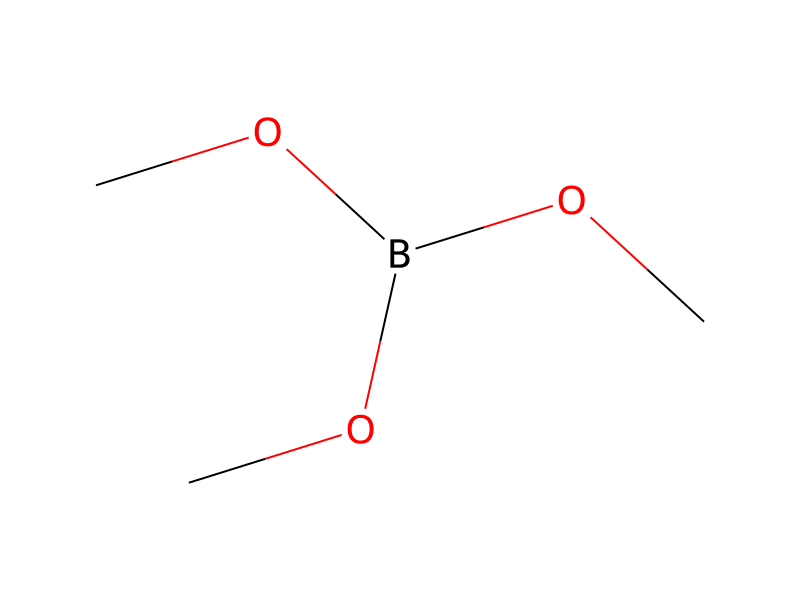
1-bromo-4-(2-carboxy-2-methylpropyl)benzene (1.93 g) was dissolved in anhydrous tetrahydrofuran (20 ml) and cooled to -70° C. A 1.25M solution of n-butyl lithium in hexane (18 ml) was added dropwise with stirring under an argon atmosphere, such that the temperature did not exceed -65° C. After a further 20 minutes, trimethyl borate was slowly added at -65° C. and the reaction mixture was allowed to attain -15° C. The reaction was quenched by the addition of a saturated aqueous solution of ammonium chloride (50 ml) and the mixture acidified by the addition of 2M hydrochloric acid. The organic phase was separated and the aqueous layer was extracted with ethyl acetate (2×50 ml). The combined organic phase was washed with brine (15 ml) and evaporated and the residue was triturated with hexane to give 4-(2-carboxy-2-methylpropyl)benzeneboronic acid (1.2 g); 1H NMR (DMSO-d6): 1.06 (s, 6 H), 2.78 (s, 2 H), 7.11 (d, 2 H), 7.67 (d, 2 H), 7.9 (br s, 2 H), 12.2 (br s, 1 H); mass spectrum (-ve ESP) 221 (M-H)-.