StartseiteMCPWorkbenchSkills
StartseiteWorkbenchBenachrichtigungenMein Bereich
llms.txt · MCP-AnleitungDatenschutz · Nutzungsbedingungen · Supportv1.8.1
  1. Startseite
  2. /Reaktion

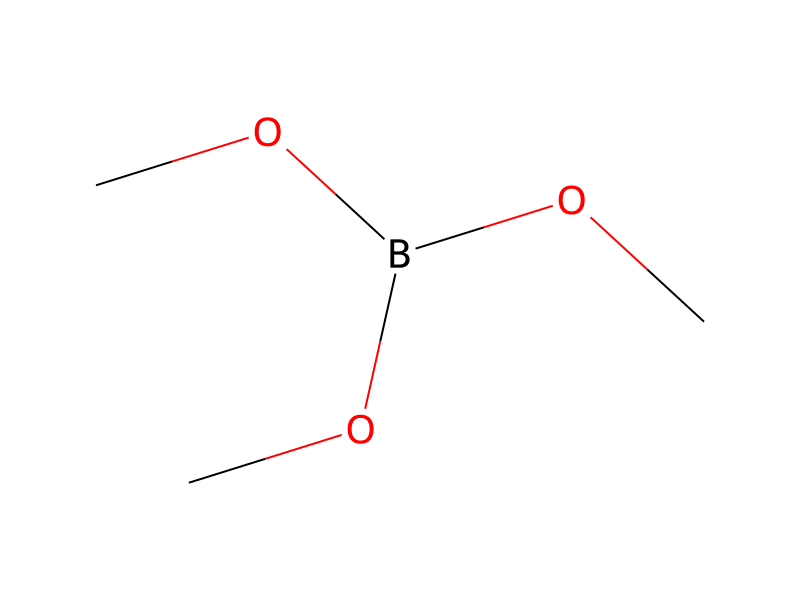
Trimethyl borate → 4-(Methylthio)phenylboronic acid

HRID 37517
Drucken

Reaktionsgleichung

Reaktionsgleichung von HRID 37517
Br[C:2]1[CH:7]=[CH:6][C:5]([S:8][CH3:9])=[CH:4][CH:3]=1.C([Li])CCC.C[O:16][B:17](OC)[O:18]C.[OH-].[Na+]>C1COCC1.CCCCCC>[CH3:9][S:8][C:5]1[CH:6]=[CH:7][C:2]([B:17]([OH:18])[OH:16])=[CH:3][CH:4]=1
KomponentenVersuchsvorschriftAufarbeitungQuellen und NachweiseNotizen zur Reaktion

Komponenten

7

Edukt 4

HCID 8470Trimethyl borateHCID 14798Sodium HydroxideHCID 660374-BromothioanisoleHCID 178418339Butyllithium

Produkt 1

HCID 27339594-(Methylthio)phenylboronic acidAusbeute 83,3 %

Reagenzien, Katalysatoren, Lösungsmittel 2

HCID 8028
Tetrahydrofuran
Lösungsmittel
HCID 8058HexaneLösungsmittel

Versuchsvorschrift

Under nitrogen, a stirred solution of 30 g (150 mmol) of 4-bromothioanisole (Aldrich) in 1500 mL of anhydrous THF at -78 ° C. was treated with 180 mmol of n-butyllithium in hexane. After 30 minutes, 51 mL (450 mmol) of trimethylborate was added neat and the reaction was allowed to warm to ambient temperature overnight. A solution of 300 mL of 10% NaOH was added and the mixture stirred vigorously for lb. The solvent was removed in vacuo, the pH adjusted to 4-5, and the product collected by filtration. Repeated washings with hexane and water provided 21 g (83%) of 4-methylthiophenylboronic acid (21 in Synthetic Scheme VII when R5 =SCH3 and R3, R4, R6, and R7 =H) as a colorless solid: NMR (DMSO-d6) d 2.47 (s, 3H), 7.20 (d, J=8 Hz, 2H), 7.71 (d, J=8 Hz, 2H), 7.96 (br s, 2H).

Aufarbeitung

  1. customThe solvent was removed in vacuo
  2. filtrationthe product collected by filtration
  3. washRepeated washings with hexane and water

Quellen und Nachweise

ORD-Eintrag
ord-2b95209fadce47fba1a904e47c6976a4
Quelldatensatz
uspto-grants-1995_05
DOI
10.6084/m9.figshare.5104873.v1
Patentnummer
US05420287

Notizen zur Reaktion

Auf dieser SeiteKomponentenVersuchsvorschriftAufarbeitungQuellen und NachweiseNotizen zur Reaktion



