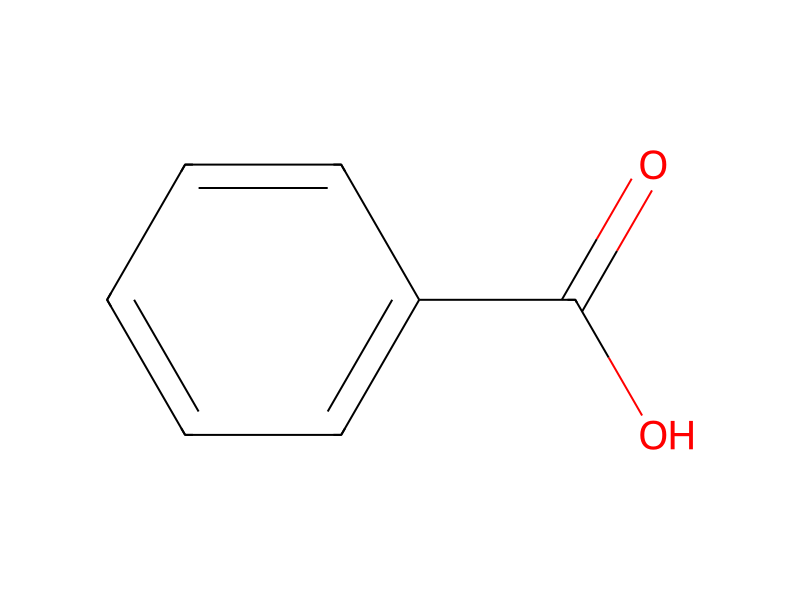
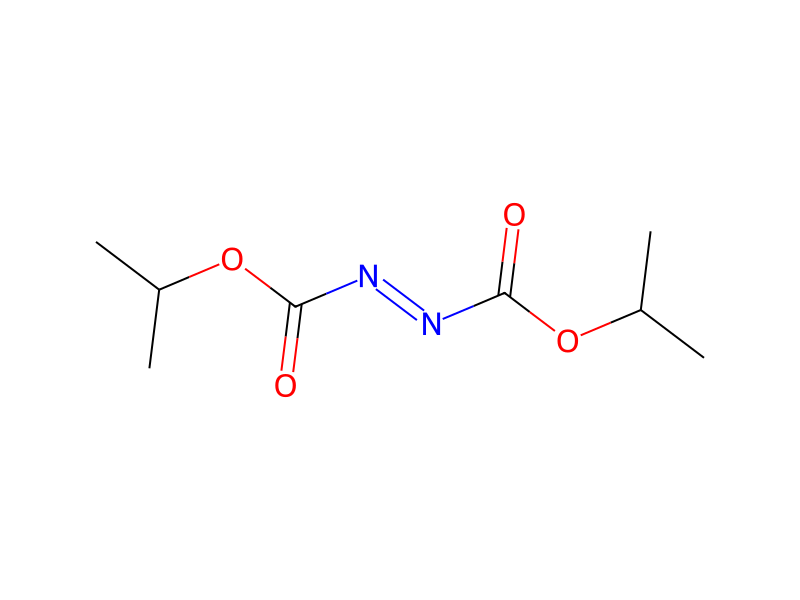
[C:1]([N:8]1[C@H:12]([C:13]#[CH:14])[CH2:11][C@@H:10]([OH:15])[CH2:9]1)([O:3][C:4]([CH3:7])([CH3:6])[CH3:5])=[O:2].C(O)(=O)C1C=CC=CC=1.C1(P(C2C=CC=CC=2)C2C=CC=CC=2)C=CC=CC=1.N(C(OC(C)C)=O)=NC(OC(C)C)=O.C([O-])([O-])=O.[K+].[K+]>C1COCC1>[C:1]([N:8]1[C@H:12]([C:13]#[CH:14])[CH2:11][C@H:10]([OH:15])[CH2:9]1)([O:3][C:4]([CH3:7])([CH3:6])[CH3:5])=[O:2]To a solution of (3R,5S)-N-Boc-3-Hydroxy-5-ethynyl-pyrrolidine (200 mg, 0.95 mmol) (Example 99C), benzoic acid (138 mg, 0.11 mmol) and triphenyl phosphine (373 mg, 1.42 mmol) in 15 mL of THF was added diisopropyl azodicarboxylate (287 mg, 1.42 mmol) at 0° C. The mixture was allowed to slowly warm up to room temperature and stirred for 18 hrs. The reaction mixture was then concentrated and the residue was directly passed through a silica gel column with a 0-30% EtOAc in hexanes gradient. The intermediate benzoate ester was dissolved in 6 mL of MeOH and then K2CO3 (260 mg, 1.89 mmol) was added. The mixture, after overnight stirring, was filtered and concentrated to a residue which after silica gel column chromatography with a 0-70% EtOAc in hexanes gradient afforded (3S,5S)-N-Boc-5-ethynyl-3-hydroxy-pyrrolidine. (Yield 170 mg, 85%).