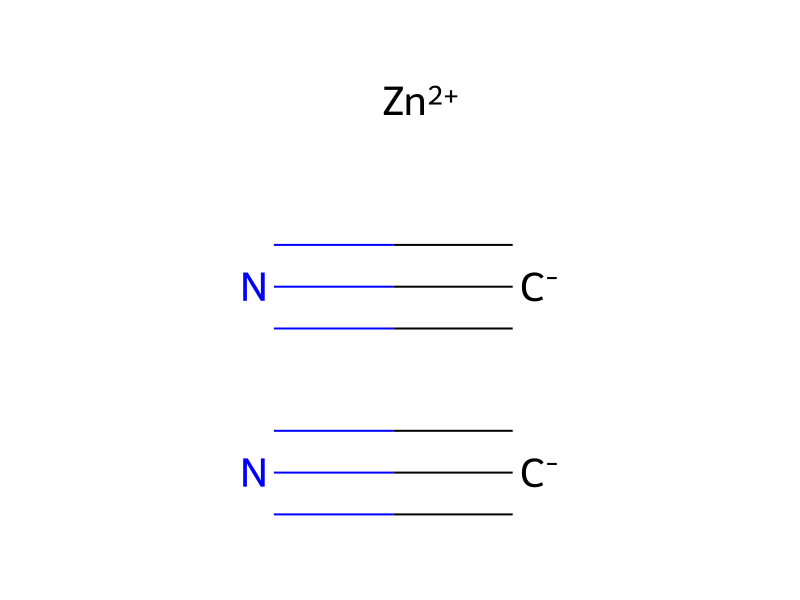
Br[C:2]1[CH:3]=[C:4]([CH2:12][OH:13])[CH:5]=[C:6]([C:8]([F:11])([F:10])[F:9])[CH:7]=1.[CH3:14][N:15](C)C=O>[Pd].C1(P(C2C=CC=CC=2)C2C=CC=CC=2)C=CC=CC=1.C1(P(C2C=CC=CC=2)C2C=CC=CC=2)C=CC=CC=1.C1(P(C2C=CC=CC=2)C2C=CC=CC=2)C=CC=CC=1.C1(P(C2C=CC=CC=2)C2C=CC=CC=2)C=CC=CC=1.[C-]#N.[Zn+2].[C-]#N>[OH:13][CH2:12][C:4]1[CH:3]=[C:2]([CH:7]=[C:6]([C:8]([F:11])([F:10])[F:9])[CH:5]=1)[C:14]#[N:15](3-Bromo-5-(trifluoromethyl)phenyl)methanol (1.4 g, 5.5 mmol), tetrakis(triphenylphosphine) palladium(0) (0.64, 0.55 mmol) and zinc cyanide (388 mg, 3.31 mmol) were combined in dimethylformamide (6 mL). The reaction mixture degassed repeatedly using the freeze-thaw method. After warming to room temperature, the reaction was heated at 90° C. for 1 h, cooled to room temperature and concentrated. The crude product was dissolved in ethyl acetate, washed with water (2×), 1 N hydrochloric acid (2×), brine (2×), dried over sodium sulfate, and concentrated. Flash chromatography on silica gel gave 0.37 g (33%). LC/MS (HPLC method 3): tR=2.06 min, 202.02 (MH)+.