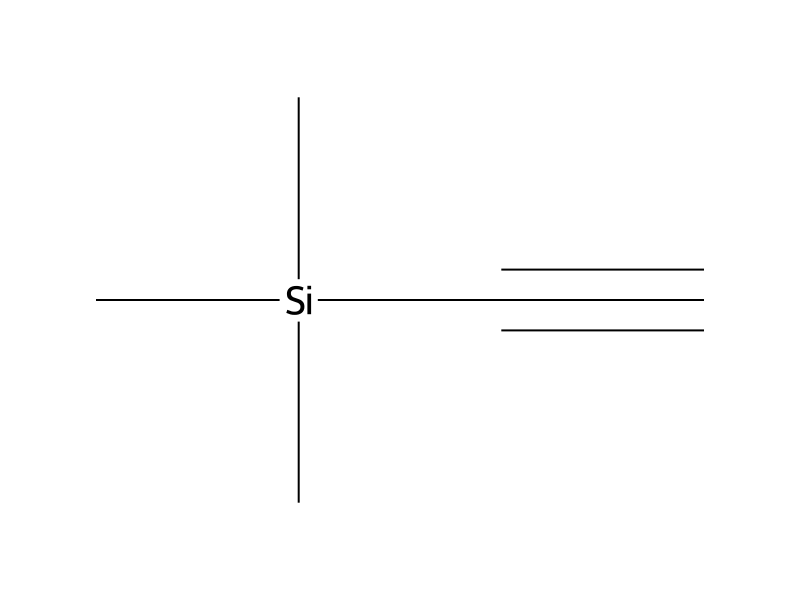
Triphenylphosphine → trimethyl[2-(5-methylene-5H-dibenzo[a,d]cyclohepten-10-yl)ethynyl)silane
HRID 393301
Reaktionsgleichung

Br[C:2]1[C:8]2[CH:9]=[CH:10][CH:11]=[CH:12][C:7]=2[C:6](=[CH2:13])[C:5]2[CH:14]=[CH:15][CH:16]=[CH:17][C:4]=2[CH:3]=1.C1(P(C2C=CC=CC=2)C2C=CC=CC=2)C=CC=CC=1.[CH3:37][Si:38]([C:41]#[CH:42])([CH3:40])[CH3:39]>C(NC(C)C)(C)C.CCCCCC.O.C([O-])(=O)C.[Cu+2].C([O-])(=O)C>[CH3:37][Si:38]([CH3:40])([CH3:39])[C:41]#[C:42][C:2]1[C:8]2[CH:9]=[CH:10][CH:11]=[CH:12][C:7]=2[C:6](=[CH2:13])[C:5]2[CH:14]=[CH:15][CH:16]=[CH:17][C:4]=2[CH:3]=1Komponenten
7