StartseiteMCPWorkbenchSkills
StartseiteWorkbenchBenachrichtigungenMein Bereich
llms.txt · MCP-AnleitungDatenschutz · Nutzungsbedingungen · Supportv1.8.3
  1. Startseite
  2. /Reaktion

Hydrochloric Acid → Ethyl 3-hydroxy-3-methylhexanoate

HRID 395899
Drucken

Reaktionsgleichung

Reaktionsgleichung von HRID 395899
C[Si](C)(C)Cl.[CH3:6][C:7](=[O:11])[CH2:8][CH2:9][CH3:10].Br[CH2:13][C:14]([O:16][CH2:17][CH3:18])=[O:15].Cl>C(OC(C)C)(=O)C.[Zn]>[OH:11][C:7]([CH3:6])([CH2:8][CH2:9][CH3:10])[CH2:13][C:14]([O:16][CH2:17][CH3:18])=[O:15]
KomponentenReaktionsbedingungenVersuchsvorschriftAufarbeitungQuellen und NachweiseNotizen zur Reaktion

Komponenten

7

Edukt 4

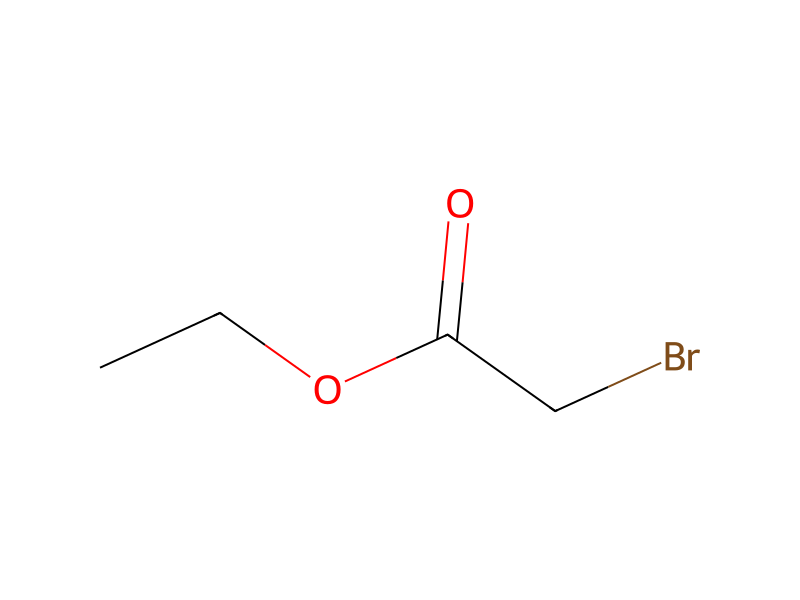
HCID 313Hydrochloric AcidHCID 6397ChlorotrimethylsilaneHCID 7748Ethyl bromoacetateHCID 78952-Pentanone

Produkt 1

HCID 9942272Ethyl 3-hydroxy-3-methylhexanoate

Reagenzien, Katalysatoren, Lösungsmittel 2

HCID 23994ZincKatalysator
HCID 7915
Isopropyl Acetate
Lösungsmittel

Reaktionsbedingungen

Temperatur
65 °C

Versuchsvorschrift

At room temperature, a three-necked flask fitted with reflux condenser, internal thermometer, dropping funnel and stirrer was charged, under nitrogen protective gas, with 11.2 g of zinc powder (170 mmol) in 65 ml of isopropyl acetate. After 3.2 ml of trimethylchlorosilane (25 mmol) had been added, the mixture was heated at 65° C. for 30 min, then left to cool to 60° C., following which 9.7 g of neat pentan-2-one (113 mmol) were added and then, over the course of 8 min, 22.6 g of neat ethyl bromoacetate (136 mmol) were added dropwise, the temperature being maintained at 60° C. by external cooling. The mixture was then stirred for 25 min at 60° C., and following cooling to 0° C., was acidified with 65 ml of 2 N hydrochloric acid to a pH of 1 and stirred for 30 min. Excess zinc was removed by filtration, and the organic phase separated. The organic phase was stirred at 0° C. with 60 ml of 1 N hydrochloric acid and then washed with 30 ml of saturated sodium hydrogen carbonate solution. Following phase separation and drying over sodium sulfate, the solvent was removed by distillation under reduced pressure. The isopropyl acetate solvent was recovered to an extent of greater than 90%). Distillation gave ethyl 3-hydroxy-3-methylcaproate in a yield of 18.2 g (93% of theory) with a boiling point of 41° C. (0.31 mbar).


Aufarbeitung

  1. customAt room temperature, a three-necked flask fitted
  2. temperaturewith reflux condenser
  3. waitleft
  4. temperatureto cool to 60° C.
  5. additionwere added
  6. temperaturethe temperature being maintained at 60° C. by external cooling
  7. temperaturefollowing cooling to 0° C.
  8. stirringstirred for 30 min
  9. customExcess zinc was removed by filtration
  10. customthe organic phase separated
  11. stirringThe organic phase was stirred at 0° C. with 60 ml of 1 N hydrochloric acid
  12. washwashed with 30 ml of saturated sodium hydrogen carbonate solution
  13. customFollowing phase separation
  14. dry with materialdrying over sodium sulfate
  15. customthe solvent was removed by distillation under reduced pressure
  16. customThe isopropyl acetate solvent was recovered to an extent of greater than 90%)
  17. distillationDistillation

Quellen und Nachweise

ORD-Eintrag
ord-28028f9c0dcd42c6a21bd88c86219eea
Quelldatensatz
uspto-grants-2003_08
DOI
10.6084/m9.figshare.5104873.v1
Patentnummer
US06605716B2

Notizen zur Reaktion

Auf dieser SeiteKomponentenReaktionsbedingungenVersuchsvorschriftAufarbeitungQuellen und NachweiseNotizen zur Reaktion