Reaktionsgleichung

[C:1]1([P:7]([C:14]2[CH:19]=[CH:18][CH:17]=[CH:16][CH:15]=2)[C:8]2[CH:13]=[CH:12][CH:11]=[CH:10][CH:9]=2)[CH:6]=[CH:5][CH:4]=[CH:3][CH:2]=1.C[N:21]([C:23](N=NC(N(C)C)=O)=[O:24])C.C(N(CC)C(C)C)(C)C.C(Cl)(Cl)(Cl)Cl>C(#N)C.C(OCC)(=O)C>[O:24]1[CH2:14][CH2:19][N:21]=[CH:23]1.[C:14]1([P:7](=[O:24])([C:1]2[CH:2]=[CH:3][CH:4]=[CH:5][CH:6]=2)[C:8]2[CH:13]=[CH:12][CH:11]=[CH:10][CH:9]=2)[CH:15]=[CH:16][CH:17]=[CH:18][CH:19]=1Komponenten
Edukt 4




Produkt 2
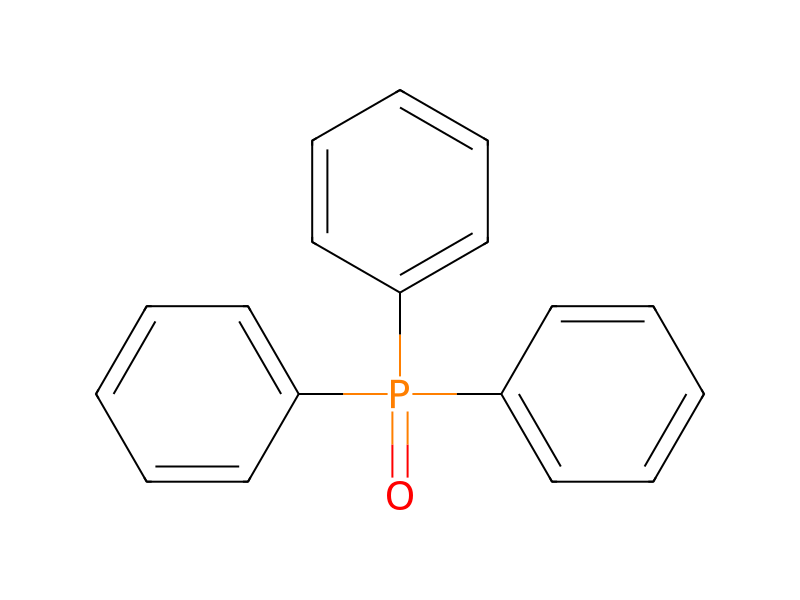

Reagenzien, Katalysatoren, Lösungsmittel 2


Versuchsvorschrift
Triphenylphosphine (654 mg, 2.46 mmol) was added to a stirred solution of diamide F (400 mg, 0.75 mmol) in acetonitrile (15 mL). After a few minutes, N,N-diisopropylethyl amine (440 μl, 2.52 mmol) was added. Addition of carbon tetrachloride (800 μl) followed. The mixture was stirred for 24 hours, diluted with ethyl acetate (100 mL) and washed with aqueous sodium bicarbonate solution and brine. The organic extract was dried (magnesium sulfate), filtered and concentrated. The residue was chromatographed on a silica gel column and eluted with 50% ethyl acetate in hexanes, followed by ethyl acetate and 2-5% methanol in ethyl acetate to obtain oxazoline G (450 mg, contaminated with triphenylphosphine oxide) as a mixture of diastereomers.
Aufarbeitung
- waitAfter a few minutes
- washwashed with aqueous sodium bicarbonate solution and brine
- extractionThe organic extract
- dry with materialwas dried (magnesium sulfate)
- filtrationfiltered
- concentrationconcentrated
- customThe residue was chromatographed on a silica gel column
- washeluted with 50% ethyl acetate in hexanes
Quellen und Nachweise
- ORD-Eintrag
- ord-d86487837e574210b2cf97c5816a36ea
- Quelldatensatz
- uspto-grants-1998_10
- Patentnummer
- US05827868
Verknüpfte Notizen
Wird geladen…