Reaktionsgleichung

COC(C1C=[C:9]([Cl:11])[CH:8]=[C:7]([C:12]([O:14]C)=O)[N:6]=1)=O.[CH3:16]NCCNC.C[Al](C)C.[C:26](O)(=O)[CH:27]([CH:29]([C:31](O)=O)O)[OH:28]>C1(C)C=CC=CC=1.[OH-].[Na+]>[Cl:11][C:9]1[CH:8]=[C:7]([C:12](=[O:14])[CH3:16])[N:6]=[C:29]([C:27](=[O:28])[CH3:26])[CH:31]=1Komponenten
Edukt 4


Produkt 1

Reagenzien, Katalysatoren, Lösungsmittel 2


Reaktionsbedingungen
- Temperatur
- 0 °C
Versuchsvorschrift
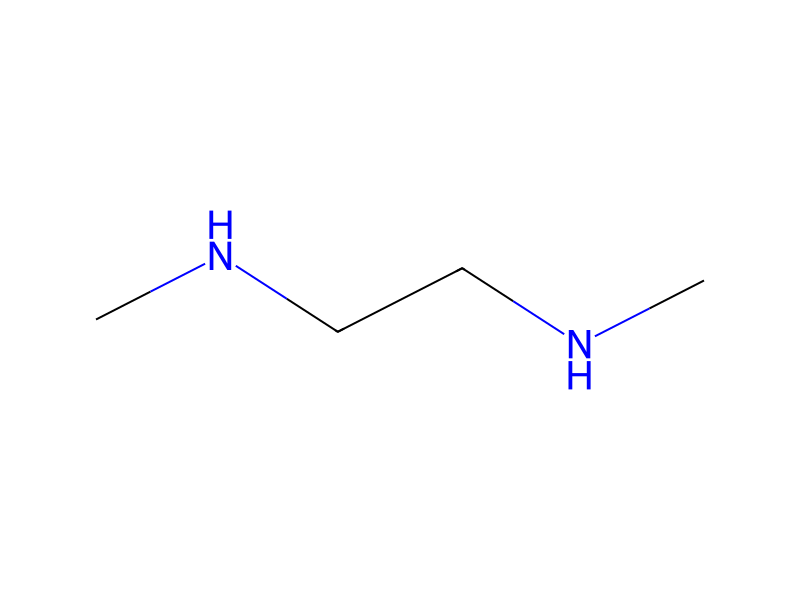
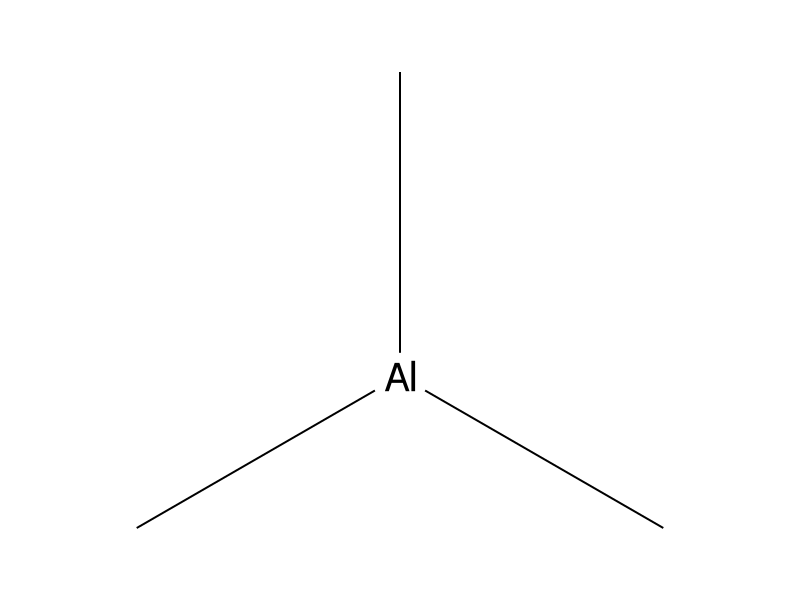
To a flame-dried, 2 L round-bottomed flask equipped with a Dean-Stark trap were added 300 mL of o-xylene and 50 g (248.6 mmol) of chelidamic acid monohydrate. The resulting slurry was heated to reflux and stirred for 4 h then allowed to cool to room temperature. To the mixture was added 207.1 g (994.4 mmol) of PCI5 in several small quantities. The resulting solution was stirred for 30 min at 25° C. then heated to reflux and stirred for an additional 1.5 h. The solution was allowed to cool to room temperature then cooled to 0° C. and quenched by adding 300 mL of anhydrous methanol slowly over 1 h. The solution was heated to reflux for 45 min and the excess methanol was removed by distillation. Once complete, the mixture was cooled to 0° C. and dimethyl-4-chloro-2,6-pyridinedicarboxylate crystallized out of solution. The product was collected by vacuum filtration and washed with 50 mL of cold methanol to give 29.9 g of dimethyl-4-chloro-2,6-pyridinedicarboxylate. 1H NMR (CDCl3, 300 MHz) δ4.03 (s, 6H), 8.30 (s, 2H). To a 500 mL round-bottomed flask were added 900 mg (3.9 mmol) of dimethyl-4-chloro-2,6-pyridinedicarboxylate, 1.4 mL (13.3 mmol) of N,N′-dimethylethylenediamine, and 100 mL of anhydrous toluene. The resulting solution was cooled to 0° C. and 20.0 mL of a 2 M solution of trimethylaluminum (40.0 mmol) in toluene was added dropwise. The solution was heated to reflux and stirred for 14 h then cooled to 0° C. The reaction was quenched by adding a solution of 1.65 g (11.0 mmol) of tartaric acid in 44 mL of 0.5 N NaOH. Stirring was continued for 1 h and the resulting slurry was filtered through Celite. The filtrate was transferred into a separatory funnel. Two layers formed and the organic material was collected, dried over anhydrous K2CO3, filtered, and concentrated in vacuo to an oil. Silica gel chromatography (50% methylene chloride in hexane) of the oil provided 128 mg of 4-chloro-2,6-diacetylpyridine. 1H NMR (CDCl3, 300 MHz) δ2.77 (s, 6H), 8.16 (s, 2H). To a 50 mL round-bottomed flask equipped with a Dean-Stark trap were added 20 mL of anhydrous toluene, 130 mg (0.66 mmol) of 4-chloro-2,6-diacetylpyridine, 235 mg (1.30 mmol) of 1-amino-2-tert-butyl-5-isopropylpyrrole, and 0.1 mg of p-toluenesulfonic acid monohydrate. The reaction mixture was stirred and heated to reflux. After 6 h, the resulting solution was allowed to cooled to room temperature and concentrated in vacuo to an oil. Silica gel chromatography (33% methylene chloride in hexane) of the oil provided 166 mg of h32. 1H NMR (CDCl3, 300 MHz) δ1.05 (d, J=6.5 Hz, 3H), 1.26 (d, J=6.8 Hz, 3H), 1.29 (s, 9H), 2.29 (s, 6H ), 2.41 (qu, J=6.8 Hz, 2H), 5.93 (d, J=3.9 Hz, 2H), 5.98 (d, J=4 Hz, 2H), 8.53 (s,2H).
Aufarbeitung
- temperatureThe solution was heated
- temperatureto reflux
- temperaturethen cooled to 0° C
- customThe reaction was quenched
- stirringStirring
- waitwas continued for 1 h
- filtrationthe resulting slurry was filtered through Celite
- customThe filtrate was transferred into a separatory funnel
- customTwo layers formed
- customthe organic material was collected
- dry with materialdried over anhydrous K2CO3
- filtrationfiltered
- concentrationconcentrated in vacuo to an oil
Quellen und Nachweise
- ORD-Eintrag
- ord-dfc95f9a6ac24a3e9b07eee1d63b1287
- Quelldatensatz
- uspto-grants-2003_05
- Patentnummer
- US06559091B1
Verknüpfte Notizen
Wird geladen…