StartseiteMCPWorkbenchSkills
StartseiteWorkbenchBenachrichtigungenMein Bereich
llms.txt · MCP-AnleitungDatenschutz · Nutzungsbedingungen · Supportv1.8.3
  1. Startseite
  2. /Reaktion

Ethanol → HCID 178426241, Verbindung

HRID 416807
Drucken

Reaktionsgleichung

Reaktionsgleichung von HRID 416807
[Br:1][C:2]1[C:3]([N:12]2[CH2:17][CH2:16][N:15]([CH2:18][C:19]3[CH:23]=[C:22]([CH3:24])[O:21][N:20]=3)[CH2:14][CH2:13]2)=[C:4]([N+:9]([O-])=O)[C:5]([NH2:8])=[N:6][CH:7]=1.CCO.[N:28]1([CH2:34][C:35]2[CH:42]=[CH:41][C:38]([CH:39]=O)=[CH:37][CH:36]=2)[CH2:33][CH2:32][O:31][CH2:30][CH2:29]1.[O-]S(S([O-])=O)=O.[Na+].[Na+]>C(OCC)C>[Br:1][C:2]1[C:3]([N:12]2[CH2:17][CH2:16][N:15]([CH2:18][C:19]3[CH:23]=[C:22]([CH3:24])[O:21][N:20]=3)[CH2:14][CH2:13]2)=[C:4]2[N:9]=[C:39]([C:38]3[CH:37]=[CH:36][C:35]([CH2:34][N:28]4[CH2:33][CH2:32][O:31][CH2:30][CH2:29]4)=[CH:42][CH:41]=3)[NH:8][C:5]2=[N:6][CH:7]=1
KomponentenReaktionsbedingungenVersuchsvorschriftAufarbeitungQuellen und NachweiseNotizen zur Reaktion

Komponenten

6

Edukt 4

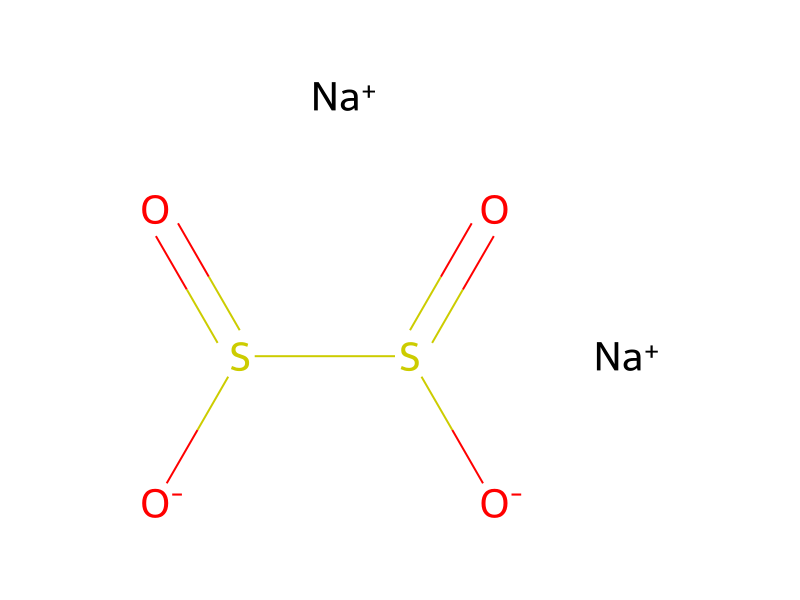
HCID 702EthanolHCID 24489Sodium DithioniteHCID 27954984-[(Morpholin-4-yl)methyl]benzaldehydeHCID 468687835-Bromo-4-[4-(5-methyl-isoxazol-3-ylmethyl)-piperazin-1-yl]-3-nitro-pyridin-2-ylamine

Produkt 1

HCID 178426241HCID 178426241, Verbindung

Reagenzien, Katalysatoren, Lösungsmittel 1

HCID 3283
Diethyl Ether
Lösungsmittel

Reaktionsbedingungen

Temperatur
80 °C

Versuchsvorschrift

To a mixture of 5-bromo-4-[4-(5-methyl-isoxazol-3-ylmethyl)-piperazin-1-yl]-3-nitro-pyridin-2-ylamine (0.044 g, 0.11 mmol) and EtOH (3.5 ml) was added 4-morpholin-4-ylmethyl-benzaldehyde (0.029 g, 0.14 mmol) followed by a freshly prepared aqueous solution of Na2S2O4 (1M; 0.44 ml, 0.44 mmol). The reaction mixture was stirred at 80° C. for 19 h, then allowed to cool to room temperature and concentrated in vacuo. The resulting residue was absorbed on silica, and the free-running powder was placed on a 10 g isolute silica column. Elution with ethyl acetate/dichloromethane (v:v; 2:3) and then a gradient of methanol (2 to 8%) in ethyl acetate/dichloromethane (v:v; 1:1) afforded a yellow solid. The title compound was obtained as a pale yellow solid after trituration with diethyl ether (0.012 g, 20%); 1H-NMR (500 MHz, DMSO-d6) 2.38 (br s, 4H) and 3.59 (t, J=4.6 Hz, 4H) (morpholine N(CH2)2 and morpholine O(CH2)2), 2.40 (s, 3H, isoxazole 5-CH3), 2.64 (br s, 4H, piperazine N(CH2)2), 3.54 (s, 2H) and 3.60 (s, 2H) (C6H4CH2N and NCH2 isoxazole), 3.67 (br s, 4H, piperazine N(CH2)2), 6.25 (s, 1H, isoxazole 4-H), 7.48 (d, J=8.2 Hz, 2H) and 8.14 (d, J=8.2 Hz, 2H) (3,5-C6H4— and 2,6-C6H4—), 8.23 (s, 1H, imidazo[4,5-b]pyridine 5-H), 13.48 (br s, 1H, imidazo[4,5-b]pyridine N—H);

Aufarbeitung

  1. temperatureto cool to room temperature
  2. concentrationconcentrated in vacuo
  3. customThe resulting residue was absorbed on silica
  4. washElution with ethyl acetate/dichloromethane (v:v; 2:3)
  5. customa gradient of methanol (2 to 8%) in ethyl acetate/dichloromethane (v:v; 1:1) afforded a yellow solid

Quellen und Nachweise

ORD-Eintrag
ord-912dc8c4d18d41898e9acf073fc2c832
Quelldatensatz
uspto-grants-2012_01
DOI
10.6084/m9.figshare.5104873.v1
Patentnummer
US08088761B2

Notizen zur Reaktion

Auf dieser SeiteKomponentenReaktionsbedingungenVersuchsvorschriftAufarbeitungQuellen und NachweiseNotizen zur Reaktion