Reaktionsgleichung

P(=O)(O)(O)O.[CH:6]1[C:11](Cl)=[CH:10][C:9]2[C:13]([C:15]3[C:20]([NH:21][C:8]=2[CH:7]=1)=[CH:19][C:18]1[C:22]([C:24]2[CH:30]=[C:29](Cl)[CH:28]=[CH:27][C:25]=2[NH:26][C:17]=1[CH:16]=3)=[O:23])=[O:14]>O>[CH:29]1[CH:30]=[C:24]2[C:22]([C:18]3[C:17]([NH:26][C:25]2=[CH:27][CH:28]=1)=[CH:16][C:15]1[C:13]([C:9]2[C:8]([NH:21][C:20]=1[CH:19]=3)=[CH:7][CH:6]=[CH:11][CH:10]=2)=[O:14])=[O:23]Komponenten
4
Edukt 2


Produkt 1
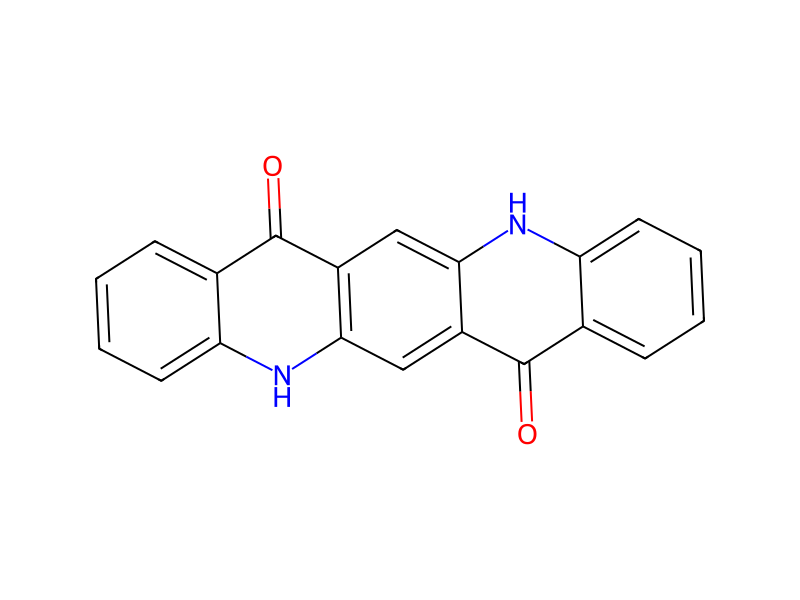
Reagenzien, Katalysatoren, Lösungsmittel 1

Versuchsvorschrift
was cyclized in phosphoric acid to form 2,9-dichloroquinacridone. The phosphoric acid containing the thus-formed 2,9-dichloroquinacridone was dispersed in water, and the 2,9-dichloroquinacridone (crude C.I. Pigment Red 202) was then sufficiently washed, dried and pulverized to obtain Quinacridone pigment composition (2-5).
Aufarbeitung
- washthe 2,9-dichloroquinacridone (crude C.I. Pigment Red 202) was then sufficiently washed
- customdried
Quellen und Nachweise
- ORD-Eintrag
- ord-88ae6df139d942e3b992d262bda4d07a
- Quelldatensatz
- uspto-grants-2003_12
- Patentnummer
- US06667140B2
Verknüpfte Notizen
Wird geladen…