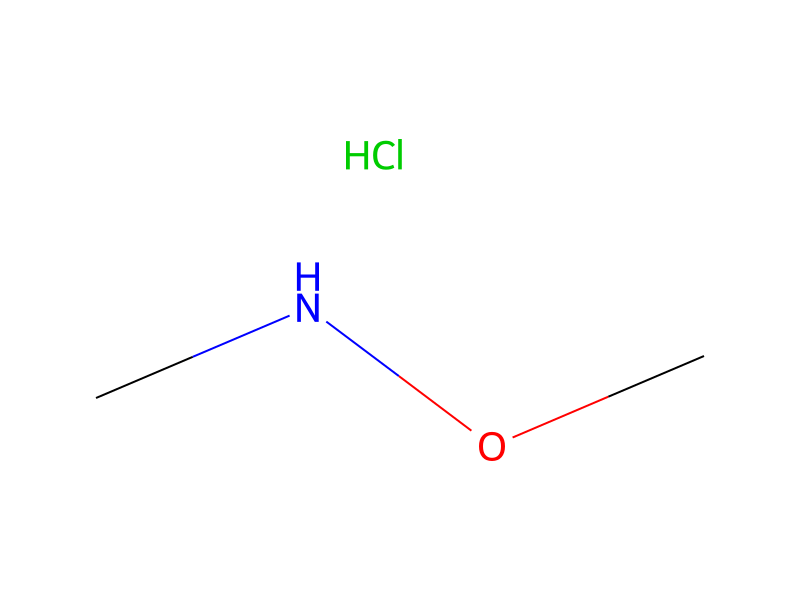
A solution of 20.3 grams (0.098 mole) of 3,4-dichlorophenylacetic acid in 200 mL of methylene chloride was stirred, and 10.7 mL (0.124 mole) of oxalyl chloride was added in one portion, followed by 6 drops of N,N-dimethylformamide. Upon completion of addition, the reaction mixture was stirred at ambient temperature for about 18 hours. After this time, 12.0 grams (0.123 mole) of N,O-dimethylhydroxylamine hydrochloride was added in one portion. The reaction mixture was then cooled to 0° C., and 35.9 mL (0.450 mole) of pyridine was added dropwise during a 45 minute period. Upon completion of addition, the reaction mixture was allowed to warm to ambient temperature, where it was stirred for about 18 hours. The reaction mixture was then diluted with 200 mL of water, and the organic layer was separated. The organic layer was washed with 200 mL of an aqueous solution saturated with sodium chloride. The organic layer was dried with sodium sulfate and filtered. The filtrate was concentrated under reduced pressure to a residue. The residue was subjected to column chromatography on silica gel. Elution was accomplished using 5% ethyl acetate in methylene chloride, then gradually increasing to 15% ethyl acetate in methylene chloride. The product-containing fractions were combined and concentrated under reduced pressure, yielding 19.4 grams of N-methoxy-N-methyl-3,4-dichlorophenylacetamide. The NMR spectrum was consistent with the proposed structure.