StartseiteMCPWorkbenchSkills
StartseiteWorkbenchBenachrichtigungenMein Bereich
llms.txt · MCP-AnleitungDatenschutz · Nutzungsbedingungen · Supportv1.8.3
  1. Startseite
  2. /Reaktion

Potassium Carbonate → 1-(p-Chlorophenyl)-1-[2-fluoro-3-(4-fluoro-3-phenoxy-3-phenoxyphenyl)propenyl]cyclopropane

HRID 443197
Drucken

Reaktionsgleichung

Reaktionsgleichung von HRID 443197
[Cl:1][C:2]1[CH:7]=[CH:6][C:5]([C:8]2([CH:11]=[C:12]([F:15])[CH2:13]Br)[CH2:10][CH2:9]2)=[CH:4][CH:3]=1.[F:16][C:17]1[CH:22]=[CH:21][C:20](B(O)O)=[CH:19][C:18]=1[O:26][C:27]1[CH:32]=[CH:31][CH:30]=[CH:29][CH:28]=1.[C:33](=[O:36])([O-])[O-].[K+].[K+]>C1(C)C=CC=CC=1.O.C1C=CC(/C=C/C(/C=C/C2C=CC=CC=2)=O)=CC=1.C1C=CC(/C=C/C(/C=C/C2C=CC=CC=2)=O)=CC=1.[Pd]>[Cl:1][C:2]1[CH:7]=[CH:6][C:5]([C:8]2([CH:11]=[C:12]([F:15])[CH2:13][C:20]3[CH2:19][C:18]([O:36][C:33]4[CH:6]=[CH:7][CH:2]=[CH:3][CH:4]=4)([O:26][C:27]4[CH:32]=[CH:31][CH:30]=[CH:29][CH:28]=4)[C:17]([F:16])=[CH:22][CH:21]=3)[CH2:10][CH2:9]2)=[CH:4][CH:3]=1
KomponentenVersuchsvorschriftAufarbeitungQuellen und NachweiseNotizen zur Reaktion

Komponenten

7

Edukt 3

HCID 11430Potassium CarbonateHCID 21185404(4-Fluoro-3-phenoxyphenyl)-boronic acidHCID 537657641-(p-Chlorophenyl)-1-(3-bromo-2-fluoropropenyl)cyclopropane

Produkt 1

HCID 867540491-(p-Chlorophenyl)-1-[2-fluoro-3-(4-fluoro-3-phenoxy-3-phenoxyphenyl)propenyl]cyclopropaneAusbeute 63 %

Reagenzien, Katalysatoren, Lösungsmittel 3
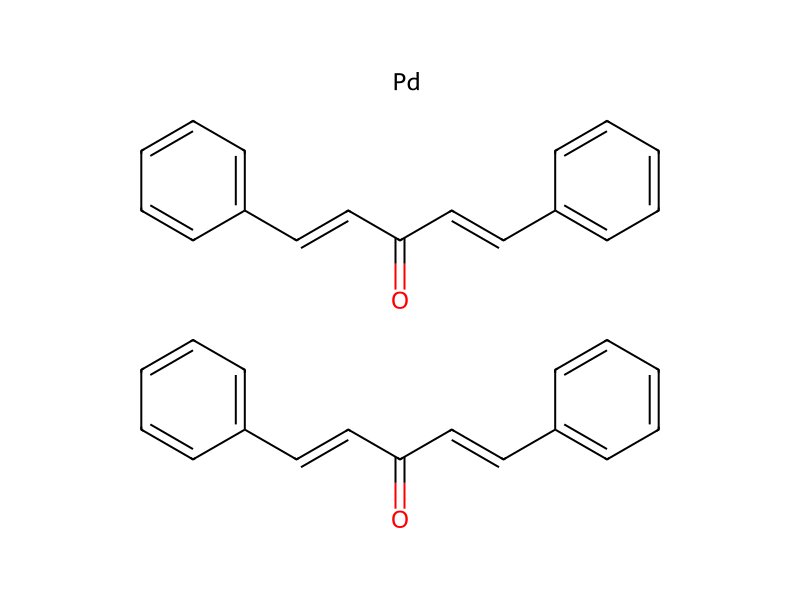
HCID 6505921
(1E,4E)-1,5-diphenylpenta-1,4-dien-3-one; palladium
Katalysator
HCID 962WaterLösungsmittel
HCID 1140TolueneLösungsmittel

Versuchsvorschrift

Under a nitrogen atmosphere, a mixture of 1-(p-chlorophenyl)-1-(3-bromo-2-fluoropropenyl)cyclopropane, (Z)- (0.434 g, 1.5 mmol), 4-fluoro-3-phenoxybenzeneboronic acid (0.452 g, 1.95 mmol), potassium carbonate (1.86 g, 13.5 mmol) and bis(dibenzylideneacetone)palladium(0) (Pd(dba)2, 4.3 mg, 0.075 mmol) in toluene is heated at 80° C. for one hour, cooled to room temperature, diluted with water, and filtered through diatomaceous earth. The phases are separated and the aqueous phase is extracted with ethyl acetate. The organic phase and ethyl acetate extract are combined, washed with water, dried over anhydrous sodium sulfate and concentrated in vacuo to obtain a residue. Flash column chromatography of the residue using silica gel and a 3:20 methylene chloride/hexanes solution gives the title product as an oil (0.274 g, 63% yield) which is identified by NMR spectral analyses.

Aufarbeitung

  1. filtrationfiltered through diatomaceous earth
  2. customThe phases are separated
  3. extractionthe aqueous phase is extracted with ethyl acetate
  4. extractionThe organic phase and ethyl acetate extract
  5. washwashed with water
  6. dry with materialdried over anhydrous sodium sulfate
  7. concentrationconcentrated in vacuo
  8. customto obtain a residue

Quellen und Nachweise

ORD-Eintrag
ord-1d83c15934ea4740b197b30007d7d5c1
Quelldatensatz
uspto-grants-1999_04
DOI
10.6084/m9.figshare.5104873.v1
Patentnummer
US05892131

Notizen zur Reaktion

Auf dieser SeiteKomponentenVersuchsvorschriftAufarbeitungQuellen und NachweiseNotizen zur Reaktion


