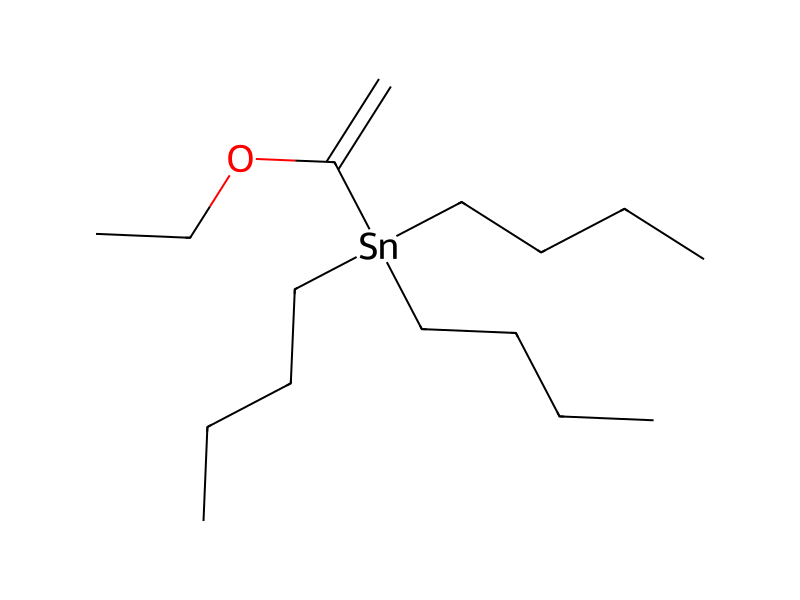
To a solution of 5-bromo-2-chloropyrimidine (12.5 g, 64.62 mmol) in dry DMF (175 mL) under N2 was added tributyl(1-ethoxyvinyl)tin (21.8 mL, 64.62 mmol) and dichlorobis(triphenylphosphine)palladium (II) (2.27 g, 3.23 mmol). The mixture was heated at 100° C. for 3 h before being allowed to stir at room temperature for 16 Hr. The mixture was then diluted with ether (200 mL) and treated with aqueous KF soln (55 g of potassium fluoride in 33 mL of water). The two phase mixture was stirred vigorously for 1 h at room temperature before being filtered through diatomaceous earth (Celite®). The Titrate was washed with sat'd NaHCO3 soln and brine prior to drying (Na2SO4). The original aqueous phase was extracted with ether (2×) and the organic phase was treated as above. Repetition on 13.5 g of 5-bromo-2-chloropyrimidine and combined purification by Biotage™ flash chromatography on silica gel (gradient elution on a 65M column using 3% ethyl acetate in hexanes to 25% ethyl acetate in hexanes with 3.0 L) afforded the title compound as a white, crystalline solid (18.2 g, 73%).