StartseiteMCPWorkbenchSkills
StartseiteWorkbenchBenachrichtigungenMein Bereich
llms.txt · MCP-AnleitungDatenschutz · Nutzungsbedingungen · Supportv1.8.3
  1. Startseite
  2. /Reaktion

Citric Acid → Benzyl 2-(benzyloxy)-4-(pyridin-3-yl)benzoate

HRID 454463
Drucken

Reaktionsgleichung

Reaktionsgleichung von HRID 454463
CC1(C)C(C)(C)OB([C:9]2[CH:10]=[N:11][CH:12]=[CH:13][CH:14]=2)O1.P([O-])([O-])([O-])=O.[K+].[K+].[K+].[CH2:24]([O:31][C:32]1[CH:47]=[C:46](Cl)[CH:45]=[CH:44][C:33]=1[C:34]([O:36][CH2:37][C:38]1[CH:43]=[CH:42][CH:41]=[CH:40][CH:39]=1)=[O:35])[C:25]1[CH:30]=[CH:29][CH:28]=[CH:27][CH:26]=1.C(O)(=O)CC(CC(O)=O)(C(O)=O)O>C([O-])(=O)C.[Pd+2].C([O-])(=O)C.C1(P(C2CCCCC2)C2C=CC=CC=2C2C(OC)=CC=CC=2OC)CCCCC1.C(OCC)(=O)C.C1(C)C=CC=CC=1>[CH2:24]([O:31][C:32]1[CH:47]=[C:46]([C:9]2[CH:10]=[N:11][CH:12]=[CH:13][CH:14]=2)[CH:45]=[CH:44][C:33]=1[C:34]([O:36][CH2:37][C:38]1[CH:39]=[CH:40][CH:41]=[CH:42][CH:43]=1)=[O:35])[C:25]1[CH:26]=[CH:27][CH:28]=[CH:29][CH:30]=1


KomponentenVersuchsvorschriftAufarbeitungQuellen und NachweiseNotizen zur Reaktion

Komponenten

9

Edukt 4

HCID 311Citric AcidHCID 62657Potassium Phosphate, Tribasic2×HCID 27346563-(4,4,5,5-Tetramethyl-1,3,2-dioxaborolan-2-yl)pyridine2×HCID 66989997Benzyl 2-(benzyloxy)-4-chlorobenzoate

Produkt 1

HCID 66990951Benzyl 2-(benzyloxy)-4-(pyridin-3-yl)benzoateAusbeute 89,2 %

Reagenzien, Katalysatoren, Lösungsmittel 4

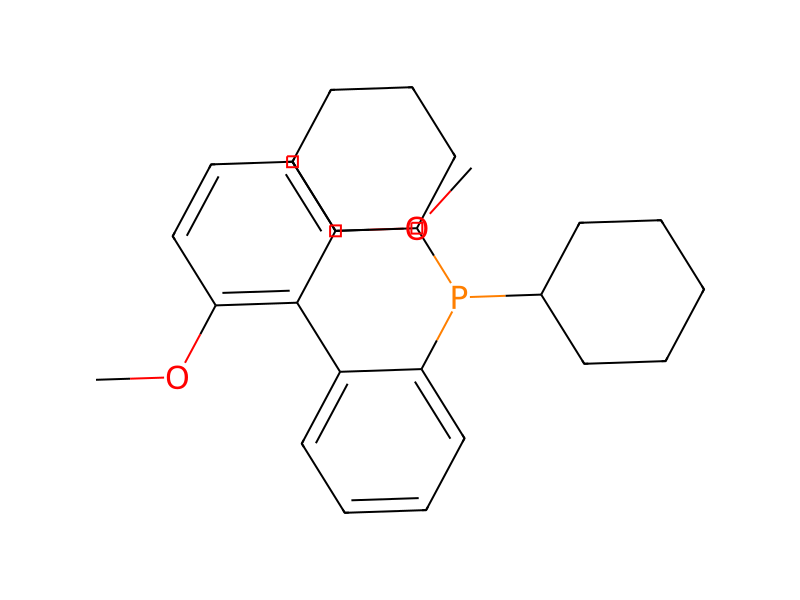
HCID 167845palladium(II) acetateKatalysator2×HCID 112698722-Dicyclohexylphosphino-2',6'-dimethoxybiphenylKatalysator2×HCID 1140TolueneLösungsmittelHCID 8857Ethyl AcetateLösungsmittel

Versuchsvorschrift

3-(4,4,5,5-Tetramethyl-1,3,2-dioxaborolan-2-yl)-pyridine (0.24 g), tripotassium phosphate (0.46 g), palladium(II) acetate (4.5 mg) and 2-dicyclohexylphosphino-2′,6′-dimethoxybiphenyl (4.1 mg) were added to a toluene (5.3 mL) solution of benzyl 2-(benzyloxy)-4-chlorobenzoate (0.35 g), followed by heating to reflux under a nitrogen atmosphere for 3 hours and 30 minutes. The reaction mixture was cooled to room temperature, and then 3-(4,4,5,5-tetramethyl-1,3,2-dioxaborolan-2-yl)pyridine (0.16 g), tripotassium phosphate (0.25 g), palladium(II) acetate (4.5 mg), and 2-dicyclohexylphosphino-2′,6′-dimethoxybiphenyl (4.1 mg) were added thereto, followed by heating to reflux under a nitrogen atmosphere for 3 hours and 30 minutes. After cooling the reaction mixture to room temperature, a 10% aqueous solution of citric acid and ethyl acetate were added thereto, and the insoluble substance was removed by filtration. The organic layer was separated, washed with a saturated aqueous solution of sodium chloride, and dried over anhydrous magnesium sulfate, and the solvent was evaporated under reduced pressure. The obtained residue was purified by silica gel column chromatography [Fuji Silysia Chemical Ltd., PSQ100B (spherical), eluent: 90-50% hexane/ethyl acetate] to obtain 0.35 g of benzyl 2-(benzyloxy)-4-(pyridin-3-yl)benzoate.

Aufarbeitung

  1. temperatureby heating
  2. temperatureto reflux under a nitrogen atmosphere for 3 hours and 30 minutes
  3. temperatureby heating
  4. temperatureto reflux under a nitrogen atmosphere for 3 hours and 30 minutes
  5. temperatureAfter cooling the reaction mixture to room temperature
  6. customthe insoluble substance was removed by filtration
  7. customThe organic layer was separated
  8. washwashed with a saturated aqueous solution of sodium chloride
  9. dry with materialdried over anhydrous magnesium sulfate
  10. customthe solvent was evaporated under reduced pressure
  11. customThe obtained residue was purified by silica gel column chromatography [Fuji Silysia Chemical Ltd., PSQ100B (spherical), eluent: 90-50% hexane/ethyl acetate]

Quellen und Nachweise

ORD-Eintrag
ord-fa096c4e6d914bdfa76d55dc7642d390
Quelldatensatz
uspto-grants-2013_07
DOI
10.6084/m9.figshare.5104873.v1
Patentnummer
US08492582B2

Notizen zur Reaktion

Auf dieser SeiteKomponentenVersuchsvorschriftAufarbeitungQuellen und NachweiseNotizen zur Reaktion