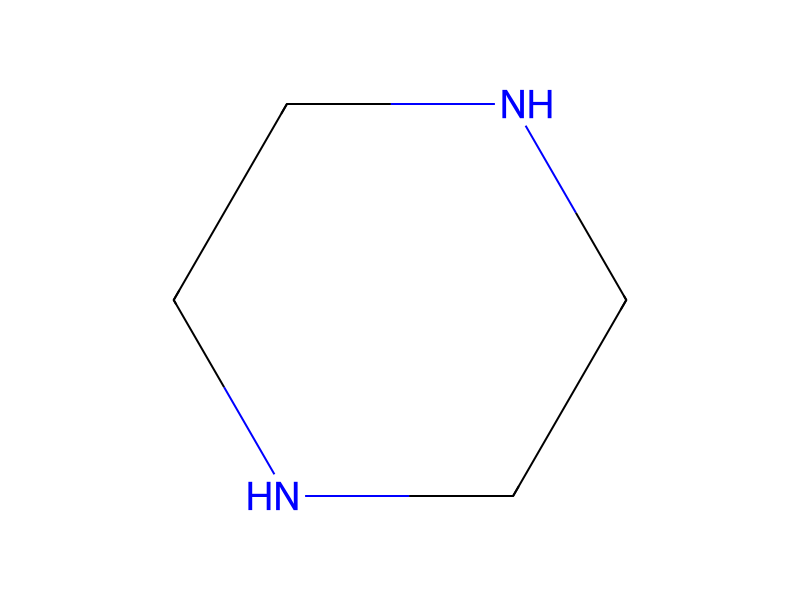
[Cl:1][C:2]1[CH:19]=[CH:18][C:17](C=O)=[CH:16][C:3]=1[C:4]([NH:6][CH2:7][C:8]1([OH:15])[CH2:14][CH2:13][CH2:12][CH2:11][CH2:10][CH2:9]1)=[O:5].[OH-].[NH4+].C1(C)C=CC(S(CN=C=O)(=O)=O)=CC=1.[NH:38]1[CH2:43][CH2:42][NH:41][CH2:40]C1>C1COCC1.C(OCC)(=O)C.O>[Cl:1][C:2]1[CH:19]=[CH:18][C:17]([C:43]2[N:38]=[CH:40][NH:41][CH:42]=2)=[CH:16][C:3]=1[C:4]([NH:6][CH2:7][C:8]1([OH:15])[CH2:14][CH2:13][CH2:12][CH2:11][CH2:10][CH2:9]1)=[O:5]A solution of 2-chloro-5-formyl-N-(1-hydroxy-cycloheptylmethyl)-benzamide (50 mg, 0.16 mmol) and ammonium hydroxide (0.5 mL, 0.44 mmol) in THF (5 mL) was stirred at room temperature for 6 h. p-Toluenesufonylmethylisocyanate (21 mg, 0.11 mmol) and piperazine (14 mg, 0.16 mmol) were added and the mixture was stirred at room temperature for 5 d. The mixture was diluted with ethyl acetate and water. The organic layer was washed with brine, dried over sodium sulfate, filtered and concentrated in vacuo. The residue was dissolved in HCl (20 mL, 1M) and washed with ethyl acetate. The aqueous layer was saponified to pH12 with sodium hydroxide (6M) and extracted with ethyl acetate. The combined organic layers were washed with brine, dried over sodium sulfate, filtered and concentrated in vacuo to afford the title compound as a white solid (12 mg).